How Close Can You Get To Wild Dolphins In The Water?
The Western Australian distance rules for swimmers, boats and drones around wild dolphins, how a guided dolphin swim works within them, and the fines that apply.
The short legal answer for Western Australia is 50 m. The Biodiversity Conservation Regulations 2018 list dolphins as prescribed fauna and set a separation distance of 50 m between a person in the water and a dolphin, 100 m for a vessel, 300 m for an aircraft other than a helicopter, 500 m for a helicopter and 60 m for a drone. Getting closer than those distances carries a fine of AUD 5,000 for a person and the same for a vessel, with one exception: an activity authorised under a licence, which is the route a paid, guided dolphin swim such as the Rockingham Wild Dolphin Swim would need. The swim is rated 4.7 across about 685 reviews and runs from A$249.72 per person; Check availability to see live dates and options.
As a member of the public in the water on your own, the legal limit in Western Australia is 50 m from a wild dolphin, and the fine for coming closer is AUD 5,000. That distance comes from Schedule 5 of the Biodiversity Conservation Regulations 2018, which treats dolphins as prescribed fauna. The one lawful route closer is a commercial swim run under a fauna disturbing licence, where trained guides control the approach under conditions set by the state.
The 50 m figure surprises people who have seen photographs from guided swims and assumed the closeness was a free-for-all. It is not. The regulations draw a hard line between a private swimmer, snorkeller or surfer who happens to be sharing water with dolphins, and a licensed commercial interaction where the approach is managed by an operator holding a fauna disturbing licence. Regulation 112 exempts licensed activity from the separation-distance rules, and regulation 30 defines the licence that covers approaches to fauna for commercial purposes, though never feeding.
So the answer has two halves. On your own, 50 m is the ceiling and you are required to keep it even if the dolphins are the ones closing the gap, because regulation 114 says a swimmer must move away as soon as reasonably possible when a dolphin comes closer. On a guided swim, the distance between you and the dolphins is set by the guides and the dolphins themselves, not by your own choices in the open water.
The Rockingham Wild Dolphin Swim is one guided format. The operator says each swim group of up to 7 holds the belt of a guide on an aqua scooter, who tows the group at the surface, while a second guide on a solo scooter works around the dolphins. The Bunbury Wild Dolphin Swim, run by the Dolphin Discovery Centre in Koombana Bay, is the other paid wild dolphin swim in the state's south west, and the Centre states a DBCA licence, with swimmers 8 and over and groups between 8 and 20 swimmers per the operator. Both swims are described in more detail further down.
If you are weighing the swim against a watching-only cruise, the distance question changes shape entirely: on a cruise you stay on the vessel and the 100 m vessel rule frames the experience. The guide on wild dolphin swim versus watching cruise choices breaks down that trade-off, and the first timers checklist for a wild dolphin swim covers what to sort out before you board.
The Legal Separation Distances For Dolphins In Western Australia
In Western Australia, Schedule 5 sets the legal separation distances for dolphins at 50 m for a person in the water, 100 m for a vessel, 300 m for an aircraft that is not a helicopter, 500 m for a helicopter, and 60 m for an aerial device such as a drone. Under Regulation 113, a person or vessel that gets closer commits an offence carrying a AUD 5,000 fine.
The full ladder of distances exists because each platform interacts with dolphins differently, and the law treats them separately. A swimmer is quiet and slow; a boat is fast and loud; a drone hovers and buzzes. The consolidated text of the regulations is published on the legislation.wa.gov.au website, and it is worth reading the dolphin provisions directly if you plan to spend time in the water off the Perth coast.
| Who or what | Separation distance | Fine for getting closer |
|---|---|---|
| Person in the water | 50 m | AUD 5,000 |
| Vessel | 100 m | AUD 5,000 |
| Aircraft other than a helicopter | 300 m | AUD 5,000 |
| Helicopter | 500 m | AUD 5,000 |
| Drone, described in the regulations as an aerial device | 60 m | AUD 5,000 |
Two details in the table deserve emphasis. The drone distance, 60 m, is shorter than the aircraft and helicopter distances, but it still applies, so drone photographers off Rockingham or Shoalwater need to keep their device well back from any dolphin. And the vessel distance, 100 m, is the one that governs every private boat, kayak and jet ski, which matters in a marine park like Shoalwater Islands, a place the parks service describes as an hour from Perth.
The species detail is not trivia. The Murdoch University study found four discrete communities of Indo-Pacific bottlenose dolphins in Perth metro waters, Cockburn Sound, Swan Canning Riverpark, Owen Anchorage and Gage Roads, each needing its own protections. The Rockingham side of the coast sits next to Cockburn Sound, but the research does not say the dolphins on any given swim belong to that community, so treat the communities as background rather than a promise about which animals you will meet.
How A Guided Swim Gets Closer Than 50 M
A commercial dolphin swim is exempt from the separation distances under regulation 112, because the activity is authorised under a fauna disturbing licence issued for commercial interaction. That licence covers approaches to fauna for commercial purposes and never covers feeding. It is the reason a guided swim can put swimmers in the water beside dolphins while a private swimmer in the same bay cannot.
The licence route is not a loophole; it is a regulatory design. The state authorises a small number of commercial operators to approach dolphins under conditions attached to their licence, with trained guides controlling the interaction. No operator's licence number or licence conditions are published on any operator or official page, so none can be shown, and no operator should be described as holding any named licence.
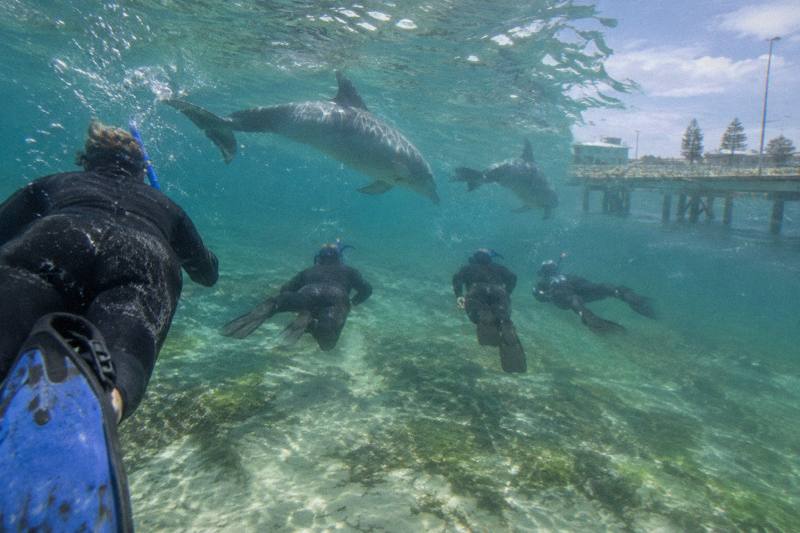
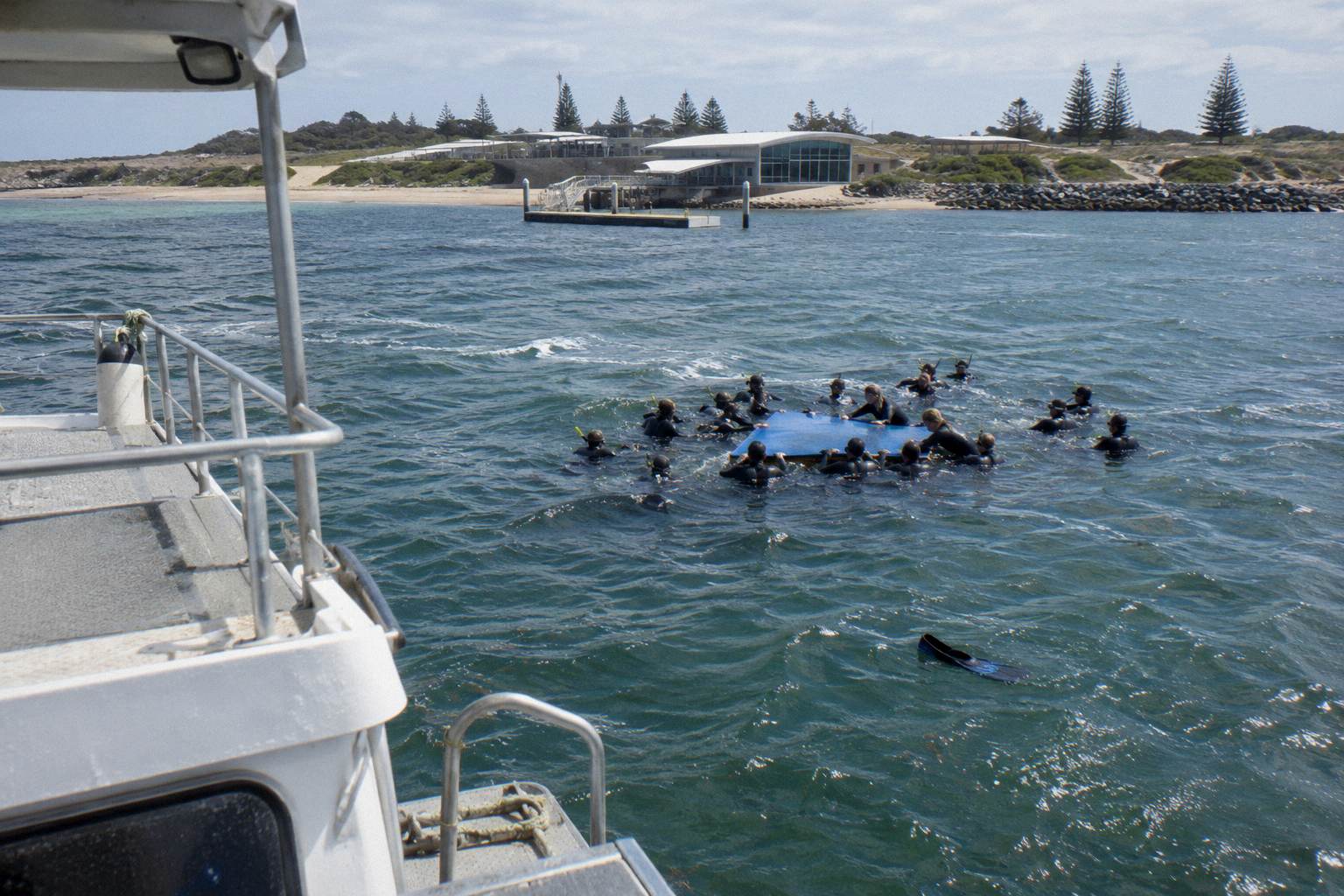
What the Rockingham operator does publish is the mechanics of its swim. Once dolphins are located, guests zip up wetsuits, put on mask and snorkel and move to the swim deck. Entry to the water is in small groups of up to 7, each led by a guide on an aqua scooter, and guests hold the guide's belt while staying at the surface. A second lead guide on a solo scooter works around the dolphins near the group. The operator's own swim page describes this in full at penguinisland.com.au/swim-with-dolphins-perth, including the kit and the introductory snorkel lesson.
The closeness on a guided swim is therefore engineered, not chanced. The scooter tows the group at the surface; the dolphins decide their own line; the operator says no touching and no feeding at any point. The operator also states that no previous snorkelling experience is required and that nervous swimmers are accepted, with a 4 mm full-length wetsuit the operator says keeps you very buoyant.
The Bunbury Wild Dolphin Swim is a second guided format with a different operator. The Dolphin Discovery Centre runs a 4-hour guided swim in Koombana Bay from November to April with a daily 7:45 am start, swimmers 8 and over accompanied by a swimming adult, and groups the operator caps at a maximum of 20 swimmers with 4 observers. Its booking page includes wetsuits in all sizes, floating devices, fresh drinking water and a snack, plus hot showers after. The Centre's research page states the Koombana Bay resident group averages about 50 animals with another 100 or more visiting through the year, a Bunbury-only figure that must not be transferred to Rockingham.
What Happens If A Dolphin Swims Up To You
Regulation 114 handles the reverse case: if a dolphin approaches closer than the separation distance, the obligation moves to you. A swimmer must move away as soon as reasonably possible, and a vessel must go to neutral or switch off, or move away at no more than 6 knots. The fine framework still applies to a person who stays put and lets the interaction continue on the dolphin's terms.
This is the part of the law people find counterintuitive. Dolphins are curious, fast and unbothered by human boundaries, and the waters off Perth and Rockingham are home to the four communities the Murdoch research describes. A dolphin can cover 50 m in seconds, and nothing in the regulations suggests you will be fined for an approach you did not initiate. The offence sits in the response: lingering, pursuing, or positioning yourself to keep the dolphin close.
For a snorkeller or swimmer in open water, the practical reading is simple. If dolphins come to you, back away steadily and let them pass. Do not swim toward them, do not circle to stay in front of them, and do not reach out. The blog post on what to do when a dolphin swims up to you walks through the moment in more detail, and the rules there trace straight back to regulations 113, 114 and 118.
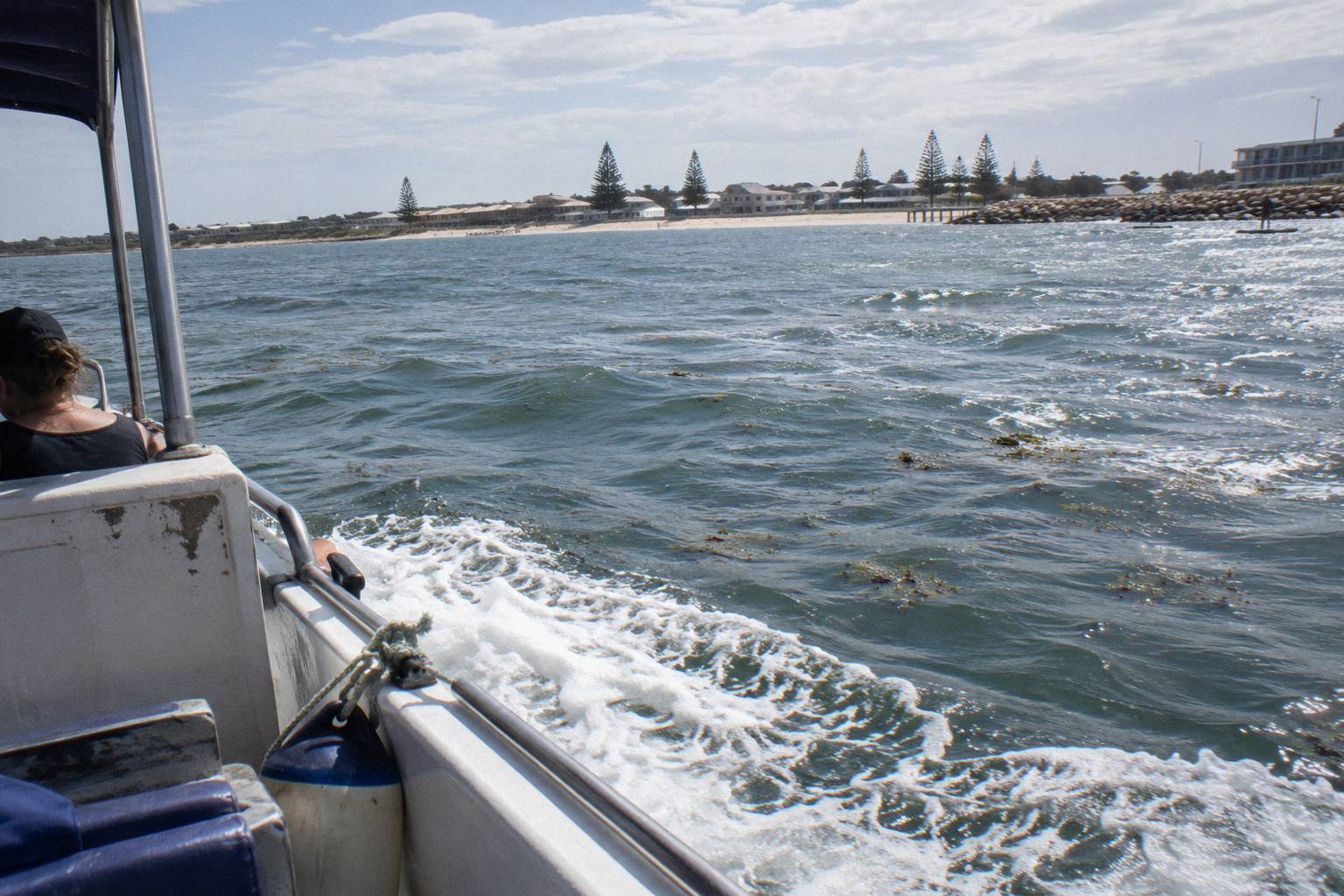
On a guided swim the same logic is managed for you. The guides hold the group at the surface, the tow keeps swimmers in a controlled line rather than free-swimming toward animals, and the operator's stated rules, no touching and no feeding, mirror the offence provisions in the regulations. Regulation 118 sets a AUD 10,000 fine for touching or attempting to touch any marine fauna, a figure that applies to everyone, licensed swimmer or not.
Touching, Feeding And Obstructing: The Bigger Fines
The touch ban is the sharpest line in the regulations: a person must not touch or attempt to touch any marine fauna, and the fine is AUD 10,000 under regulation 118. Feeding is separately controlled, requiring its own licence under regulation 32. A person in the water must also not obstruct or interfere with the natural movement of marine fauna, a AUD 5,000 offence under regulation 120.
The ladder of offences is worth seeing side by side, because the touch fine is double the approach fine and the obstruction offence catches behaviour short of contact, such as cutting across a dolphin's path or holding position in front of a moving group.
| Action | Regulation | Fine |
|---|---|---|
| Person or vessel closer than the separation distance | 113 | AUD 5,000 |
| Failing to move away when a dolphin approaches | 114 | AUD 5,000 |
| Touching or attempting to touch marine fauna | 118 | AUD 10,000 |
| Obstructing or interfering with natural movement in the water | 120 | AUD 5,000 |
| Diving with marine fauna using an artificial air supply | 119 | AUD 5,000 |
The diving ban in regulation 119 has a precise definition: diving means swimming with an artificial air supply, so it captures scuba and leaves snorkelling untouched, which is why a guided dolphin swim in the state is a surface snorkel. A vessel must also move away from visibly disturbed marine fauna under regulation 121, and the operator-observed behaviours listed for the Rockingham swim, hunting, mating and sleeping among them, are a reminder that the animals are working through their own day whether or not a boat is nearby.
The feeding licence point matters more than it looks. A dolphin that associates people with food changes its behaviour around swimmers and vessels, which is precisely what the interaction rules exist to prevent. The guided swims state no feeding as a hard rule, and the regulations back it with a separate licensing regime under regulation 32.
The ethics of managed closeness are covered at length in is swimming with wild dolphins ethical, which sets the licence framework against the behavioural science. Reading the distance rules alongside that discussion gives you the full picture of what managed closeness means.
Watching From A Boat: The 100 M Vessel Rule
A vessel must stay 100 m from dolphins, and if dolphins come closer the vessel must go to neutral or switch off, or retreat at no more than 6 knots. The watching cruises covered here operate within that rule, and the Mandurah cruises' booking pages describe what happens when no dolphins are sighted: a free return until you see them, on those tours only, subject to availability.
Watching is the lower-commitment format, and for plenty of travellers it is the right one. The Mandurah Dolphin Cruise runs 75 minutes from A$47 per person, rated 4.5 across 1,090 reviews, with live commentary from a skipper and local expert, and the Mandurah Giants And Dolphin Cruise runs 2 hours from A$85 per person, rated 4.8 across 87 reviews, on a SuperCat with an open front and upper and lower decks. Both are watching only: nobody enters the water on either cruise.
The Mandurah Dolphin Cruise's booking page describes its return term in its own words: dolphins are wild and choose when and how they interact, so sightings cannot be promised; if none are sighted you can return free until you see them, claiming it by contacting the operator with your booking reference, rebooking within 12 months, or 3 years if you live overseas, subject to availability. The Giants cruise's booking page states a similar join-again-for-free term for that tour. Neither term transfers to any other tour, and neither is a refund.
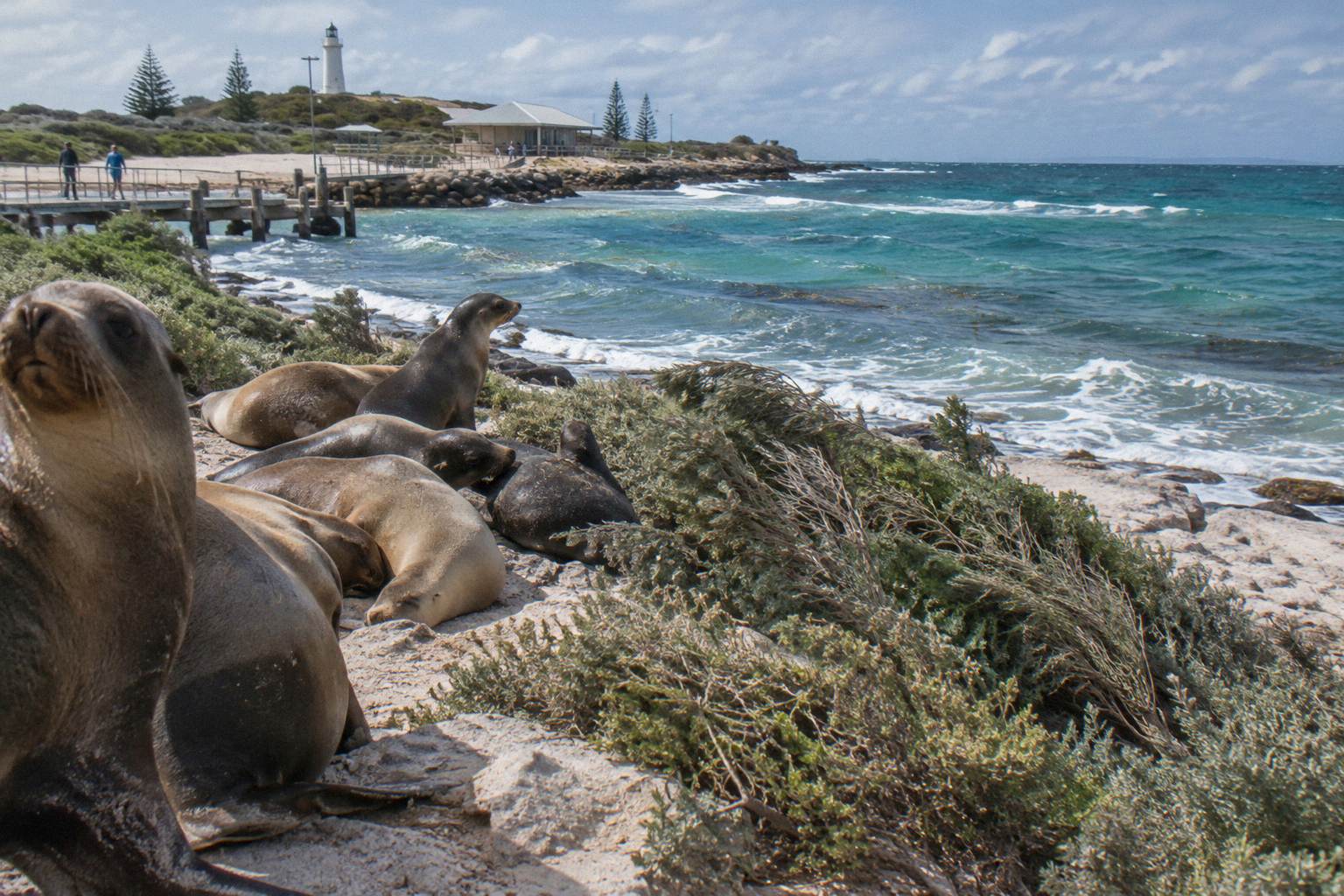
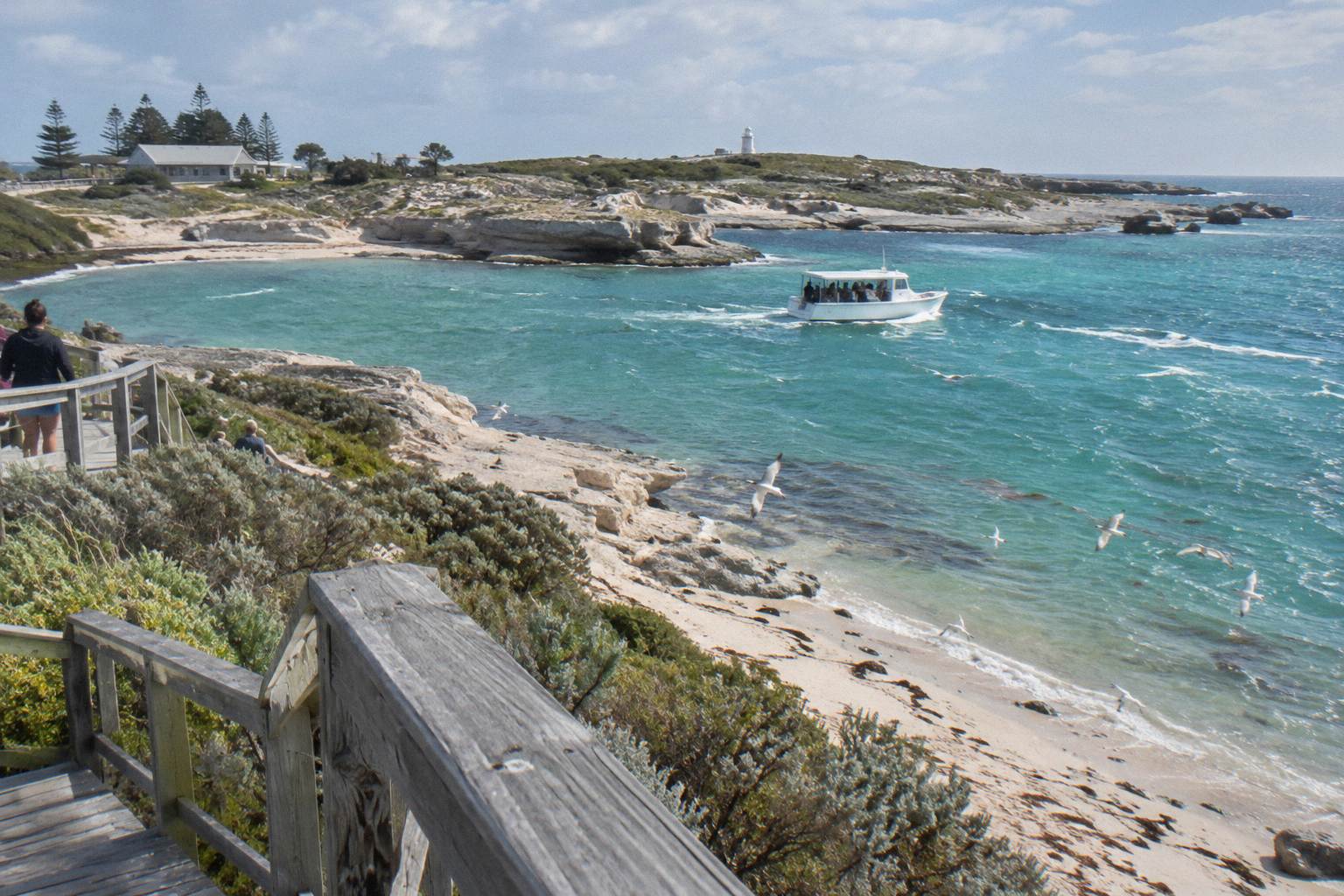
The Penguin Island And Dolphin Cruise is the third watching option, about 1 hour 30 minutes, meeting at the operator base at 153 Arcadia Drive, Shoalwater. Its booking page states no price, rating or cancellation terms, so those are questions for the operator at booking. Shoalwater itself is part of the Shoalwater Islands Marine Park, which the parks service describes as just an hour from Perth, with free entry and sea lions on Seal Island.
One caution that trips up photographers: the drone rule. Sixty metres sounds generous until a dolphin surfaces toward your device, at which point regulation 114's retreat duty applies in the air just as it does in the water. If you want photographs of dolphins close to people, a guided swim is the lawful setting, and the Rockingham operator says the crew film every swim and upload the photos online, which removes the need to risk a fine for your own drone footage.
Common Mistakes When Getting Close To Wild Dolphins
The common mistakes are assuming the guided-swim closeness is legal for everyone, chasing dolphins to hold the 50 m gap closed, reaching out at the last second, flying a drone low for a better angle, and treating one tour's free-return term as a blanket policy. Each mistake traces to a specific rule: regulations 113, 114, 118 and the per-tour terms the operators and booking pages state.
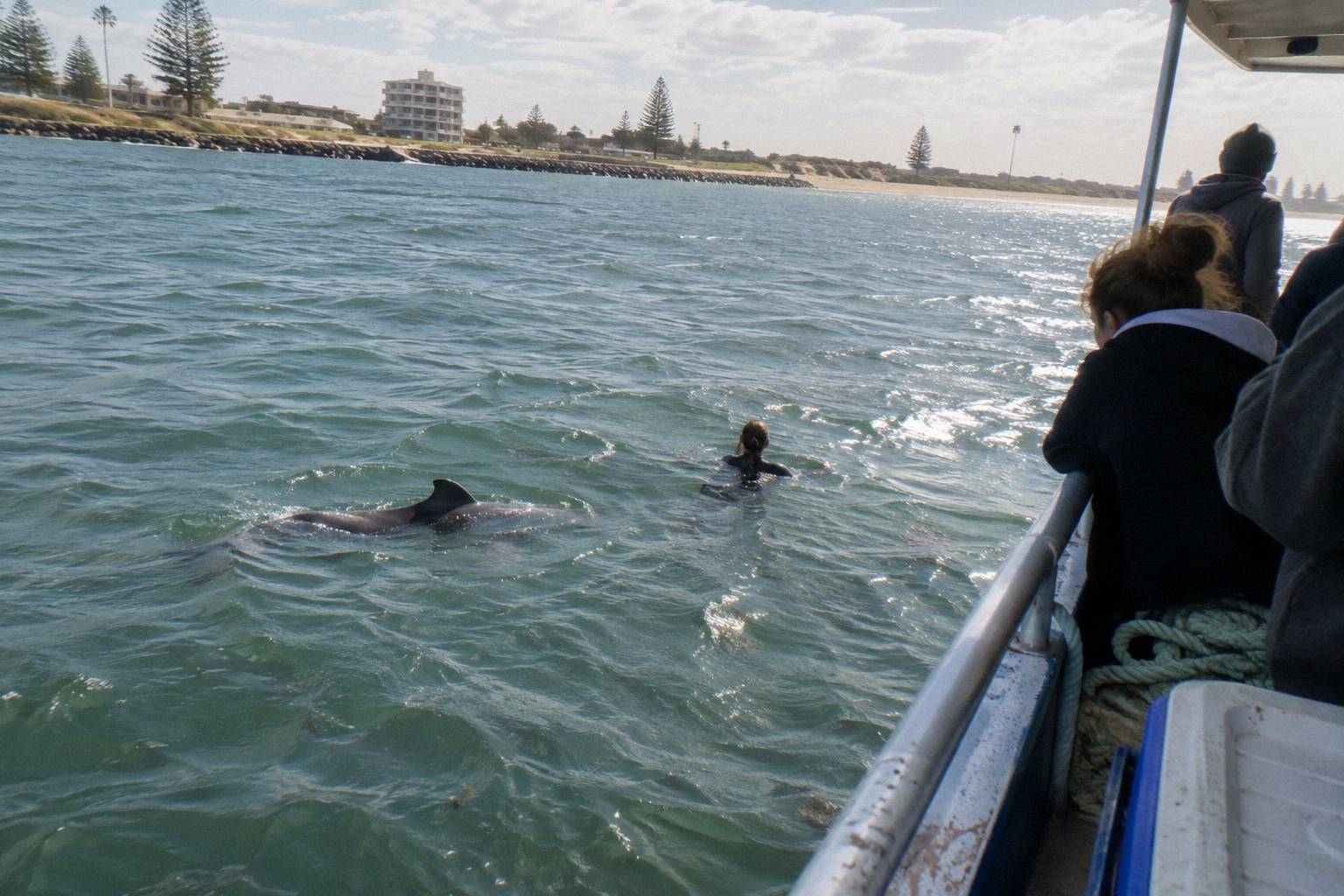
The first mistake is the innocent one. Someone watches a guided swim, sees swimmers metres from dolphins, and concludes the 50 m rule is loose or unenforced. It is neither; the swimmers they watched were on a guided swim, and a private swimmer doing the same thing faces the AUD 5,000 fine. The second mistake follows from the first: swimming after dolphins to recreate the guided experience. Pursuit is the clearest possible breach of the approach and obstruction provisions, and it is also the least rewarding, since dolphins outpace any swimmer without effort.
The third mistake happens at the moment of contact temptation. A dolphin passes within arm's reach on a guided swim and the instinct is to touch. The operator states no touching, regulation 118 sets a AUD 10,000 fine, and the guided setting removes any ambiguity: hands stay on the guide's belt or at your side. The fourth mistake is the drone flight, covered above, where the 60 m distance and the retreat duty combine against the pilot.
The fifth mistake is contractual rather than legal: assuming the free-return or come-again terms apply everywhere. The Rockingham operator's come-again term, "In the unlikely event that we don't see or swim with any dolphins ... you're welcome to come again free of charge", is for bookings made direct with the operator, is not a refund, and applies to the Swim with Wild Dolphins cruises only. The booking page for that swim separately shows free cancellation up to 24 hours before it starts. The Mandurah cruises' return terms belong to their own booking pages. The Penguin Island And Dolphin Cruise states no cancellation term at all, so ask the operator before assuming one exists.
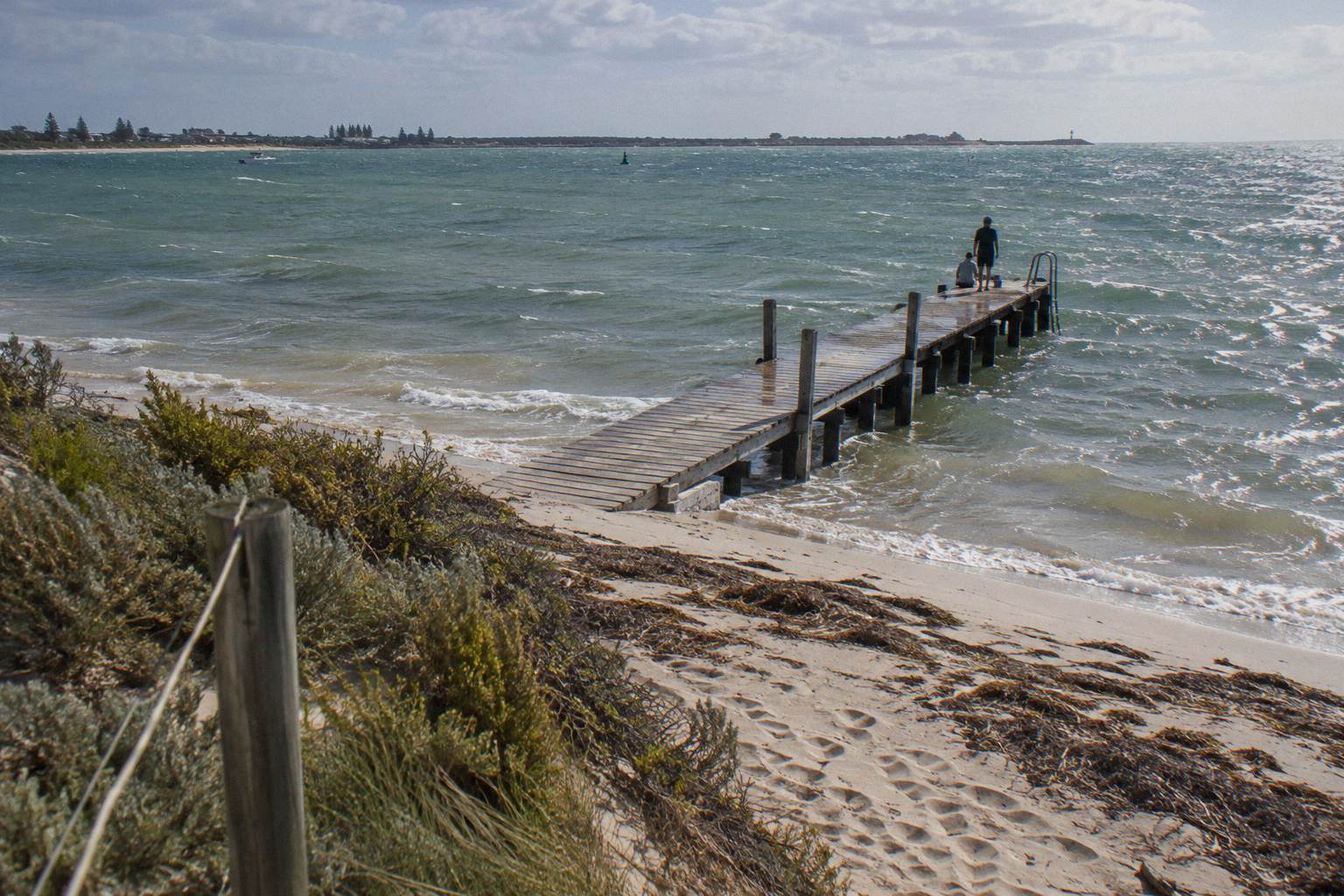
A checklist of questions worth asking any operator before booking: what the exact meeting point is, what happens if no dolphins are found, what the cancellation window is on your chosen booking channel, what ages are accepted, and what the water conditions are expected to be. The Rockingham operator's answers are on record: Val Street Jetty, a come-again term for direct bookings, not recommended for children 6 years or younger, and a season of September to early June. Anything beyond those statements is a question for the operator when you book.
Deciding between the formats comes down to whether you want to be in the water or on it. The two paid swims put you at the surface beside the animals under a guide's control; the three cruises keep you dry behind the 100 m vessel line. Rockingham Swim With Dolphins covers both sides of that choice across its guides, including the comparison of Rockingham versus Bunbury swims and the breakdown of how likely dolphin sightings are on a swim.
Common Questions About Getting Close To Wild Dolphins In The Water
How Close Can You Get To Wild Dolphins In The Water?
For a private swimmer in Western Australia the legal separation distance is 50 m, with a AUD 5,000 fine for getting closer. On a commercial dolphin swim the separation-distance rules do not apply, and the closeness is managed by trained guides; the Rockingham operator tows groups of up to 7 at the surface beside the dolphins.
Can You Touch Wild Dolphins When Swimming?
No. Regulation 118 of the Biodiversity Conservation Regulations 2018 bans touching or attempting to touch any marine fauna, with a AUD 10,000 fine. The guided swim operators state no touching and no feeding, and parents are responsible for supervising their own children in the water.
What Happens If A Dolphin Comes Closer Than 50 M To You?
Regulation 114 requires a swimmer to move away as soon as reasonably possible when a dolphin approaches closer than the separation distance. A vessel must go to neutral or switch off, or move away at no more than 6 knots. The duty to retreat sits with the person, not the dolphin.
How Close Can A Boat Get To Dolphins In WA?
A vessel must keep 100 m from dolphins under Schedule 5 of the Biodiversity Conservation Regulations 2018, and the fine for getting closer is AUD 5,000. Aircraft other than helicopters must keep 300 m, helicopters 500 m and drones 60 m.
Why Can Guided Dolphin Swims Get Closer Than 50 M?
Regulation 112 exempts activities authorised under a licence from the separation-distance rules, and regulation 30 defines the fauna disturbing licence that authorises commercial interaction approaches, though never feeding. A swim run under that route has guides controlling the approach. No operator's licence number or conditions are published on any operator or official page.
Is Snorkelling With Dolphins Legal In Western Australia?
Snorkelling is legal, but the 50 m separation distance applies to any private swimmer using it, and regulation 119's ban on diving with marine fauna applies only to swimming with an artificial air supply, meaning scuba. The swims at Rockingham and Bunbury are surface snorkels by design.