What To Do If A Dolphin Swims Up To You?
The WA rules that apply the moment a wild dolphin approaches a swimmer, what the fines are for touching or blocking one, and how a guided dolphin swim handles the encounter for you.
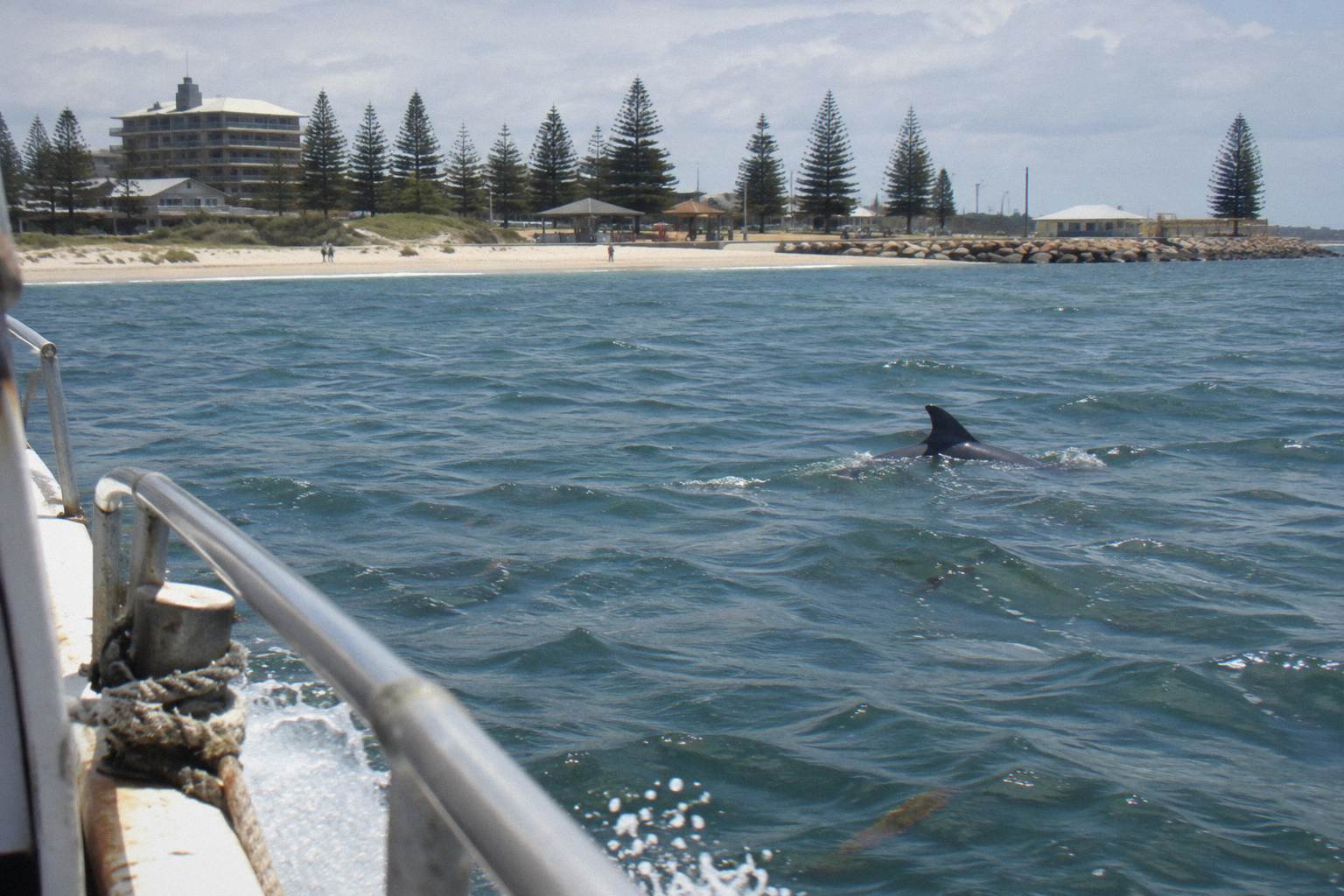
If a wild dolphin approaches closer than 50 metres to you in the water in Western Australia, the law requires you to move away from it as soon as reasonably possible. You must not touch it or try to, which carries a AUD 10,000 fine, and you must not obstruct its movement, which carries AUD 5,000. On a commercial swim, trained guides lead the group, and a commercial swim sits outside the public distance rules only where a licence authorises it.
The instruction surprises people who expect the opposite. The assumption is that a dolphin choosing to come close somehow transfers permission to the swimmer, that interest equals invitation. The Biodiversity Conservation Regulations 2018 draw the line differently. Regulation 114 says that when a dolphin comes closer than the separation distance, the person in the water must move away as soon as reasonably possible, and a vessel must go to neutral or switch off, or move away at no more than 6 knots. The animal's curiosity does not suspend the rule. The rule exists to keep the interaction on the dolphin's terms and to stop swimmers and boats from crowding, following or cutting off an animal that cannot ask for space.
Three further prohibitions sit beside the distance rule. Touching or attempting to touch any marine fauna carries a AUD 10,000 fine under regulation 118. Obstructing or interfering with the natural movement of marine fauna from the water carries a AUD 5,000 fine under regulation 120. Feeding is a licensed activity of its own under regulation 32, which means it is off limits to the public entirely. Together these four rules are the entire legal answer to the question of what to do, and every one of them places the obligation on you, never on the dolphin.
For swimmers who want the close encounter without carrying that legal responsibility alone, the two paid swim tours covered here do the work differently. The Rockingham Wild Dolphin Swim, rated 4.7 across about 685 reviews and listed from A$249.72 per person, sends groups of up to 7 into the water behind a guide on an aqua scooter. The Bunbury Wild Dolphin Swim, rated 4.7 across 24 reviews, runs a guided swim in Koombana Bay from November to April. The three cruises, the Penguin Island And Dolphin Cruise, the Mandurah Dolphin Cruise and the Mandurah Giants And Dolphin Cruise, are watching only, and the distance rules that bind a vessel bind their boats too.
If a free-roaming dolphin comes at you while you are snorkelling on your own account, anywhere along the WA coast, the sequence is short. Stop swimming toward it. Let it pass rather than turning to follow. Begin moving away as soon as you reasonably can, without splashing hard or sprinting through the water. Keep your hands to yourself regardless of how close it comes, and keep any vessel near you neutral or slow. That is the whole of it, and it fits on a wristband.
The 50 M Rule And What It Actually Requires Of A Swimmer
Under Schedule 5 of the WA regulations, a swimmer must keep at least 50 metres between themselves and a dolphin, and regulation 113 makes deliberately closing that gap an offence carrying a AUD 5,000 fine. Regulation 114 covers the reverse case: if a dolphin approaches you, the duty to move away still falls on you, so staying put is not an option.
The distinction between the two regulations matters. Regulation 113 punishes approach. If you swim toward a dolphin, close the 50 metres yourself, chase a dorsal fin or position yourself in its path, you have committed the offence. Regulation 114 governs what happens when the approach is the dolphin's doing, and it still asks something of the swimmer: withdraw as soon as reasonably possible. The word reasonably carries weight in the water. A swimmer who pauses, looks and begins a steady retreat has complied. A swimmer who treads water and waits for the animal to arrive, or who drifts along beside it, has not moved away and is relying on the dolphin to end the encounter.
| Party | Separation Distance | If The Dolphin Closes The Gap | Fine For Approaching |
|---|---|---|---|
| Person in the water | 50 m | Move away as soon as reasonably possible (reg 114) | AUD 5,000 (reg 113) |
| Vessel | 100 m | Go neutral or switch off, or move away at no more than 6 knots | AUD 5,000 (reg 113) |
| Aircraft, not a helicopter | 300 m | Not stated for aircraft in reg 114 | AUD 5,000 (reg 113) |
| Helicopter | 500 m | Not stated for aircraft in reg 114 | AUD 5,000 (reg 113) |
| Drone (aerial device) | 60 m | Not stated for aircraft in reg 114 | AUD 5,000 (reg 113) |
Two misunderstandings travel through every comment thread on the subject. The first is that the distance is 30 metres, or 10 metres, or that swimmers share the vessel's 100 metres. It is none of those: 50 metres is the swimmer's number and 100 metres is the boat's. The second is that a tour boat's behaviour shows what private swimmers may do. Regulation 112 exempts an activity authorised under a licence from the distance rules, and regulation 30 defines the fauna disturbing commercial interaction licence that covers approaches to fauna for commercial purposes, never feeding. A swim is lawful under that framework only where a licence authorises it. A freelance snorkeller is not covered by anyone's licence and is held to the full public distances.
That licence exemption is worth sitting with, since it explains the entire structure of a paid dolphin swim. The state permits a commercial operator to approach and interact under conditions, in exchange for the operator taking responsibility for the conduct of its guests. When you join the Rockingham Wild Dolphin Swim or the Bunbury Wild Dolphin Swim, the person managing the distance, the timing and the group's behaviour is a trained guide, not a swimmer improvising. The question of what to do if a dolphin swims up to you, in the legal sense, has already been answered by the operation you joined.
Drones deserve a specific word, since every boat now carries one or three. Sixty metres is the aerial device distance in Schedule 5, and it is the smallest number in the table, which tells you the regulators treat low, close hovering as more intrusive than a passing plane at 300 metres. If a dolphin surfaces near your vessel while your drone is up at 30 metres, pulling the drone away is the equivalent of the swimmer's retreat. The same logic runs through every row: whoever brought the machine, the fins or the hull into the dolphin's space is the one who takes it out again.
Touching, Feeding And Blocking: The Fines In Plain Words
Touching or attempting to touch any marine fauna carries a AUD 10,000 fine under regulation 118, the largest penalty in the dolphin rules. Obstructing the natural movement of marine fauna from the water carries AUD 5,000 under regulation 120. Feeding is prohibited to the public under regulation 32, since it needs a licence no recreational swimmer holds, and diving with marine fauna on an artificial air supply is banned outright under regulation 119.
The touch rule reads broadly on purpose. Attempting to touch is enough, so an outstretched hand that never makes contact is still an offence, and the AUD 10,000 figure is the one the regulator puts in front of the public for a reason. A dolphin that surfaces beside a swimmer is within arm's reach for a second or two, and the temptation in that second is exactly what the fine is priced against. Reaching toward a passing animal also changes the encounter for the animal: it converts a passing interaction into a confrontation with an unfamiliar object. Keep your hands at your sides or behind your back and let the animal define the distance.
Blocking is the quieter offence and the easier one to commit by accident. Interfering with natural movement under regulation 120 covers more than grabbing. A swimmer who repeatedly positions themselves in the animal's line of travel, who circles to keep the dolphin in view, or who swims out to intercept a pod moving along the shore is obstructing movement even at a distance that respects the 50 metre rule. The retreat obligation in regulation 114 and the obstruction prohibition in regulation 120 work as a pair: one tells you to open the gap, the other forbids you from steering the animal while the gap is open. If you want a deeper look at the distance question, the companion piece on how close you can legally get to wild dolphins in the water works through the numbers.
Feeding sits outside the swim encounter entirely. Regulation 32 makes feeding a separately licensed activity, and a fauna disturbing commercial interaction licence expressly does not authorise it. There is no version of a private swim in WA where offering food to a dolphin is lawful, and no tour operator runs one that does. The rule protects the animal's foraging: a dolphin that associates swimmers or boats with food changes its own behaviour, and the change outlives the person who taught it.
One adjacent question comes up whenever the touch rule does, and the answer is behavioural rather than legal. The page on whether dolphins bite swimmers covers what is and is not stated about dolphin conduct around people, and it belongs to the same reading. What the law settles is your conduct, not the dolphin's, and the fines are attached to the human half of the encounter.
How A Guided Swim Handles The Encounter For You
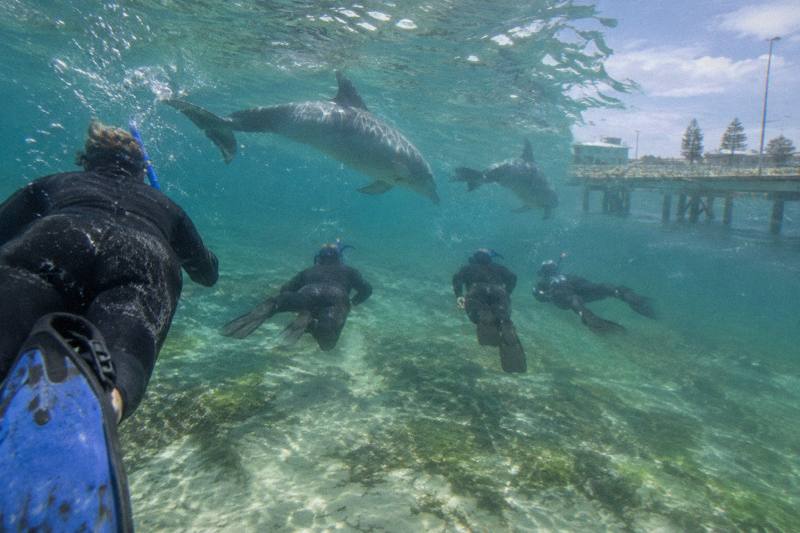
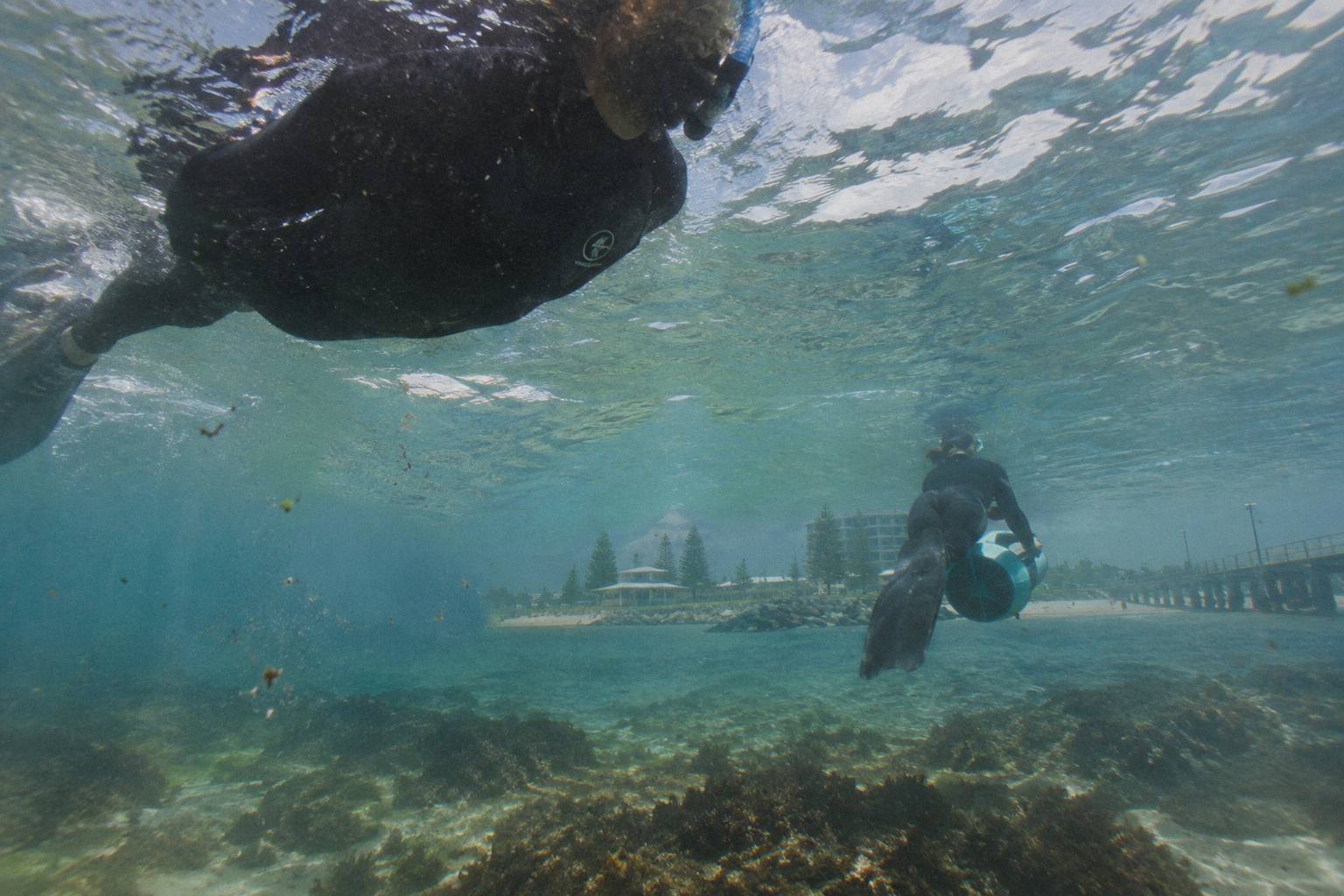
On the Rockingham Wild Dolphin Swim, the operator manages the encounter for you: guests enter the water in groups of up to 7, each led by a guide on an aqua scooter who tows the group while you hold the guide's belt and stay at the surface, with rules against touching or feeding the dolphins.
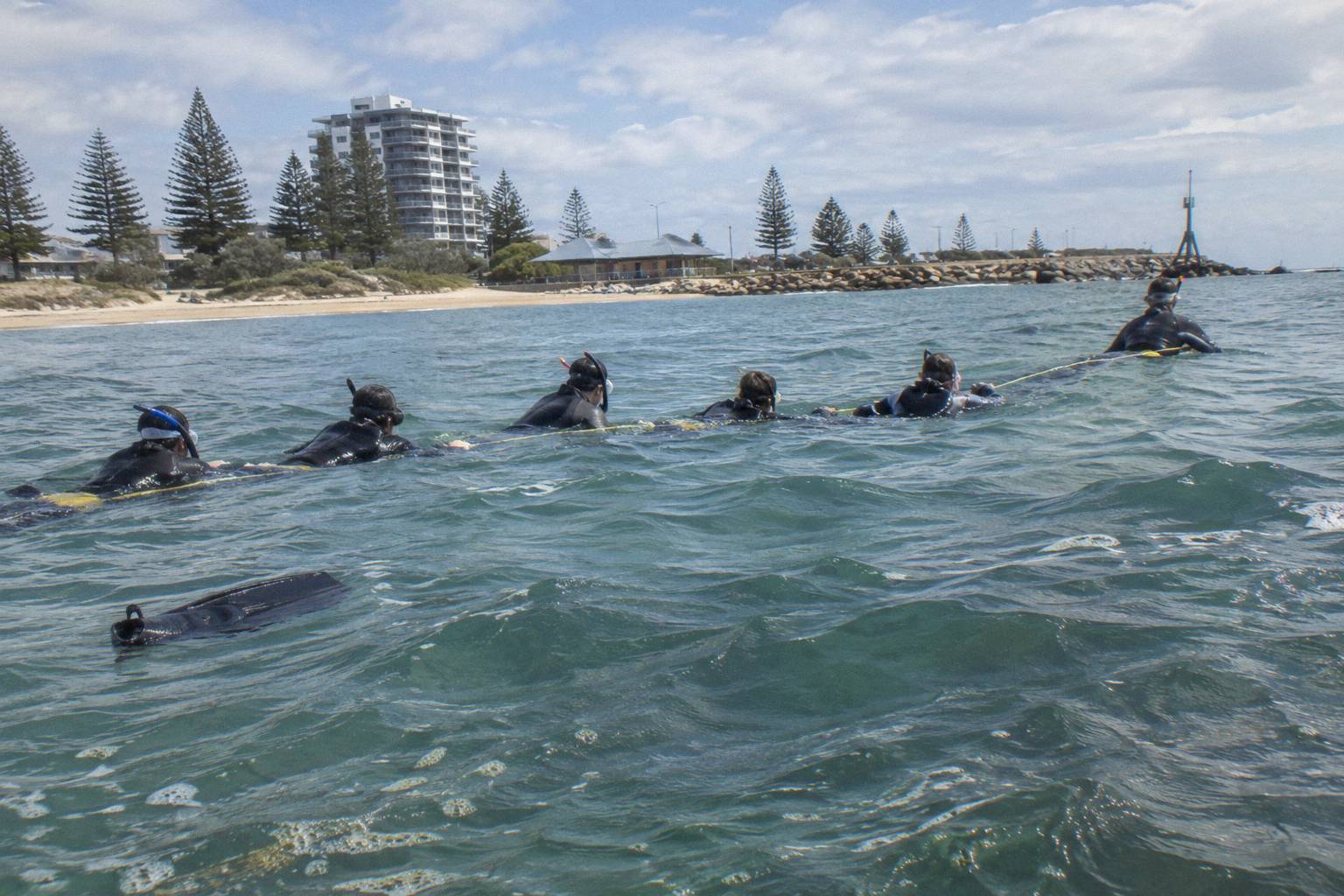
The mechanics matter to the question, since they answer it physically before you ever have to answer it legally. You are not swimming free among dolphins, choosing your own line and distance. You are clipped, in effect, to a guide: the operator says guests hold the guide's belt and are towed at the surface while the guide on the aqua scooter manages speed, direction and positioning relative to the animals. A dolphin that swings toward the group meets a formation the guides control, and the guides manage the approach, and a commercial swim sits outside the public separation distances only where a licence authorises it. Your job as a guest narrows to three things: hold on, stay at the surface, and keep your hands off the animals. More of these guides are collected on Rockingham Swim With Dolphins.
The operator's swim page describes the rest of the framework. Guests zip into a 4 mm full-length wetsuit, described as very buoyant, with a mask, snorkel and an introductory snorkel lesson before anything happens in deep water. The operator says no previous snorkelling experience is required and nervous swimmers are accepted. Children's wetsuits come in small sizes, but the swim is not recommended for children 6 years or younger, and the operator is blunt about buoyancy aids: if a child needs one, the cruise is, in the operator's words, "definitely not suitable". Parents supervise their own children in the water, and children are not left on board unsupervised. Crew wear Shark Shields, and the operator says people with pacemakers and people who are pregnant must not use the Shark Shield and should avoid swimming near anyone using one.
If you are weighing whether a guided format suits you, the tour page for the Rockingham Wild Dolphin Swim sets out the listed duration, the meeting point at Val Street Jetty and the cancellation window, and you can check availability for your dates. The season runs September to early June, the operator says, and cruises have no fixed finish time, which lets the crew keep searching. Medical suitability is a question for your doctor and a note to the operator when you book, not something to decide from a web page.
The Bunbury Wild Dolphin Swim answers the same question with a similar structure under a different operator, the Dolphin Discovery Centre. It runs about 4 hours in Koombana Bay, November to April, with a listed daily 7:45 am start, and the operator's direct page sets swimmers at a minimum of 8 and a maximum of 20, with 8 the minimum needed to run. Children swimming must be 8 or over and accompanied by a swimming adult, and the operator asks for independent, confident swimmers. The booking page includes wetsuits in all sizes, floating devices, water and a snack, with hot showers after. Its price is on the booking page rather than stated here, and its rating of 4.7 comes from a small pool of 24 reviews.
The two swims differ in one respect worth naming for a nervous swimmer. At Rockingham the group holds a belt and is towed, which removes the need to swim any distance under your own power during the encounter. At Bunbury the operator's framing centres on confident, independent swimmers in the water with guides. Neither is a free swim among dolphins, and on neither does a guest manage the approach. Choosing between them is a matter of water confidence and season, and the guide comparing the Rockingham and Bunbury wild dolphin swims works through that trade directly.
What To Do From The Boat On A Watching Cruise
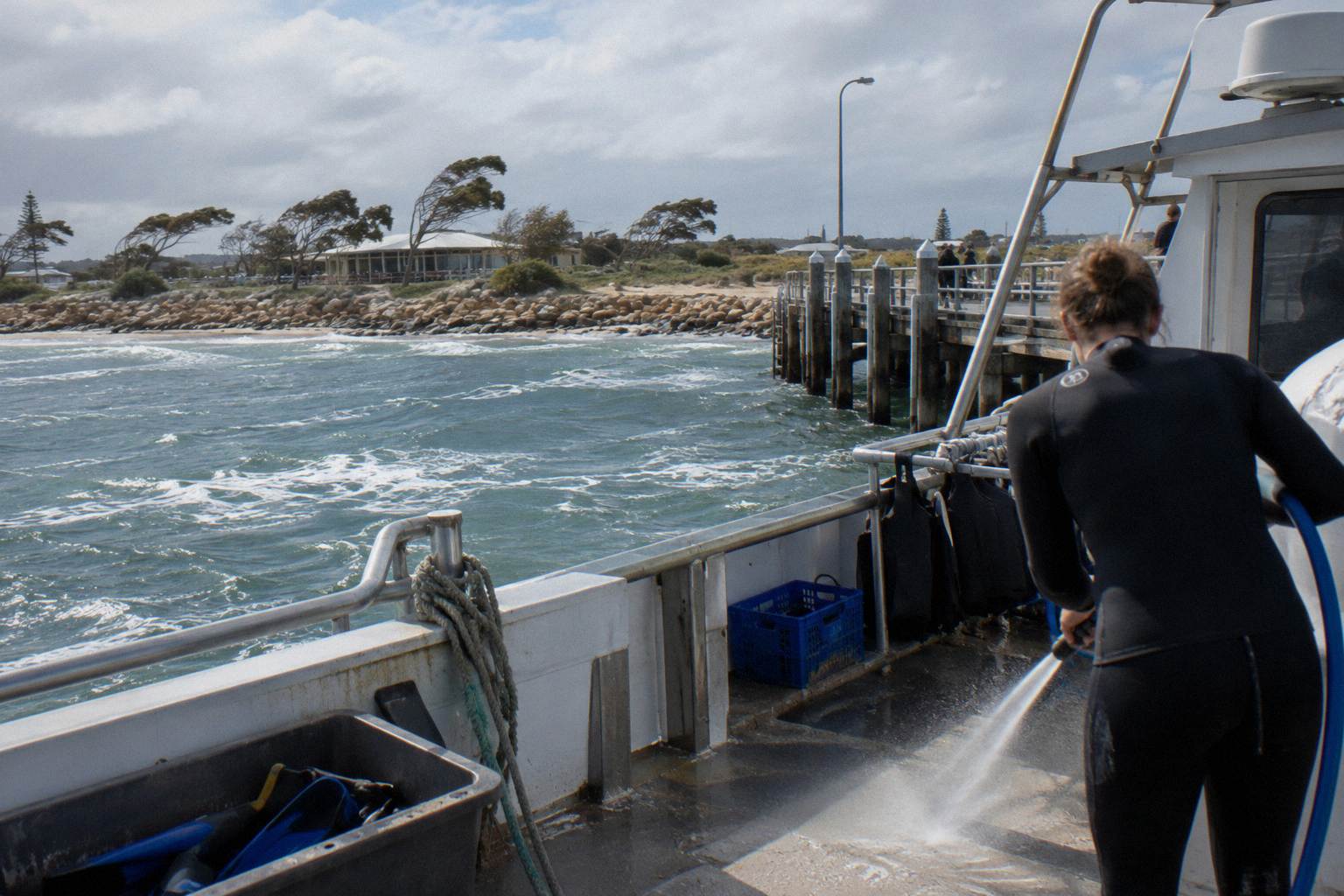
On a watching cruise you never enter the water, so the swimmer's 50 metre rule never applies to you personally, but the vessel's 100 metre rule and the 6 knot retreat requirement in regulation 114 do, and the crew manages both. The three cruise tours are watching only: no swimmer enters the water on any of them, and the law's instructions to a swimmer simply do not arise.
Your obligations from a deck are passive. Do not lean out to touch a dolphin that surfaces beside the hull, since regulation 118's AUD 10,000 touch penalty applies to a person on a vessel as much as to a person in the water. Do not throw anything, and never food, since feeding is prohibited to the public. Beyond that, the vessel's distances are the skipper's responsibility, and a dolphin that chooses to bow-ride or surface close to the boat is interacting with the vessel on its own initiative while the crew hold their course. The Shoalwater Islands Marine Park page from the parks service describes the setting for the Shoalwater cruises, with wildlife cruises and sea lions on Seal Island, and it confirms the park is free to enter.
The five tours sort cleanly by what the law lets happen, and the split is worth seeing in one place before the per-tour detail follows.
| Tour | Water Access | Season Or Duration | Listed Price |
|---|---|---|---|
| Rockingham Wild Dolphin Swim | In the water with guides | September to early June, about 3 to 6 hours | from A$249.72 |
| Bunbury Wild Dolphin Swim | In the water with guides | November to April, about 4 hours | Not stated |
| Penguin Island And Dolphin Cruise | Watching only | about 1 hour 30 minutes | Not stated |
| Mandurah Dolphin Cruise | Watching only | 75 minutes | from A$47 |
| Mandurah Giants And Dolphin Cruise | Watching only | 2 hours | from A$85 |
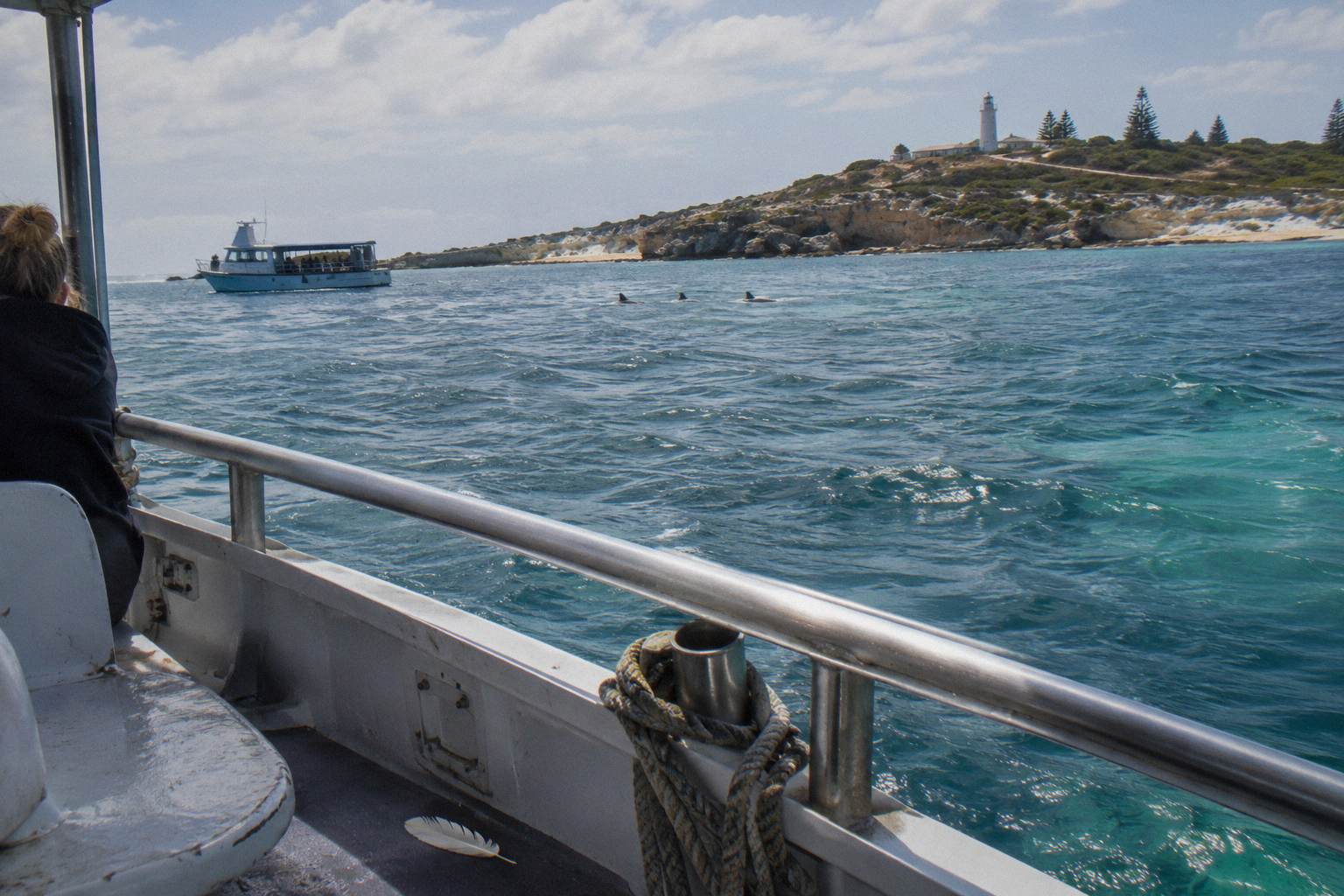
The three cruises carry different detail on their booking pages, and each statement belongs to its own tour alone. The Penguin Island And Dolphin Cruise runs about 1 hour 30 minutes, watching only, meeting at the operator base at 153 Arcadia Drive, Shoalwater, with price, rating and cancellation terms not stated. The Mandurah Dolphin Cruise, rated 4.5 across 1,090 reviews and listed from A$47 per person for 75 minutes, carries live skipper commentary, free parking near the departure point, hotel pickup expressly not included, and free cancellation up to 24 hours. Its booking page describes a dolphin come-again term in its own words: dolphins are wild and choose when and how they interact, so sightings cannot be promised, and if none are sighted you can return free until you see them, rebooking within 12 months, 3 years if you live overseas, subject to availability and for guests on the original booking only.
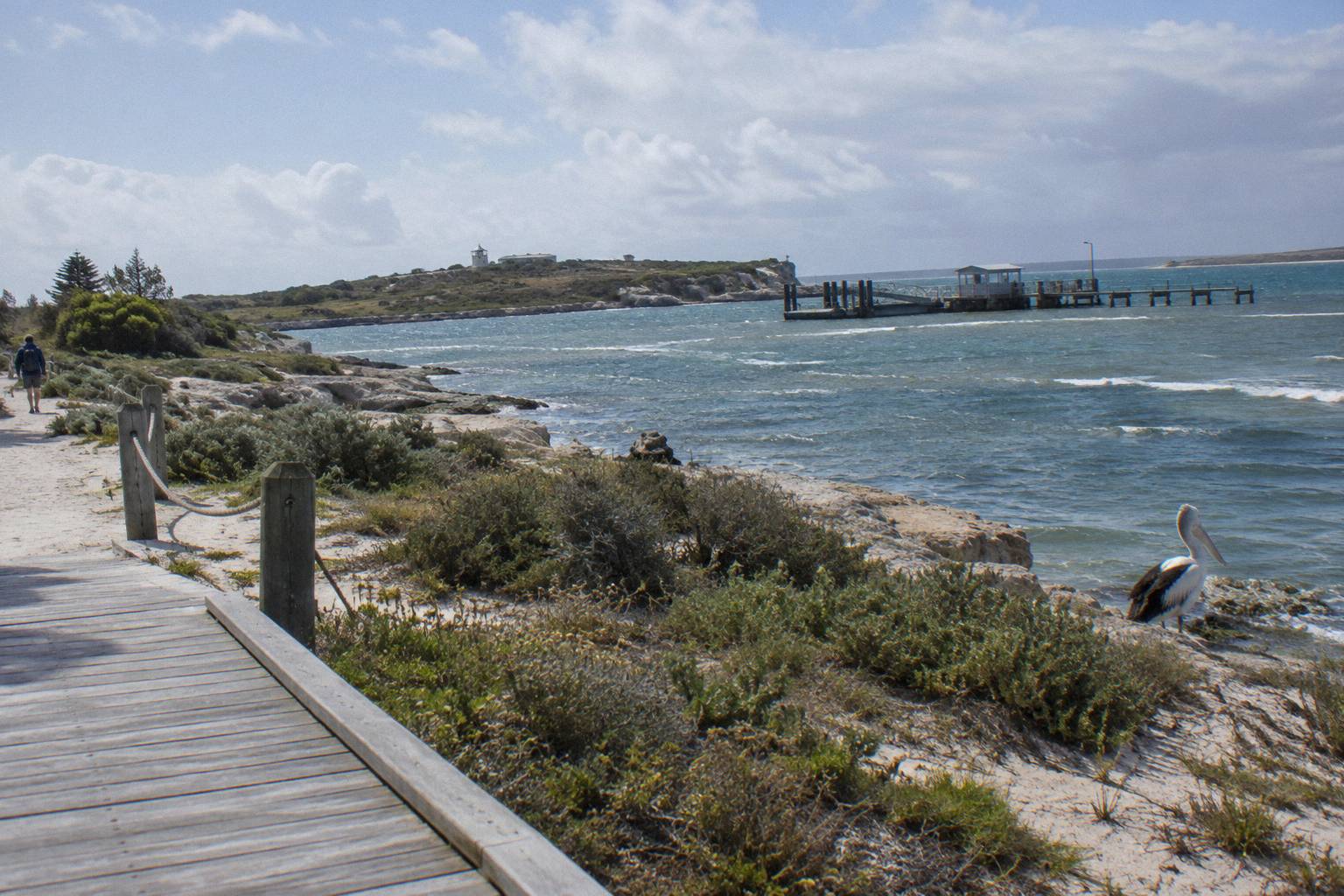
The Mandurah Giants And Dolphin Cruise, rated 4.8 across 87 reviews and listed from A$85 per person for 2 hours, adds a SuperCat with an open front and upper and lower decks, live commentary, drinks and snacks for sale on board, and its booking page states that if dolphins are not sighted you can join again for free. Both Mandurah terms are those tours' own booking-page statements and travel with those tours alone; neither attaches to a swim tour, and the swims' own operator terms apply only to bookings made direct with the operators. For a reader who wants the in-water encounter eventually but is starting with a cruise, the piece on watching Rockingham dolphins from the shore or a boat compares the perspectives.
A watching cruise is also the right answer for part of a group that cannot or should not enter the water. The mixed-party scenarios are common: one confident swimmer, one hesitant partner, a family with a child under the operator's age guidance. The swims handle accompanying non-swimmers differently and not always identically, so the question to ask any operator before booking is what a non-swimming companion may do, on the boat, at what cost, and under whose supervision. Where an operator has not stated a spectator arrangement, ask directly, since a gap in a description is a question for the operator rather than an assumption.
The Giants cruise earns its place in the same family for a different reason: the longer two-hour format and the open-front SuperCat give a watching day more room to breathe, and its booking page names a fourth giant sculpture seen from the water. That detail belongs to this tour alone, as does its snacks-for-sale arrangement and its fish-and-chip lunch, which is not included and is added by contacting the operator. Neither Mandurah cruise includes hotel pickup, and the shorter cruise states that plainly on its own booking page.
What Trips People Up When A Dolphin Comes Close
The common errors are reaching out at the moment of closest approach, treating a dolphin's curiosity as permission to close the gap yourself, following or circling an animal that has turned away, and assuming a tour boat's conduct shows what a private swimmer may do. Each one turns a lawful encounter into an offence, and the first three are single-second decisions that are hard to undo. The touch penalty alone is AUD 10,000.
The hand is the big one. A dolphin surfacing within arm's length is a brief event, and the instinct to reach is exactly as brief. Rehearse the response before you get in: hands low or behind the back, body still, and let the animal pass through its own chosen distance. If you are on a guided swim the guides will have said it; if you are snorkelling independently the rehearsal is yours to do.
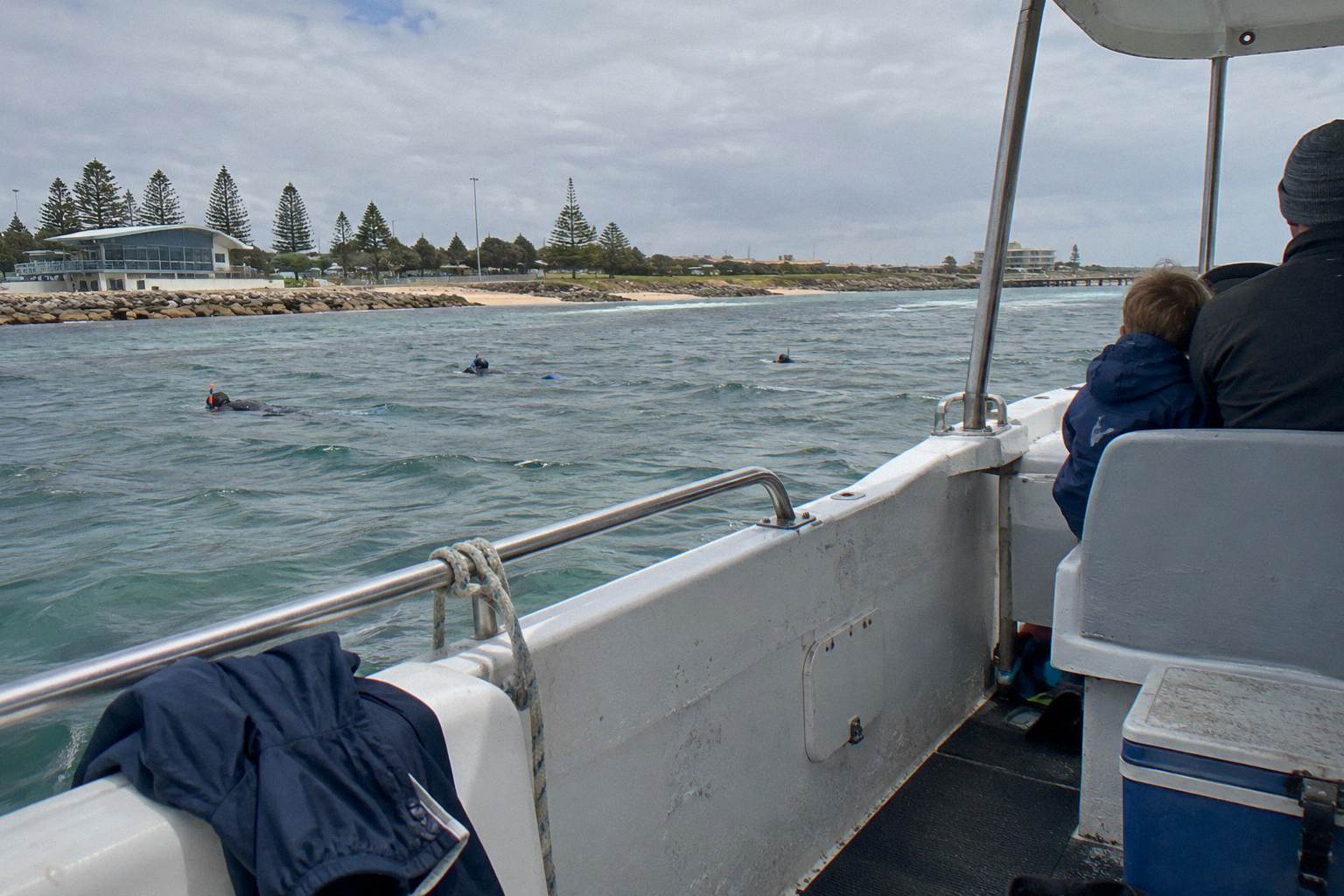
The second error is subtler. A dolphin that approaches you has not granted you an approach in return. Regulation 114's retreat duty exists precisely for this case, and the swimmer who turns to follow an animal that has just circled them has converted the dolphin's approach into their own, which is the regulation 113 offence with a AUD 5,000 penalty. The same applies to a group: a pod moving along a reef line is not an invitation to swim out and intercept it, since interception is obstruction under regulation 120 even at a respectful distance.
The third is borrowed permission. Watching a guided swim boat position its groups, or a cruise skipper hold station near a pod, tells you nothing about your own entitlement. The licence covers the operator's activity, regulation 112 exempts that activity from the distance rules, and no exemption follows you home. Independent swimmers, kayakers, drone pilots and private boats all operate under the full public distances: 50 metres in the water, 100 metres for a vessel, 60 metres for a drone.
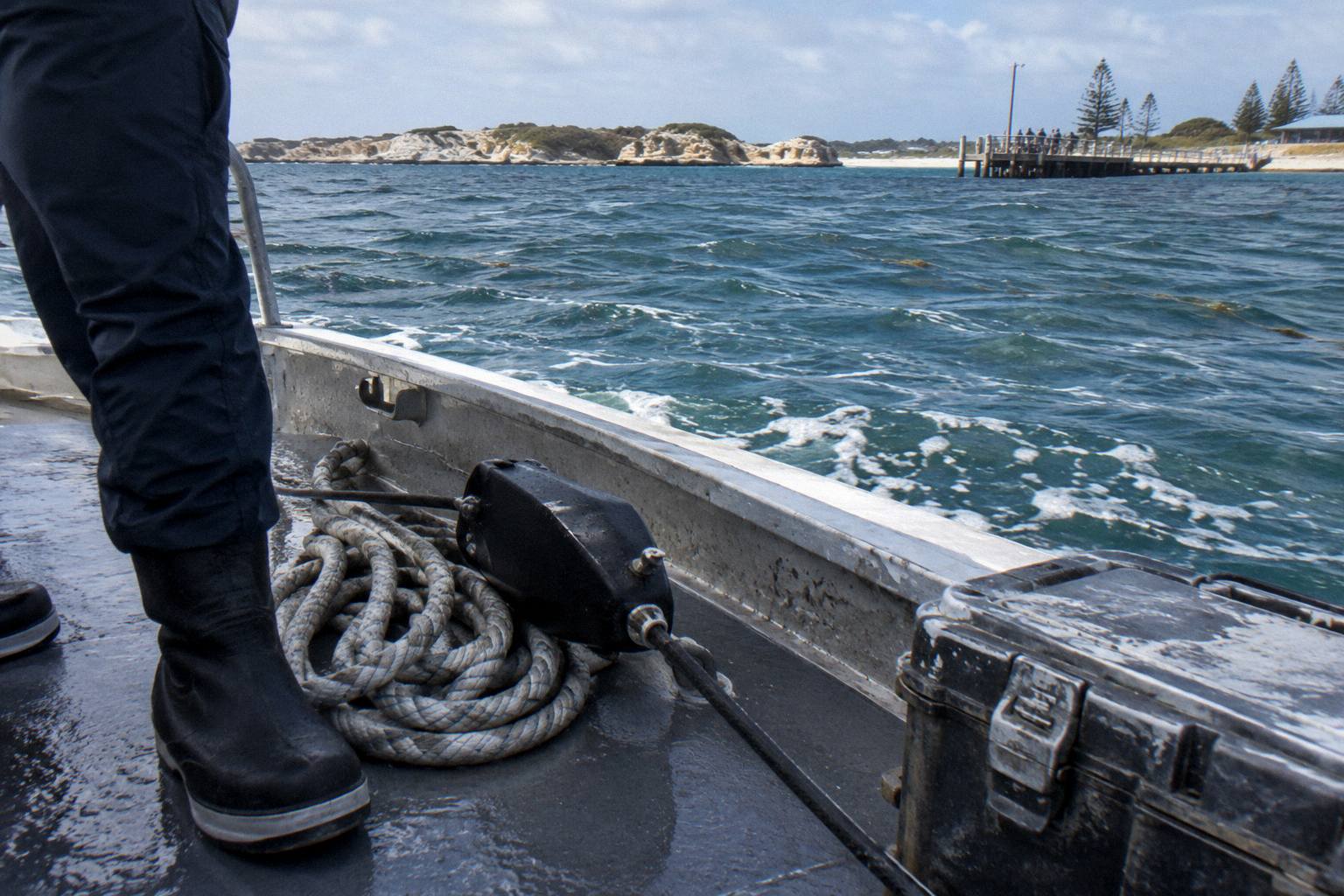
Before any in-water day, a short checklist of questions to the operator covers the rest: what the guide ratio is in the water, what a hesitant swimmer should say and when, what the operator's own no-show term is and through which booking channel it applies, and what a non-swimming companion may do. Operators state these things differently and a comparison across answers is worth more than any single description.
Common Questions About A Dolphin Swimming Up To You
What To Do If A Dolphin Swims Up To You?
Move away as soon as reasonably possible, do not touch it or reach toward it, do not feed it, and do not block or follow its path. The instruction comes from regulation 114 of the WA Biodiversity Conservation Regulations 2018, with a AUD 10,000 fine for touching under regulation 118 and AUD 5,000 for obstruction under regulation 120.
Can You Touch A Wild Dolphin If It Comes To You?
No. Touching or attempting to touch any marine fauna carries a AUD 10,000 fine, and attempt alone is enough for the offence. The rule applies whether you are in the water or leaning from a vessel, and a close approach by the dolphin does not change it. The companion piece on whether you can touch wild dolphins when swimming covers the detail.
Does The 50 M Rule Apply On A Guided Dolphin Swim?
No. Regulation 112 exempts activities authorised under a licence from the separation distances, and a paid dolphin swim operates under a fauna disturbing commercial interaction licence as defined in regulation 30. The guides, not the guests, manage positioning, and the operator's own no-touch and no-feed rules still bind every swimmer.
What If A Dolphin Approaches The Boat?
The vessel's rule is 100 metres, and under regulation 114 a vessel must go to neutral or switch off, or move away at no more than 6 knots, when a dolphin comes closer. Passengers must not touch, feed or throw anything. A dolphin surfacing beside a cruise boat is interacting on its own initiative while the crew manage the vessel.
Is Swimming Toward A Dolphin Illegal In WA?
Yes. Getting closer than the separation distance carries a AUD 5,000 fine for a person under regulation 113, and the distance for a swimmer is 50 metres. A dolphin that approaches you does not give you permission to approach it back, and following or circling can also count as obstruction under regulation 120.
Which Tours Let You Be In The Water With Dolphins?
Two of the five tours covered here: the Rockingham Wild Dolphin Swim and the Bunbury Wild Dolphin Swim. The Penguin Island And Dolphin Cruise, the Mandurah Dolphin Cruise and the Mandurah Giants And Dolphin Cruise are watching only, and no swimmer enters the water on any of them.