How Likely Is Seasickness On A Dolphin Swim Boat Trip?
A plain answer to how likely seasickness is on a dolphin swim or cruise from Rockingham, Mandurah and Bunbury, with what each trip involves and what to ask the operator before booking.
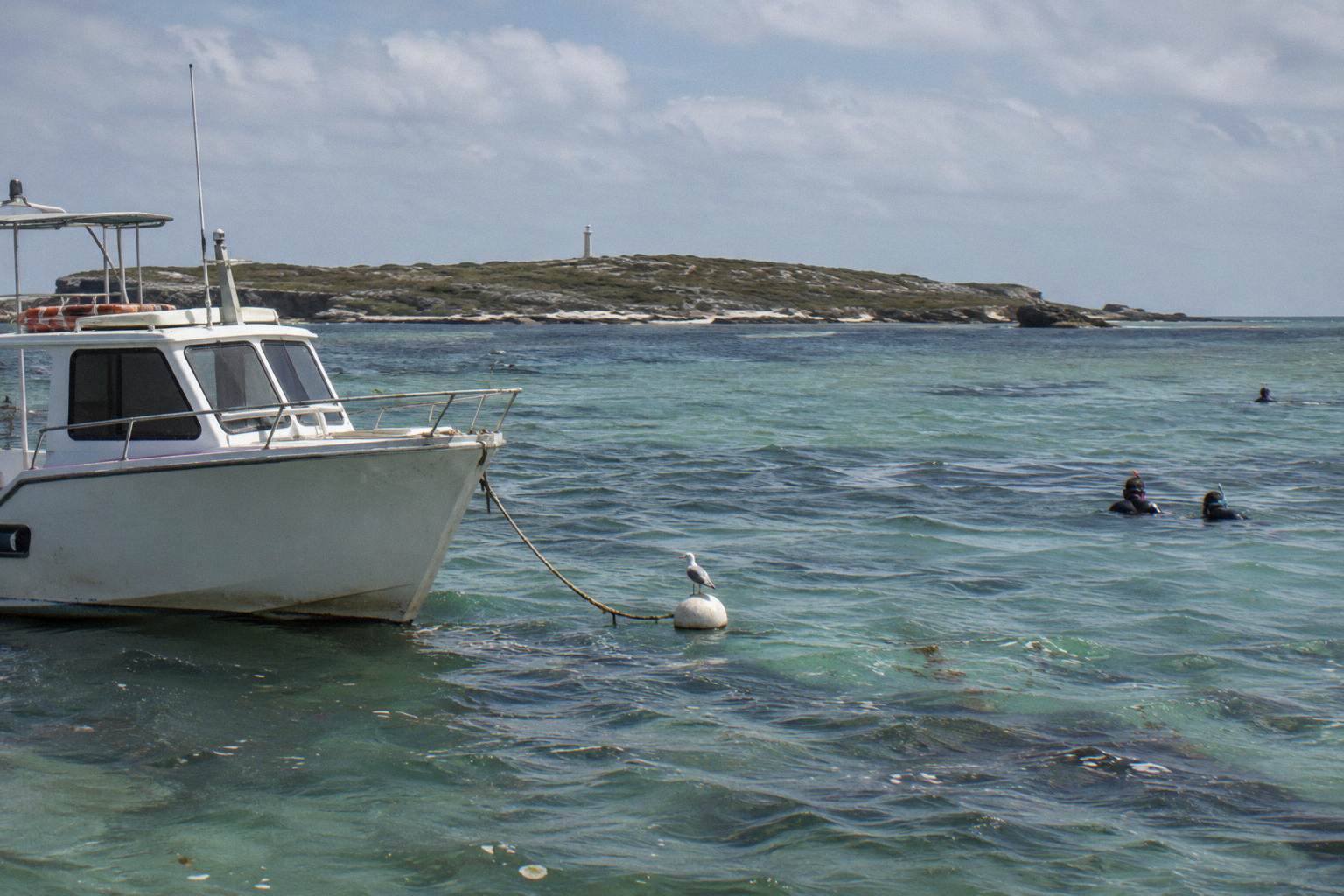
No figure exists for it. None of the five dolphin trips around Rockingham, Mandurah and Bunbury publishes a seasickness rate, a sea-state record or a complaint tally, and any number quoted for "how likely" it is would be invented. What the operators and booking pages do state is the shape of each day: the Rockingham Wild Dolphin Swim runs about 3 to 6 hours with in-water time in groups of up to 7, the Mandurah Dolphin Cruise runs 75 minutes, and the Mandurah Giants And Dolphin Cruise runs 2 hours. Those facts, plus the boat type where stated, are the basis for a decision.
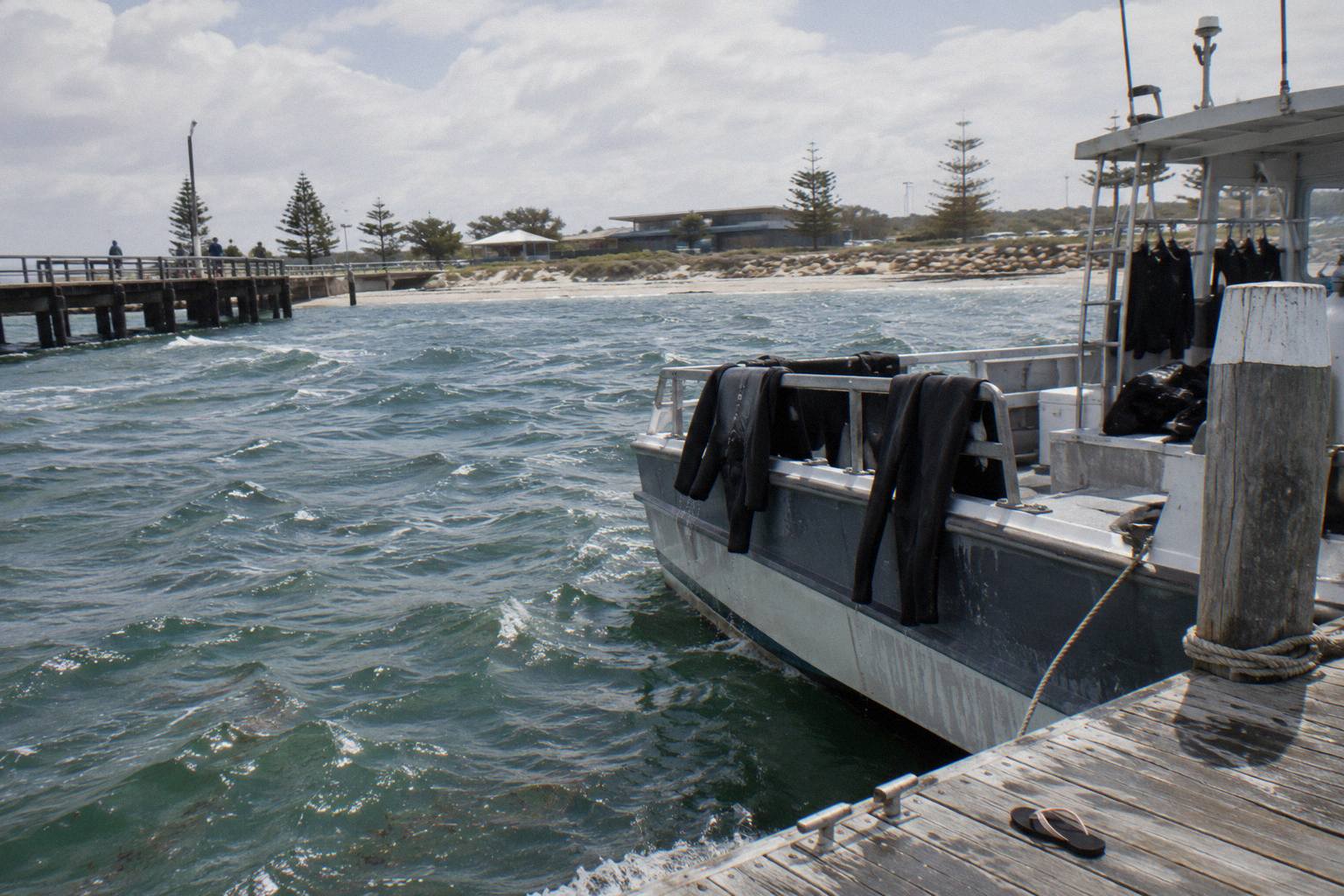
A dolphin swim boat trip is really two different experiences stitched into one booking. There is the transit: the boat ride out, the searching, the waiting while the crew look for dolphins. Then there is the interaction itself, which on the two swims that exist means being in the water holding a guide's belt rather than sitting on a moving deck. A person who feels unwell on boats is often really reacting to the first half, and the first half varies enormously between these five products.
The practical question is not "what percentage of guests get seasick", a number nobody has. It is "how long am I on a moving boat, on what kind of boat, and can I get off the motion when I have had enough". Those answers are stated for each trip, tour by tour, and they are set out below.
Two places in Western Australia offer a swim with wild dolphins through the products covered here: Rockingham, operated by Perth Wildlife Encounters, and Bunbury, operated by the Dolphin Discovery Centre. Mandurah's two cruises, and the Shoalwater cruise, are watching trips from a boat. That distinction alone changes the motion exposure a great deal, because a swimmer floating at the surface experiences the sea differently from a passenger seated on a hull. Whether that difference helps any individual is something to raise with a doctor or the operator, not something a page can promise.
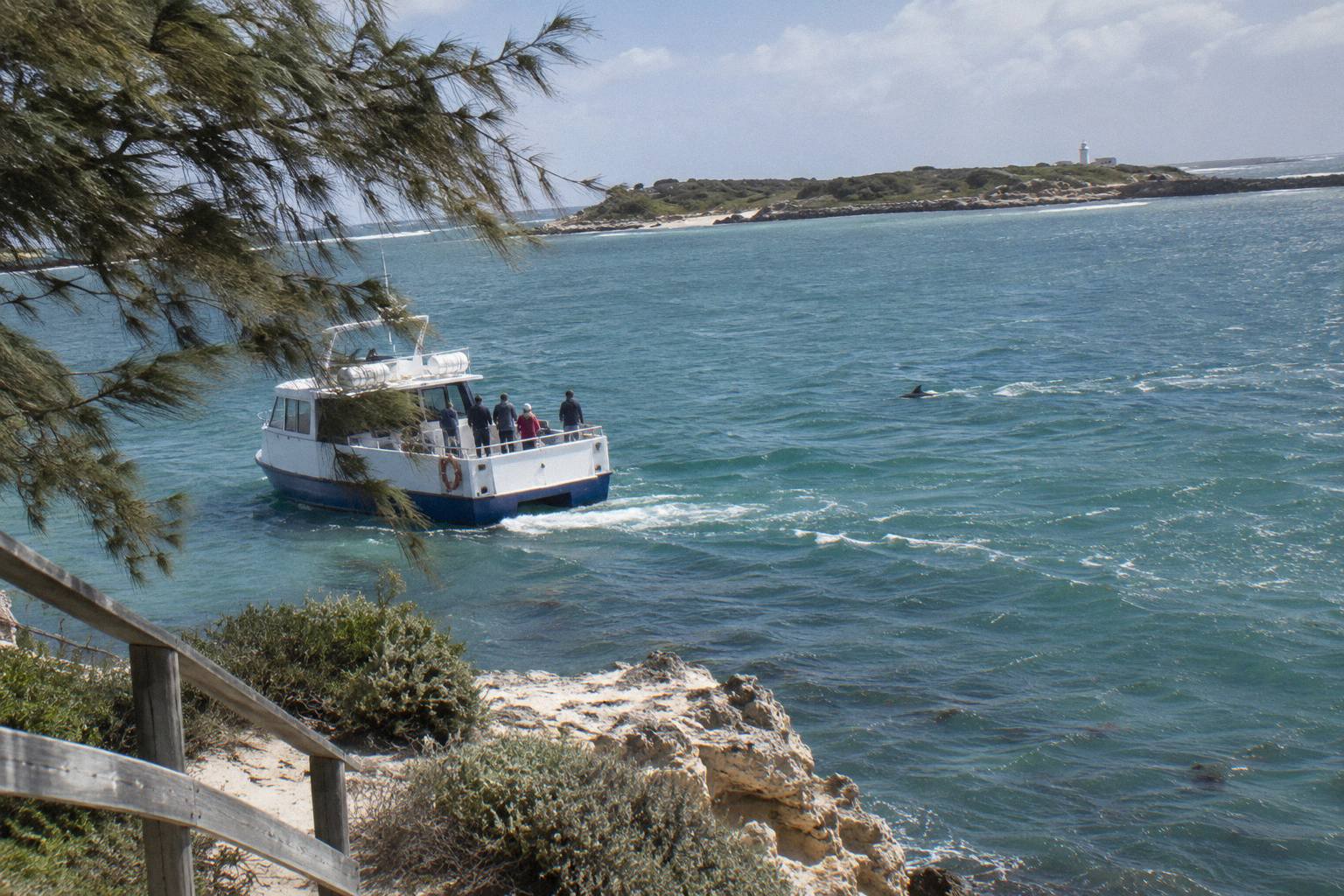
The three trips above span the whole range of exposure. The Rockingham swim is the long day, the Bunbury swim is a four-hour alternative in a different bay, and the Penguin Island And Dolphin Cruise is a 1 hour 30 minute watching trip from a Shoalwater base. Anyone weighing the seasickness question should start by matching the format to their own history on boats, then ask the operator the specific questions listed further down.
Why The Length Of The Day Matters More Than Anything Else
The length of the day matters more than anything else because duration is the one stated fact that bears directly on motion exposure, and the spread is enormous: trips run anywhere from 75 minutes to about 6 hours, a difference that shapes the entire experience. The Mandurah Dolphin Cruise runs 75 minutes, with the booking page also describing the cruise and views as 1 hour to 1 hour 15 minutes. The Mandurah Giants And Dolphin Cruise runs 2 hours, the Penguin Island And Dolphin Cruise about 1 hour 30 minutes, the Bunbury Wild Dolphin Swim about 4 hours, and the Rockingham Wild Dolphin Swim about 3 to 6 hours depending on dolphin sightings. Nobody states a sea-state figure for any of them.
That spread matters because a person prone to motion sickness is not choosing between five versions of the same motion. A 75-minute cruise is a short, bounded exposure, closer to a ferry ride than a day at sea. The Rockingham swim is the opposite end: the operator says the cruise has no fixed finish time so the crew can keep searching, and the booking page gives the 3 to 6 hour range precisely because sightings decide the day. A swimmer there commits to a window that could double in length if the dolphins take finding.
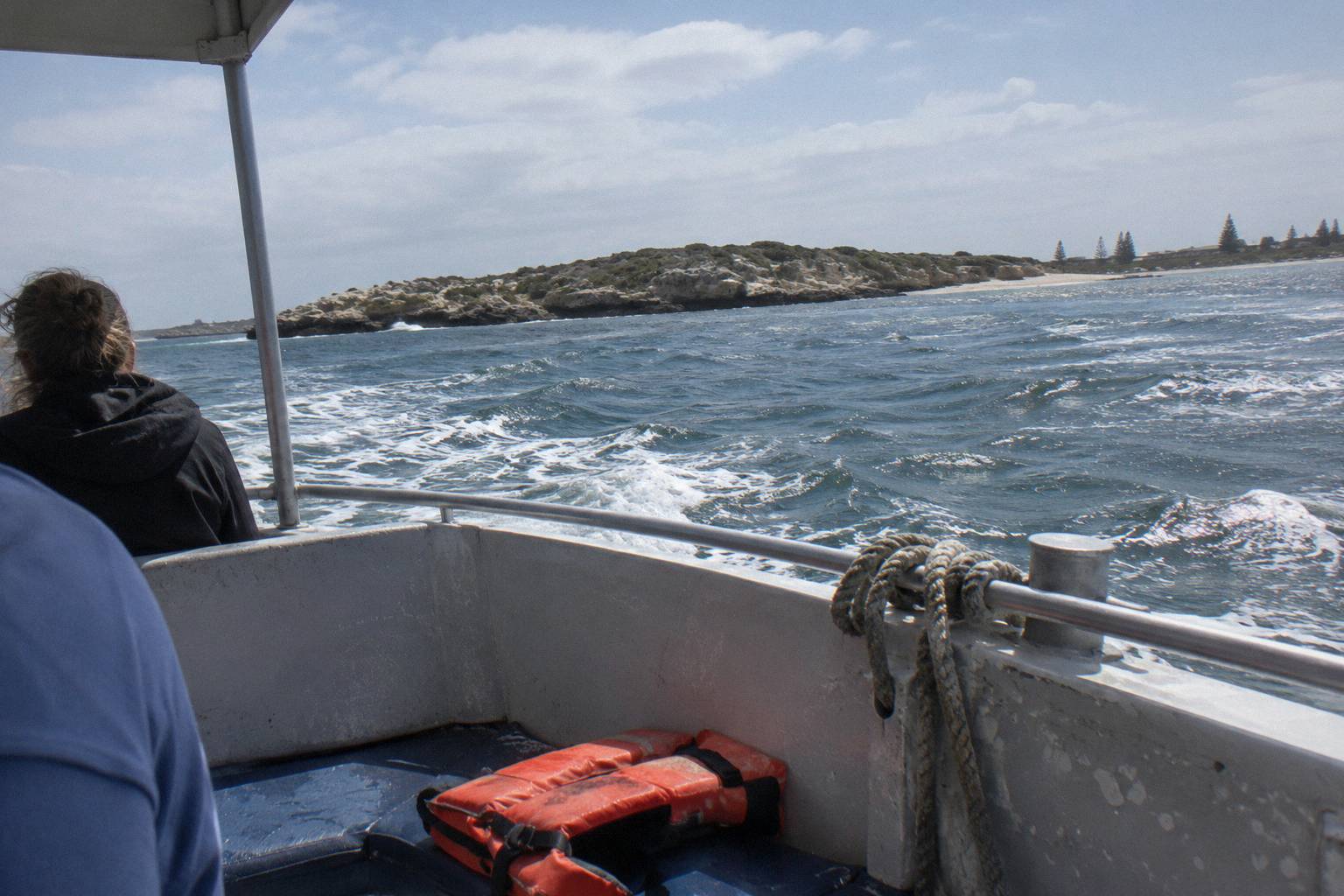
The middle options split the difference. The Bunbury Wild Dolphin Swim runs about 4 hours with a daily 7:45 am start stated by the operator, and its swim happens inside Koombana Bay rather than on an open coastline, a fact the Dolphin Discovery Centre states about its own operation. The Penguin Island And Dolphin Cruise keeps a passenger on the water for about 1 hour 30 minutes and meets at the operator base, 153 Arcadia Drive, Shoalwater. Neither the Rockingham nor the Bunbury operator states a sea condition for its bay, so the comparison runs on time and format alone.
| Trip | Stated duration | Format | Where it starts |
|---|---|---|---|
| Rockingham Wild Dolphin Swim | about 3 to 6 hours, no fixed finish time (operator and booking page) | swim, groups of up to 7 behind a guide's scooter | Val Street Jetty, Rockingham |
| Bunbury Wild Dolphin Swim | about 4 hours (operator) | swim, minimum 8 and maximum 20 swimmers (operator) | Dolphin Discovery Centre, Anchorage Cove, Koombana Bay |
| Penguin Island And Dolphin Cruise | about 1 hour 30 minutes | watching only | operator base, 153 Arcadia Drive, Shoalwater |
| Mandurah Dolphin Cruise | 75 minutes | watching only | 73 Mandurah Terrace |
| Mandurah Giants And Dolphin Cruise | 2 hours | watching only | Mandurah Terrace |
A useful planning read of that table: the two swims carry the longest stated commitments, and the three cruises carry the shortest. That is not a claim that shorter trips are gentler, since no sea-state data is stated for any of them. It is simply that the ceiling on exposure is a real, stated number for each product, and a person who knows their own limit on boats can compare the ceilings directly. Anyone uncertain should ask the operator what the trip does if conditions on the day are poor, a question the checklist below covers.
What Being In The Water Actually Involves On The Two Swims
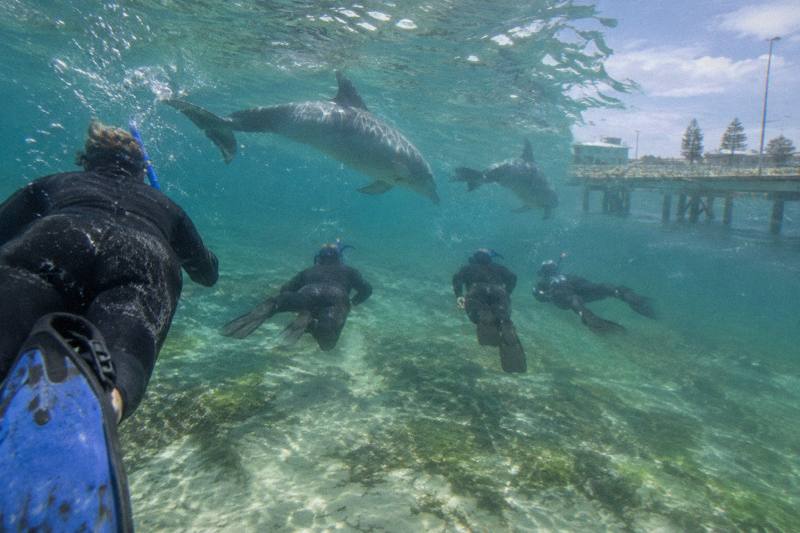
On both swims, the in-water portion is a surface swim behind a guide, not a dive, so you stay at the surface the whole time. For the dolphin encounter, the operator describes a tow among the dolphins, with guests holding on while remaining at the surface rather than diving down beneath the animals. Perth Wildlife Encounters, the Rockingham operator, says that once dolphins are located, guests zip up wetsuits, put on mask and snorkel and go to the swim deck, then enter in small groups of up to 7, each led by a guide on an aqua scooter who tows the group among the dolphins while guests hold the guide's belt. A second guide on a solo scooter loops and spins the dolphins close to the group. The operator says no touching and no feeding.
For someone weighing motion sickness, the relevant part of that description is what the body is doing: floating at the surface, holding a belt, moved by the sea rather than by a hull. The operator states that no previous snorkelling experience is required and that nervous swimmers are accepted, and the 4 mm full-length wetsuit is described as one that "keeps you very buoyant". None of that is a statement about nausea in either direction, and neither operator says anything of the kind. What it does establish is that a large share of the Rockingham day is not spent seated on a deck, but split between the boat's search phase and the water itself.
The Rockingham Wild Dolphin Swim is the trip where this split matters most, simply because its stated window is the longest. Before the swim there is a signed waiver, an introductory snorkel lesson and the cruise out; after it, the crew film every swim and the boat may keep searching. Anyone who has felt unwell on longer boat rides should weigh that whole arc, not just the swim minutes, and raise it with the operator when booking: Check availability. The booking page shows free cancellation up to 24 hours before the start, which gives a defined exit if plans change.
Bunbury's swim is structured differently on the same principle. The Dolphin Discovery Centre says its swim is a 4-hour guided experience in Koombana Bay, with wetsuit, mask, snorkel, fins and a buoyancy vest if required, a snack, and hot showers after; children swimming must be 8 or over and accompanied by a swimming adult, and swimmers must be independent and confident in the water. Group sizes run from a minimum of 8 to a maximum of 20 swimmers and 4 observers, the operator's own figures. Again, nothing in those statements predicts how any stomach behaves, but they describe the physical reality of the day precisely enough to compare against personal experience on boats.
Where You Sit And What The Boat Is Like On The Watching Trips
Only one of the five watching tours, the Mandurah Giants And Dolphin Cruise, spells out what its boat is like: a SuperCat with a large open front, upper and lower decks, and large windows, so you can watch from the open front, from either deck, or behind glass. The other four booking pages say little about where you sit or what the vessel is like. For the Rockingham and Bunbury swims, no vessel name, size, capacity or speed is stated for the swim cruise itself, and none should be assumed. The Penguin Island And Dolphin Cruise and the Mandurah Dolphin Cruise describe their experiences through duration and inclusions rather than through the vessel.
The SuperCat description belongs to the Mandurah Giants And Dolphin Cruise alone and is a booking-page statement for that tour. What it offers a cautious passenger is choice within one boat: an open front, two deck levels and large windows, which in practice means somewhere to stand in moving air and somewhere to watch from inside. Whether that layout suits any individual is a matter for them and, if in doubt, for a question to the operator before booking. The same booking page says a fish-and-chip lunch is not included but can be added by contacting the operator, and that soft drinks and light snacks can be bought on board or brought your own. The full index of guides sits on Rockingham Swim With Dolphins.
The Mandurah Dolphin Cruise is described by its booking page through its commentary and duration rather than its vessel: live commentary from a skipper and local expert, guided dolphin spotting, and a 75-minute run, with the cruise and views also described as 1 hour to 1 hour 15 minutes. It states free parking close to the departure point and that hotel pickup and drop-off are not included. One requirement on that booking page bears on physical comfort: guests must be able to move around the vessel independently and safely, including boarding and steps and staying seated in small waves without crew help. Anyone for whom that is a stretch should raise it with the operator directly.
The short watching trips have a second feature worth naming: their come-again terms. The Mandurah Dolphin Cruise's booking page says dolphins are wild and choose when and how they interact, so sightings cannot be promised, and if none are sighted you can return free until you see them, claimed by contacting the operator with your booking reference, with rebooking within 12 months, 3 years for overseas residents, subject to availability and for guests on the original booking. The Giants cruise's page says if dolphins are not sighted you can join again for free, that tour only. Neither term is about seasickness, but both cap the downside of a short trip that does not deliver, which is a different risk a cautious booker weighs.
For a fuller comparison of the two formats, the guide on wild dolphin swims versus dolphin watching cruises breaks the decision down by what each product actually asks of you. The short version for the motion-sensitive: a cruise keeps you on a hull for a stated, short window, while a swim splits the day between a hull and the surface of the sea.
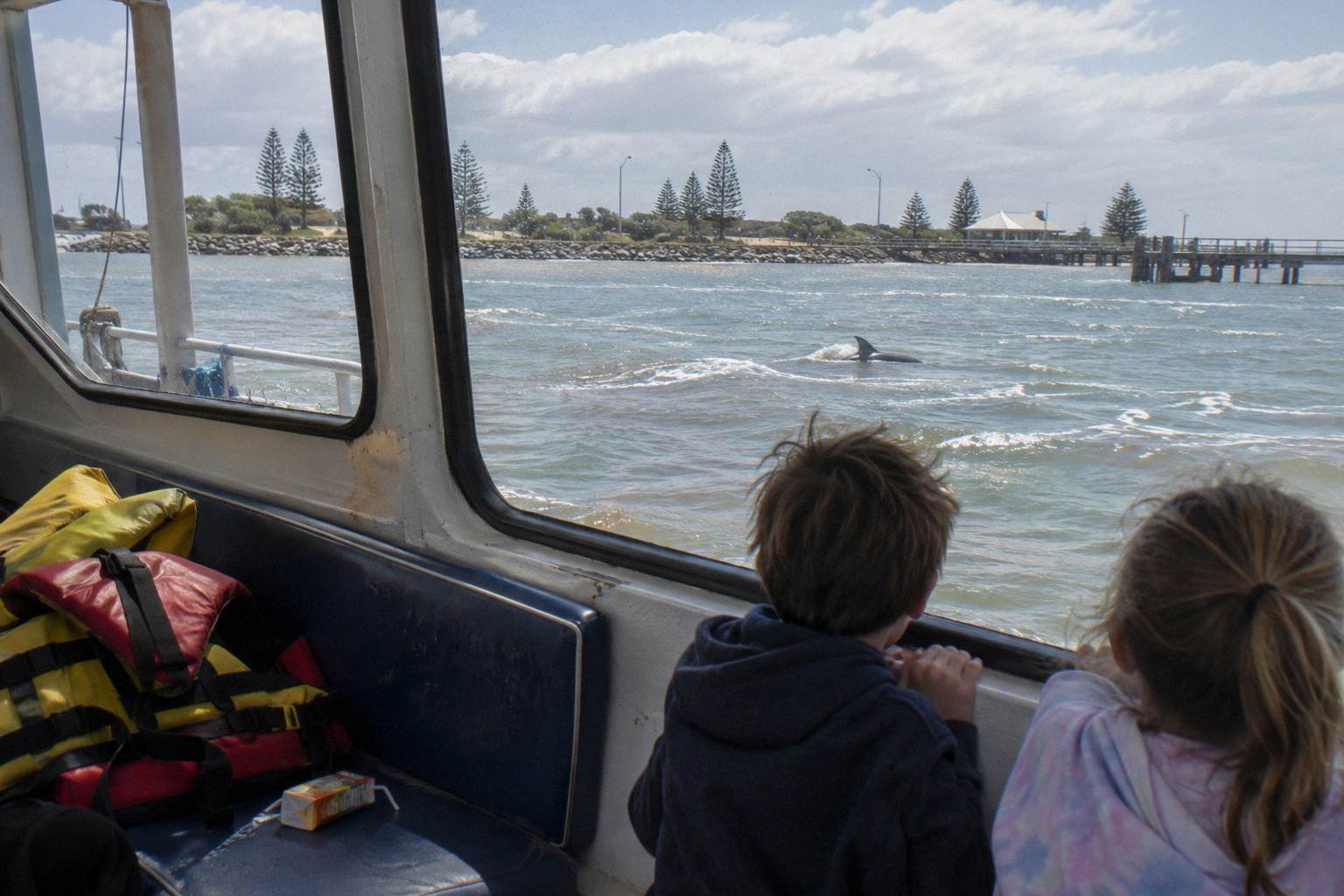
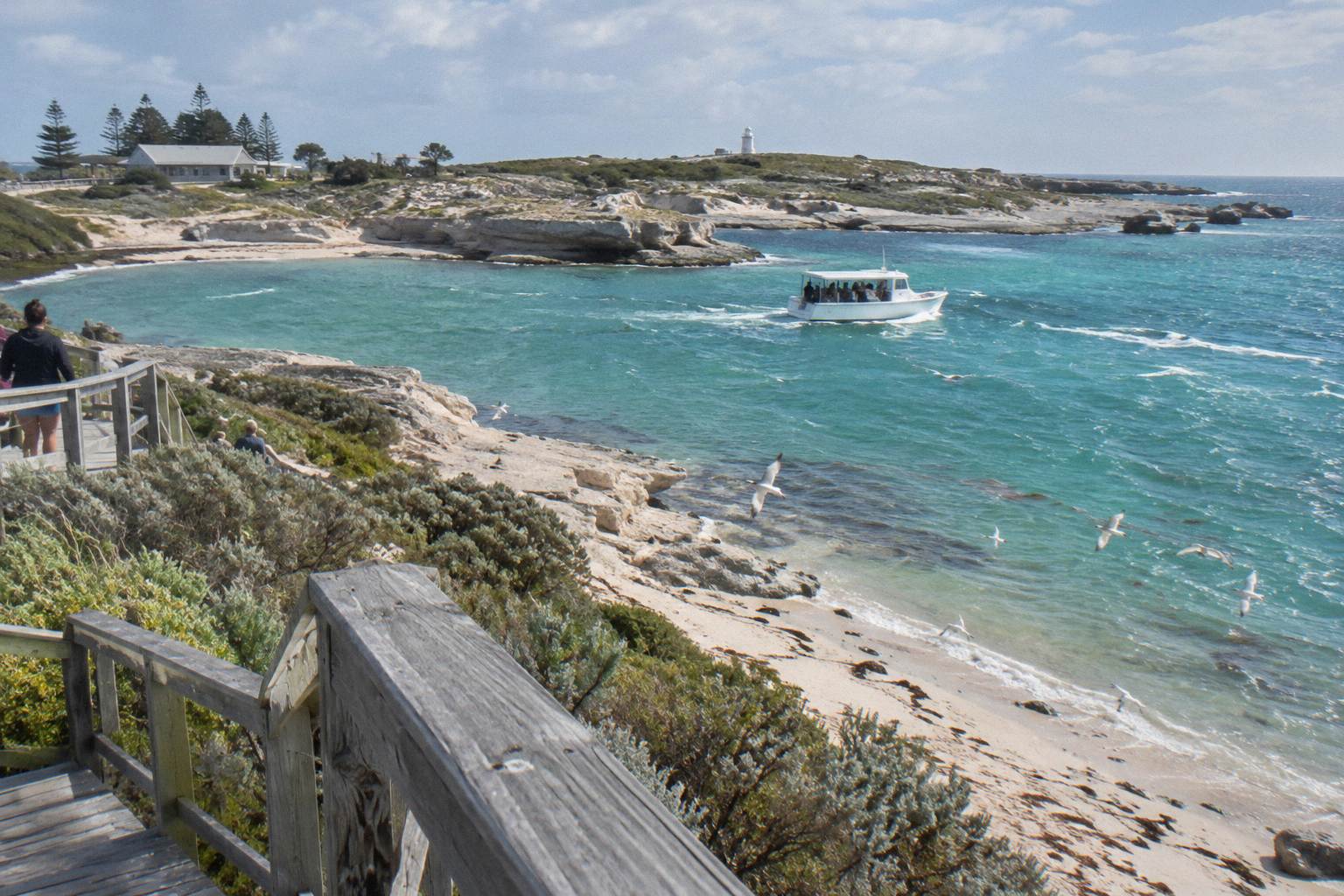
Does The Season Or The Water Temperature Change The Picture
Season and water temperature do not change the picture much: each operator states its own season, only two sources state a sea temperature, and neither of them says anything about sickness, so no available information connects the season or the water temperature to whether people get sick. The Rockingham operator's season runs September to early June, and its transfers from Perth CBD run late September to early June, for bookings made direct with the operator. The Bunbury operator's season runs November to April with a daily 7:45 am start. No operator states that any month is calmer, rougher, better or worse, and no such claim should be expected from a booking page either.
The temperature facts that do exist are narrow and worth having anyway. The Rockingham operator says the water runs "18 in September through to 25 degrees Celsius during the summer and autumn", its own statement about its own bay. Separately, seatemperature.org lists monthly averages for the Mandurah coast, the nearest listed place to Rockingham, ranging from 18.3 in September to 22.8 in March. Neither figure describes motion, swell or wind, and neither should be stretched to do so; they answer the wetsuit question, not the stomach question, and the guide on water temperature and wetsuits on a wild dolphin swim covers them in full.
| Month range | Water figures stated, by source |
|---|---|
| September | operator says 18 °C; seatemperature.org Mandurah coast average 18.3 °C |
| March | seatemperature.org Mandurah coast average 22.8 °C (its warmest listed month) |
| Summer and autumn | operator says up to 25 °C |
| Rockingham season | September to early June (operator) |
| Bunbury season | November to April, daily 7:45 am (operator) |
The only use of that table for the motion question is negative: nothing in it predicts sea state. It rules out a common shortcut, the idea that warmer months mean flatter water, because no operator or official page states that. Anyone trying to pick a date around conditions should ask the operators what they observe across their own seasons rather than assume a pattern, and the how-far-ahead-to-book guide on timing a wild dolphin swim booking handles the booking-window side of that question.
Who Should Think Twice, And What The Rules Say About Getting Close
Every tour sets its own rules for getting close, and those limits are physical and age-based rather than medical, so anyone who falls outside a particular tour's physical or age-based limits should think twice before booking and check the specific restrictions that apply to the tour they are considering. The Rockingham operator says the swim is not recommended for children 6 years or younger, that parents supervise their own children in the water, and that children are not left on board unsupervised; it also says buoyancy aids are not recommended and that if a parent feels a child needs one, the cruise is not suitable. The Bunbury operator requires swimmers to be 8 or over, accompanied by a swimming adult, with confident swimmers of 12 or over allowed to swim without one. No operator states a weight limit, a fitness test or a swimming-distance requirement, so none should be invented or assumed.
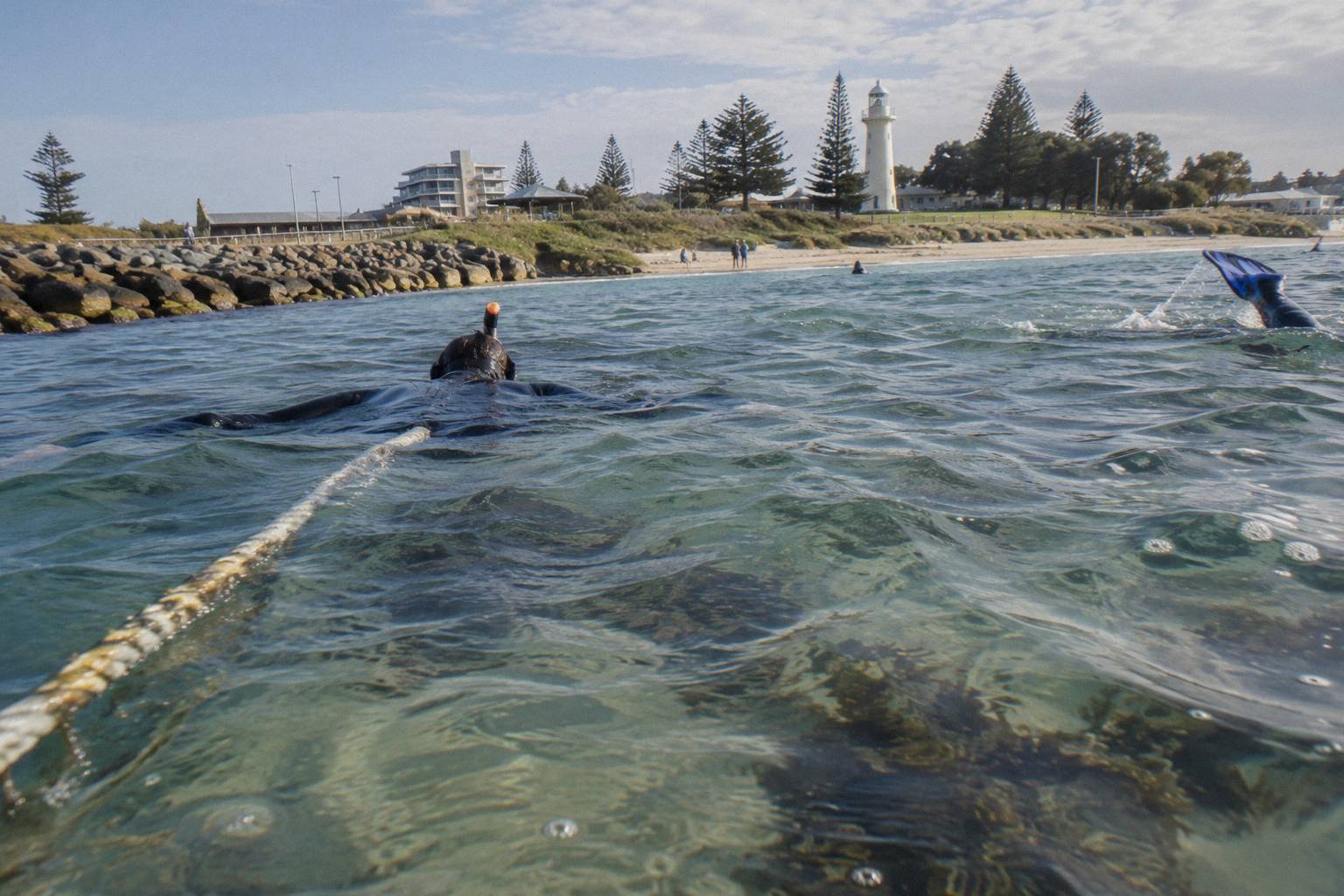
Motion sickness itself is not addressed by any operator restriction. The gap is filled the way gaps should be: by asking. A doctor knows a person's history; an operator knows its boat, its bay and its day. Between them they can answer what a page cannot. Two specific operator statements do touch on health, both from the Rockingham operator: the crew wear Shark Shields, and the operator says people with pacemakers or who are pregnant must not use the Shark Shield and should avoid swimming near anyone using one. That is a stated exclusion, and it belongs to the Rockingham swim only.
The law shapes the water part of the day too. Under Western Australia's Biodiversity Conservation Regulations 2018, a person in the water must keep 50 m from a dolphin and a vessel 100 m, with fines of AUD 5,000 for getting closer; if a dolphin approaches closer, the swimmer must move away as soon as reasonably possible. Touching marine fauna carries a AUD 10,000 fine. A commercial swim operates under its own authority under the regulations, which is why the swim itself is lawful, and the detail is covered in the guide on how close you can get to wild dolphins in the water. None of this bears on nausea; it simply defines the swim as a regulated surface interaction rather than a free-for-all.
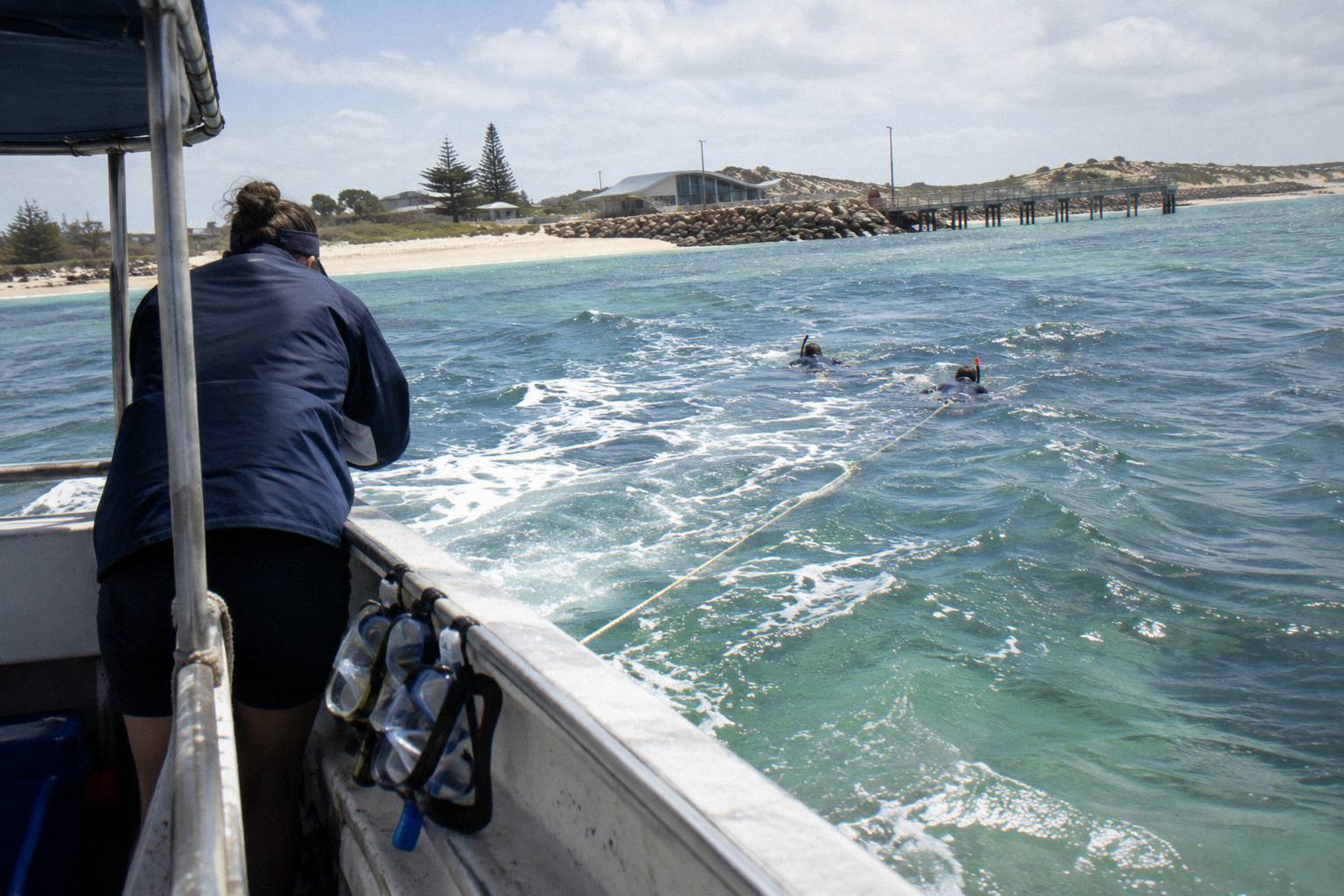
For anyone whose concern is really about a child or a non-swimmer in the group rather than themselves, two further reads help: the blog on what to wear to swim with dolphins covers the kit side, and the guide on whether non-swimmers can join a wild dolphin swim covers the spectator and boat-side options, including the Rockingham operator's stated spectator option, for which no price is stated.
What Trips People Up When Planning Around Seasickness
Three mistakes recur when people plan around seasickness: assuming a figure exists when in fact none does, assuming the swim is the rough part when it may not be, and assuming one tour's terms or one boat's description apply to another when they often differ. Each false assumption can shape an entire booking decision, so all three deserve a closer look. No seasickness or sea-state figure is stated for any of the five trips, so any "calm water" or "rarely rough" claim found anywhere should be treated as someone's invention. The swim phase is a surface float behind a guide, while the boat phase is a hull in motion, and people prone to one are not always prone to the other. And the details that do exist are strictly per tour: the SuperCat belongs to the Mandurah Giants cruise, the 7:45 am start to Bunbury, and the come-again terms to their own booking pages.
The first mistake usually looks like a search for reassurance: a number that says 5 percent, or a claim that a bay is always flat. Nothing here supports either. The second mistake is treating the five products as interchangeable, which they visibly are not, from 75 minutes to about 6 hours. The third is reading one booking page's generosity onto another, for example expecting free cancellation on the Penguin Island And Dolphin Cruise, for which no cancellation term is stated, because four other tours show free cancellation up to 24 hours.
| What to ask the operator | Why it matters for the motion question |
|---|---|
| How long is the boat phase before anyone gets in the water? | The Rockingham day is about 3 to 6 hours in total, but the split between searching and swimming is decided on the day, since the cruise has no fixed finish time |
| What happens if conditions are poor on the day? | The Rockingham operator says that if it cancels for weather there is no charge and a reschedule is offered, for direct bookings |
| Can a nervous guest stay on the boat instead of swimming? | The Rockingham operator names a spectator option, price not stated; the Bunbury operator allows 4 observers per swim |
| What is the vessel like? | Not stated for either swim; ask directly rather than assume |
| What is your cancellation window? | The booking pages show free cancellation up to 24 hours for four tours; no term is stated for the Penguin Island cruise |
| Should I mention my motion sickness history when booking? | Telling the operator when you book is the stated route for any personal restriction, alongside advice from a doctor |
That checklist is built entirely from stated facts: durations, the spectator option, the observer cap at Bunbury, the weather-cancellation term for direct bookings and the cancellation windows. It asks the operator to fill the one gap that genuinely decides the question, which is how the stated day interacts with one person's history on the water. No remedy, tablet, wristband or diet appears in it, because none is stated by any operator or official page and medical advice belongs with a doctor.
A final trip-up worth naming is scope. Monkey Mia, Sorrento, Hawaii and every captive-dolphin venue have their own operators and their own rules, and nothing stated here applies to them. Within the trips covered, the choice is between two swims, at Rockingham and Bunbury, and three watching cruises at Shoalwater and Mandurah, and the seasickness question is best answered inside that list rather than by looking elsewhere.
Common Questions About Seasickness On A Dolphin Swim Boat Trip
How Likely Is Seasickness On A Dolphin Swim Boat Trip?
No operator or booking page for the five trips around Rockingham, Mandurah and Bunbury states any seasickness or sea-state figure, so no likelihood can be given. The stated facts that bear on it are duration, format and boat type: from a 75-minute cruise to a swim day of about 3 to 6 hours with no fixed finish time. Match those against your own history on boats and ask the operator the specific questions in the checklist above.
Is The Swim Itself Or The Boat Ride The Bigger Problem?
They are different kinds of motion. The swim phase on the Rockingham and Bunbury swims is a surface float in a group, holding a guide's belt or swimming above the bay floor, while the boat phase is a hull in transit and search. Neither operator states which phase troubles guests more, so the answer is to weigh your own reactions to each and raise both with the operator when booking.
Which Of The Five Trips Is Shortest On The Water?
The Mandurah Dolphin Cruise at 75 minutes, with its booking page also describing the cruise and views as 1 hour to 1 hour 15 minutes. The Penguin Island And Dolphin Cruise runs about 1 hour 30 minutes and the Mandurah Giants And Dolphin Cruise 2 hours. The two swims run about 4 hours at Bunbury and about 3 to 6 hours at Rockingham, depending on sightings.
Can I Stay On The Boat Instead Of Swimming?
On the Rockingham swim the operator names a spectator option, for which no price is stated. On the Bunbury swim the operator allows a maximum of 4 observers alongside 8 to 20 swimmers. Tell the operator when you book if you want a spectator place, since availability is not stated as promised.
Do Warmer Months Mean Calmer Water?
No operator or official page says so. The Rockingham operator states water of 18 °C in September rising to 25 °C in summer and autumn, and seatemperature.org lists Mandurah coast averages from 18.3 °C to 22.8 °C, but none of that describes swell, wind or motion. Ask the operators what they observe across their seasons rather than assume a pattern.
What If I Cancel Because I Am Worried About The Conditions?
The booking pages show free cancellation up to 24 hours before the start for the Rockingham swim, the Bunbury swim and both Mandurah cruises, with no cancellation term stated for the Penguin Island And Dolphin Cruise. The Rockingham operator's own direct-booking terms allow changes by email 48 hours or more before departure, with no refund inside 48 hours, and say that if the operator cancels for weather there is no charge and a reschedule is offered.