Water Temperature And Wetsuits On A Wild Dolphin Swim
Sea temperature decides how a wild dolphin swim feels long before the dolphins arrive. Here is what the temperature tables say month by month, what each operator supplies, and how to prepare for the water between 18 and 25 degrees Celsius.
Short answer
seatemperature.org lists monthly averages of 18.3 to 22.8 degrees Celsius for the Mandurah coast, the nearest measured place to Rockingham, and the Rockingham operator describes water of 18 degrees in September rising to 25 degrees in summer and autumn. The swim supplies a 4 mm full-length wetsuit, mask and snorkel, so a separate wetsuit is not needed.
In short: The sea off the coast south of Perth stays in a narrow band all year: seatemperature.org lists monthly averages between 18.3 and 22.8 degrees Celsius for the Mandurah coast, the nearest measured place to Rockingham. The Rockingham swim operator describes water of 18 degrees in September rising to 25 degrees in summer and autumn, and supplies a 4 mm full-length wetsuit, hood options for cooler water, mask and snorkel on every cruise. The Bunbury swim supplies a wetsuit, mask, snorkel, fins and a buoyancy vest if required. Between the suits the operators hand you and the temperature range, the main decisions left are what to wear underneath and which month to swim in.
For the broader day-plan picture, see the guide to what happens on a wild dolphin swim day.
| Quick Fact | Rockingham Wild Dolphin Swim | Bunbury Wild Dolphin Swim |
|---|---|---|
| Season | September to early June (operator) | November to April (operator) |
| Wetsuit supplied | 4 mm full length, operator says it "keeps you very buoyant" | wetsuit, booking page lists all sizes |
| Hood | mentioned for cooler water (operator FAQ) | Not stated |
| Extra gear | mask, snorkel, introductory snorkel lesson | mask, snorkel, fins, buoyancy vest if required |
| Water temperature claim | "18 in September through to 25 degrees Celsius" (operator) | Not stated |
| Minimum swimmer age | not recommended for children 6 years or younger (operator) | 8 and over, operator |
Sea temperature is the number that quietly shapes a wild dolphin swim. It sets how long you can stay in the water comfortably, whether a hood matters, and what you need to pack for the boat. The Rockingham Wild Dolphin Swim runs from Val Street Jetty, Rockingham, from September to early June, and the Bunbury Wild Dolphin Swim runs in Koombana Bay from November to April, so the two swims cover different slices of the temperature curve. The Rockingham Wild Dolphin Swim is rated 4.7 across about 685 reviews and is listed from A$249.72 per person, varying by date and option, and its booking page shows free cancellation up to 24 hours. This page pulls together the month-by-month temperature tables, each operator's own statements about wetsuits and gear, and the packing decisions that follow from them, without inventing a single comfort claim the operators have not made themselves. For the ethical and safety background, the safety guide for wild dolphin swims in Western Australia covers the rules that apply in the water.
How Cold Does The Sea Get Near Rockingham
The sea along the coast south of Perth stays within a fairly narrow band across the year, according to the temperature tables for the Mandurah coast, the nearest measured place to Rockingham. seatemperature.org lists monthly averages there of 18.3 degrees Celsius in September, the coldest month, rising to 22.8 in March, the warmest, with the maximum figure peaking at 25.0 in February.
Rockingham itself has no entry on the temperature site, so the Mandurah coast table, measured a short way down the same coastline, is the closest published series. The numbers below are the monthly averages seatemperature.org lists for each place, shown here as published and attributed to that source, not to any weather bureau.
| Month | Mandurah coast average (C) | Perth average (C) |
|---|---|---|
| January | 21.4 | 21.7 |
| February | 22.2 | 22.6 |
| March | 22.8 | 23.2 |
| April | 22.2 | 22.6 |
| May | 21.7 | 21.9 |
| June | 20.8 | 21.1 |
| July | 19.6 | 19.7 |
| August | 18.9 | 19.2 |
| September | 18.3 | 18.7 |
| October | 18.4 | 18.7 |
| November | 19.2 | 19.4 |
| December | 20.5 | 20.7 |
Two things stand out from the table. First, the spread between the coldest and warmest average month is small, roughly four and a half degrees on the Mandurah coast series, so the sea does not swing between extremes the way an inland lake does. Second, the Perth column runs slightly warmer than the Mandurah column in every single month, which reflects how close together these two measuring points sit on the same coast. The seatemperature.org page for the Mandurah coast is the source of the first column and the matching Perth page the second.
The Rockingham swim operator gives its own description of the water, separate from any table: "18 in September through to 25 degrees Celsius during the summer and autumn." That is the operator's claim about the water its swimmers enter, and it sits close to the September average in the table while running a little above the table's warmest monthly means. Both figures describe the same stretch of season, September to early June, over which the operator runs its cruises.
For planning purposes, the month you book matters less than you might expect from the word "September", because the September average and the March average sit less than five degrees apart. What changes through the season is not the water alone but the whole picture: suit thickness, whether a hood is worth taking, and how long you want to float at the surface holding a guide's belt. The month-by-month decision is covered in the guide to choosing a month for a wild dolphin swim.
What The Rockingham Operator Supplies In Wetsuits And Gear
The Rockingham Wild Dolphin Swim supplies a 4 mm full-length wetsuit on every cruise, which the operator says "keeps you very buoyant", plus a mask, a snorkel and an introductory snorkel lesson before anyone enters the water. Hoods are mentioned on the operator's FAQ page for cooler water, and children's wetsuits come in small sizes. The operator states that "no previous snorkelling experience is required" and that nervous swimmers are accepted on the cruise.
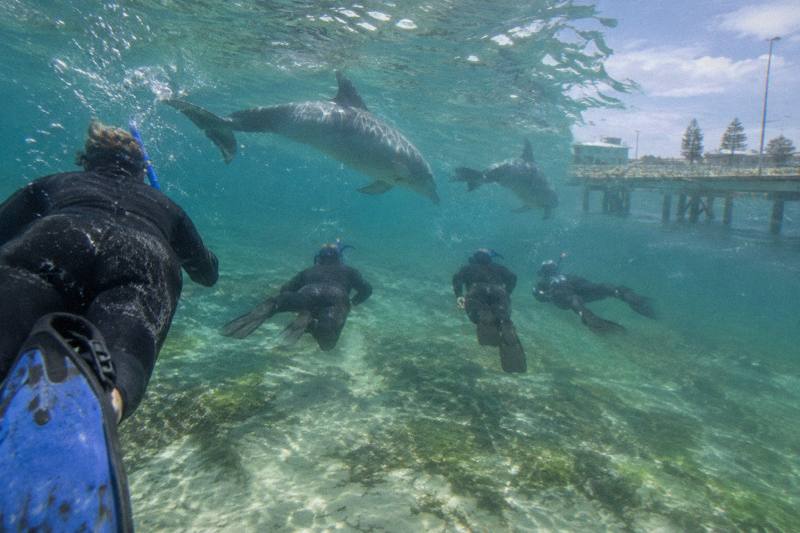
The sequence the operator describes is simple: once dolphins are located, guests zip up wetsuits, put on mask and snorkel and move to the swim deck. Entry to the water happens in small groups of up to 7, each led by a guide on an aqua scooter who tows the group among the dolphins while guests hold the guide's belt and stay at the surface. A second guide on a solo scooter works around the group. The suit is therefore not an optional extra you weigh up at home, it is part of the format of the swim, handed to you on the boat and worn for every water entry. Details of the day from jetty to swim deck are laid out in the first-timer's checklist for a wild dolphin swim.
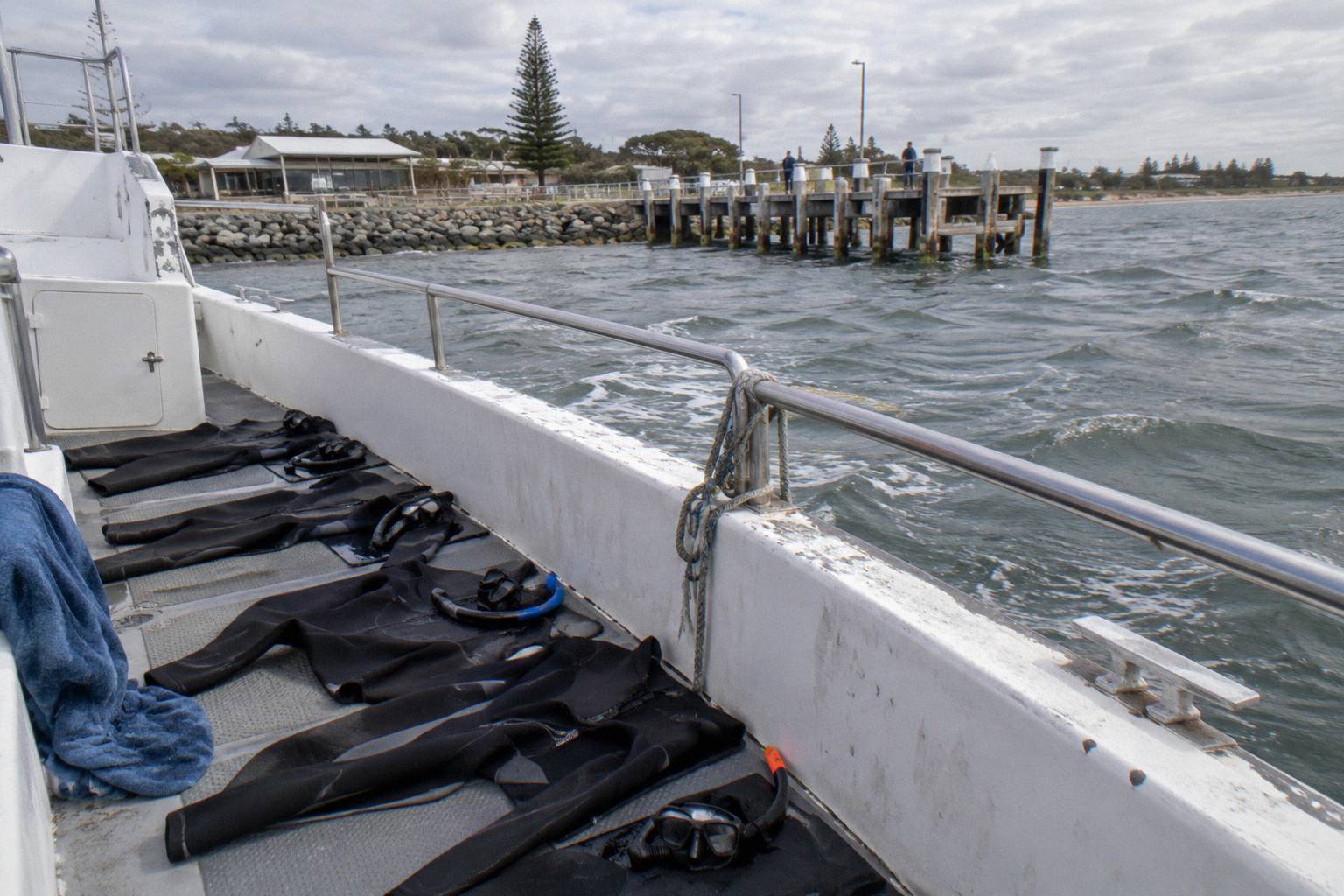
The thickness figure, 4 mm, is the operator's own specification and it is the standard thickness category used for temperate-water suits. The operator's buoyancy comment matters for a second reason: it connects to the operator's position on buoyancy aids. Buoyancy aids are not recommended on this cruise, and the operator says plainly that "if you feel your child needs a buoyancy aid this cruise is definitely not suitable." The suit itself provides the float, so a separate aid is treated as a signal that the swim format does not fit that child. The non-swimmer question is unpacked in the guide to whether non-swimmers can join a wild dolphin swim.
On the question of what a shark deterrent means for gear, the operator says crew wear Shark Shields, and that people with pacemakers or who are pregnant must not use the Shark Shield and should avoid swimming near anyone using one. That is a gear-adjacent restriction worth knowing at booking time rather than on the jetty, and it is the operator's statement about its own cruise. No food, drink or pickup details are stated for the booking page of this swim; ask the operator directly if any of those matter to your day.
How The Two Swims Compare On Wetsuits And Water Gear
The Rockingham swim supplies a 4 mm full-length wetsuit, hood options for cooler water, mask, snorkel and an introductory snorkel lesson. The Bunbury Wild Dolphin Swim, run by the Dolphin Discovery Centre in Koombana Bay, supplies a wetsuit, mask, snorkel and fins, with a buoyancy vest if required, and its booking page lists wetsuits in all sizes, floating devices, water, a snack, changing rooms, storage and hot showers.
The clearest differences sit in three places: footwear, flotation and after-swim facilities. The Bunbury swim includes fins in its kit and offers a buoyancy vest if required, while the Rockingham cruise builds flotation into the suit itself and does not recommend separate aids. The Bunbury booking page spells out the land-side extras, including hot showers and a tea and coffee station at the Dolphin Discovery Centre; for the Rockingham swim, food, drink and shower facilities are not stated on the booking page. The table below prints each item beside the operator or page that states it, and where something is not stated the cell says so.
| Gear or facility | Rockingham Wild Dolphin Swim | Bunbury Wild Dolphin Swim |
|---|---|---|
| Wetsuit | 4 mm full length (operator) | included (operator); all sizes (booking page) |
| Hood | mentioned for cooler water (operator FAQ) | Not stated |
| Mask and snorkel | included, with lesson (operator) | included (operator) |
| Fins | Not stated | included (operator) |
| Buoyancy vest | aids not recommended (operator) | if required (operator); floating devices (booking page) |
| Snack or water | Not stated | snack and water (booking page) |
| Showers | Not stated | hot showers (operator and booking page) |
| Season | September to early June | November to April |
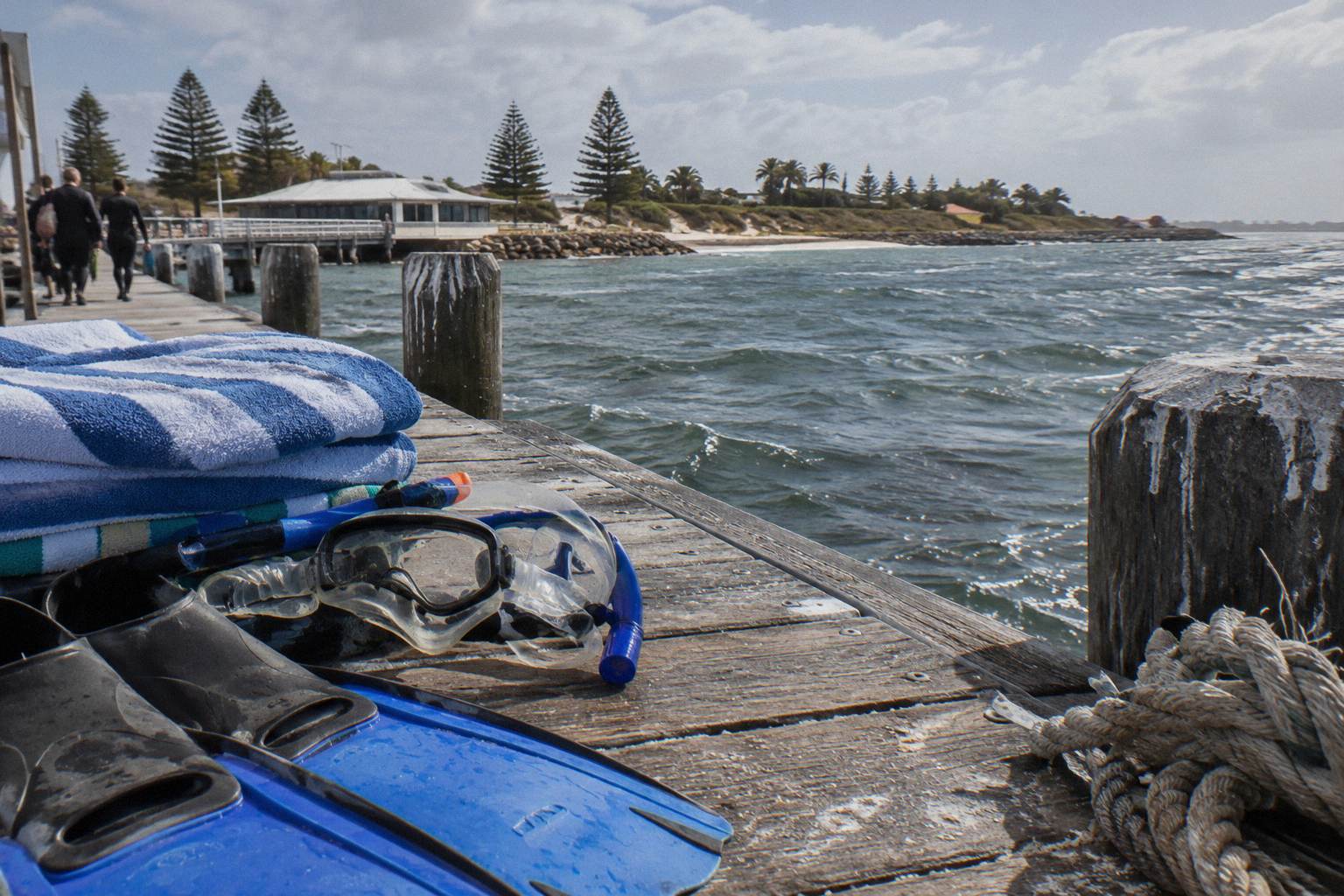
The seasons matter as much as the gear when you are matching a swim to a temperature. The Rockingham season, September to early June, includes the two coldest months in the temperature table, September and October at 18.3 and 18.4 degrees on the Mandurah coast series, and runs right through the March peak. The Bunbury season, November to April, starts after the spring minimum and covers the warmest half of the table, which is one reason the two swims can feel different in the water even though both hand you a wetsuit. The trade-offs between the two products go well beyond temperature, and the comparison of the Rockingham and Bunbury dolphin swims works through them side by side.
One point of caution for planning: gear stated for one swim never carries across to the other. The Bunbury booking page's list of inclusions belongs to the Bunbury Wild Dolphin Swim, and the Rockingham operator's suit specification belongs to the Rockingham cruise. If an item matters to you, confirm it on the booking page for the specific swim before you pay, because the details above are each attached to a single product. If you want the alternative angle on Rockingham Swim With Dolphins as a whole experience, the water and the wetsuit are only one layer of that decision.
Do You Need A Hood Or Extra Layers In Cooler Months
The Rockingham operator mentions hoods for cooler water on its FAQ page, which is the only stated layer beyond the 4 mm suit, and no other extra layer, glove or boot is stated for either swim. The coldest water in the temperature table is the September average of 18.3 degrees Celsius on the Mandurah coast series, and the Rockingham season opens in September.
The way to handle the hood question is to treat it as an ask-ahead item. The operator's FAQ acknowledges hoods exist for cooler water; it does not state when they are handed out, whether they are included, or whether you can request one. Those are exactly the questions to put to the operator at booking: are hoods available on my date, are they part of the kit, and what does the crew suggest for a swimmer who feels the cold? For the Bunbury swim, no hood is mentioned at all, so the same question goes to the Dolphin Discovery Centre if a November-to-April booking lands in the cooler end of that window.
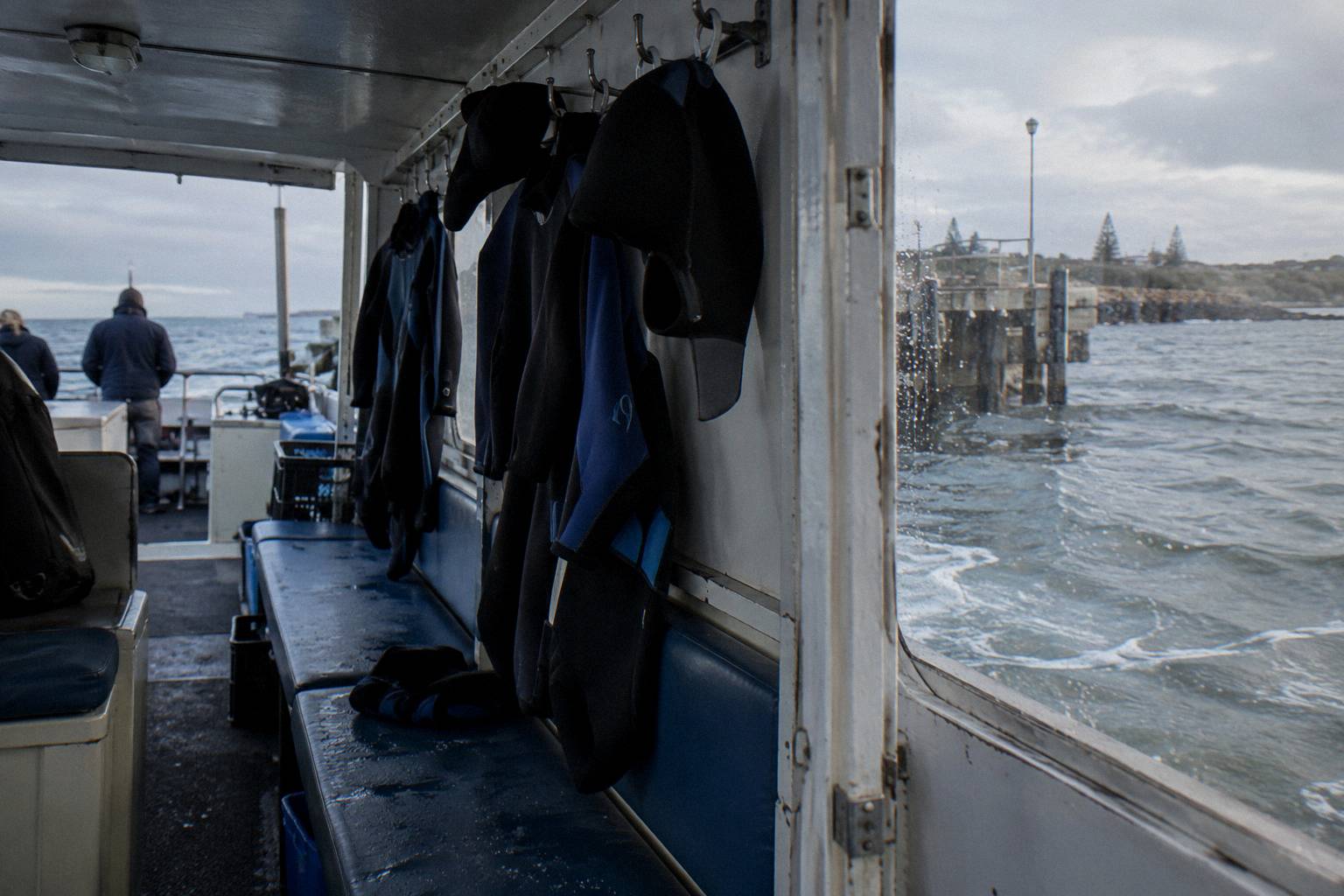
Beyond the hood, nothing is stated about gloves, boots or thermal underlayers on either swim, and no air-temperature figure is published here because none belongs to the operators' statements. What is stated is the water range: the operator's own claim of 18 to 25 degrees Celsius across its season, and the seatemperature.org monthly series for the coast. A 4 mm full-length suit is the operator's answer to that entire range, and the operator's position is that the suit handles the water its swimmers enter from September to early June. If your own experience of temperate-water swimming suggests you run colder than others, say so when booking; the operator accepts nervous swimmers and will tell you what it can and cannot add on the day. Whether a hood or an extra layer becomes part of your kit is a decision the operator can settle in one short exchange before you pay, not something to guess at from a shop shelf.
Can Children And Nervous Swimmers Manage The Water
The Rockingham operator says the swim is not recommended for children 6 years or younger, that parents are responsible for supervising their own children in the water, and that children are not left on board unsupervised. Children's wetsuits come in small sizes. The operator states that nervous swimmers are accepted and that "no previous snorkelling experience is required", with an introductory lesson given before entry.
The two age statements are the operators' own and they are different, which matters when a family is choosing between the swims. The Rockingham wording is a recommendation, not a stated minimum: "not recommended for children 6 years or younger." The Bunbury wording is a stated minimum with a condition: 8 and over, accompanied in the water by a swimming adult, with confident swimmers of 12 and over permitted to swim without one. The age detail is covered from the family angle in the post on how old kids need to be to swim with dolphins.
The buoyancy-aid position at Rockingham is the point that catches out parents. Because the 4 mm suit is itself described as very buoyant, the operator does not recommend separate aids, and its FAQ is blunt that a child who needs one is not suited to the cruise. That means the water-temperature question for a child is really a confidence question: a child who is happy floating at the surface in a thick suit, holding a guide's belt, fits the format; a child who needs extra flotation does not. The water temperature itself is the same for everyone on the boat, but the gear and the format decide who copes with it. The under-7s question, including watching from the boat, is addressed in the post on whether under-7s can watch a dolphin swim from the boat.
For nervous adult swimmers, the stated facts are encouraging without promising anything about the water on any given day: the operator accepts nervous swimmers, gives an introductory snorkel lesson, and keeps swimmers at the surface in groups of up to 7 with a guide on an aqua scooter. What to wear for the swim, from the operator's stated kit down to the items you bring yourself, is listed in the post on what to wear to swim with dolphins.
What To Wear Under The Wetsuit
What a swimmer wears under the wetsuit is not stated by either operator, so there is no official answer to print. The practical approach is the standard one for any supplied full-length suit: swimwear underneath, a towel and dry clothes for after, and a warm layer for the boat ride, packed in a bag you can leave as the operator directs.
The gap here is genuine: neither the Rockingham operator's FAQ nor the Bunbury pages describe an under-suit layer. Rather than guess at a policy, treat this as a two-minute conversation with the operator. Tell them who is swimming, whether anyone feels the cold, and ask what they suggest underneath on the date you have chosen. The operator knows its suits and its water, and it has stated its willingness to work with nervous swimmers, so a direct question will get you a direct answer.
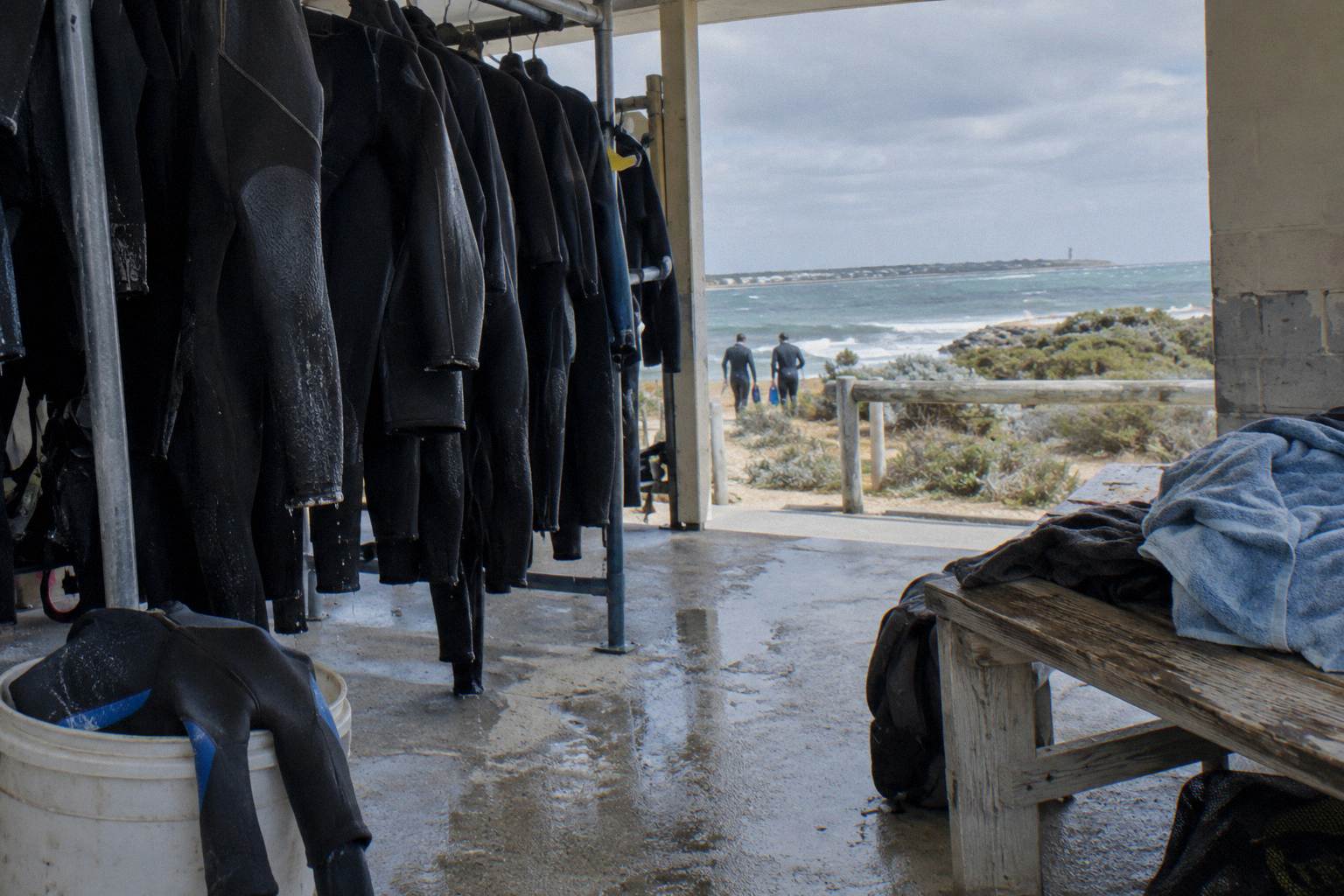
What you can plan from the stated facts is everything around the suit. The Rockingham cruise has no fixed finish time, because the crew keeps searching for dolphins, so a longer day on the water is possible and dry clothes for afterward are worth carrying. A waiver is signed before boarding at Val Street Jetty. Crew film every swim and upload photos online, so a camera is optional rather than essential; the camera question is worked through in the post on taking your own camera on a dolphin swim. For the Bunbury swim, the booking page lists changing rooms, storage and hot showers after, which shapes what you need to bring: less toweling logistics, but the same dry-clothes thinking for the trip home.
The Rockingham Wild Dolphin Swim is the featured swim on this page for a reason that connects directly to temperature: it is the one running in September, the coldest month in the table, and it is also the one with the most fully specified kit, from the 4 mm suit to the lesson to the children's sizes. You can read the full details on the Rockingham Wild Dolphin Swim tour page and, if the temperature picture above has settled your main worry, Check availability for your dates.
Watching Alternatives When The Water Feels Too Cold
The watching options suit a mixed group where one person wants to swim and others would rather stay dry, or a traveller who likes the idea of dolphins but not the idea of a September average of 18.3 degrees. The Penguin Island And Dolphin Cruise runs about 1 hour 30 minutes from the operator base at 153 Arcadia Drive, Shoalwater, and its price, rating and cancellation terms are not stated, so ask on its booking page. The two Mandurah cruises are shorter still, 75 minutes for the Mandurah Dolphin Cruise and 2 hours for the Mandurah Giants And Dolphin Cruise, and both carry the same come-again term on their booking pages if no dolphins are sighted: you can join again for free. The trade-off between getting in the water and staying on deck is set out in the guide to choosing between a swim and a watching cruise.
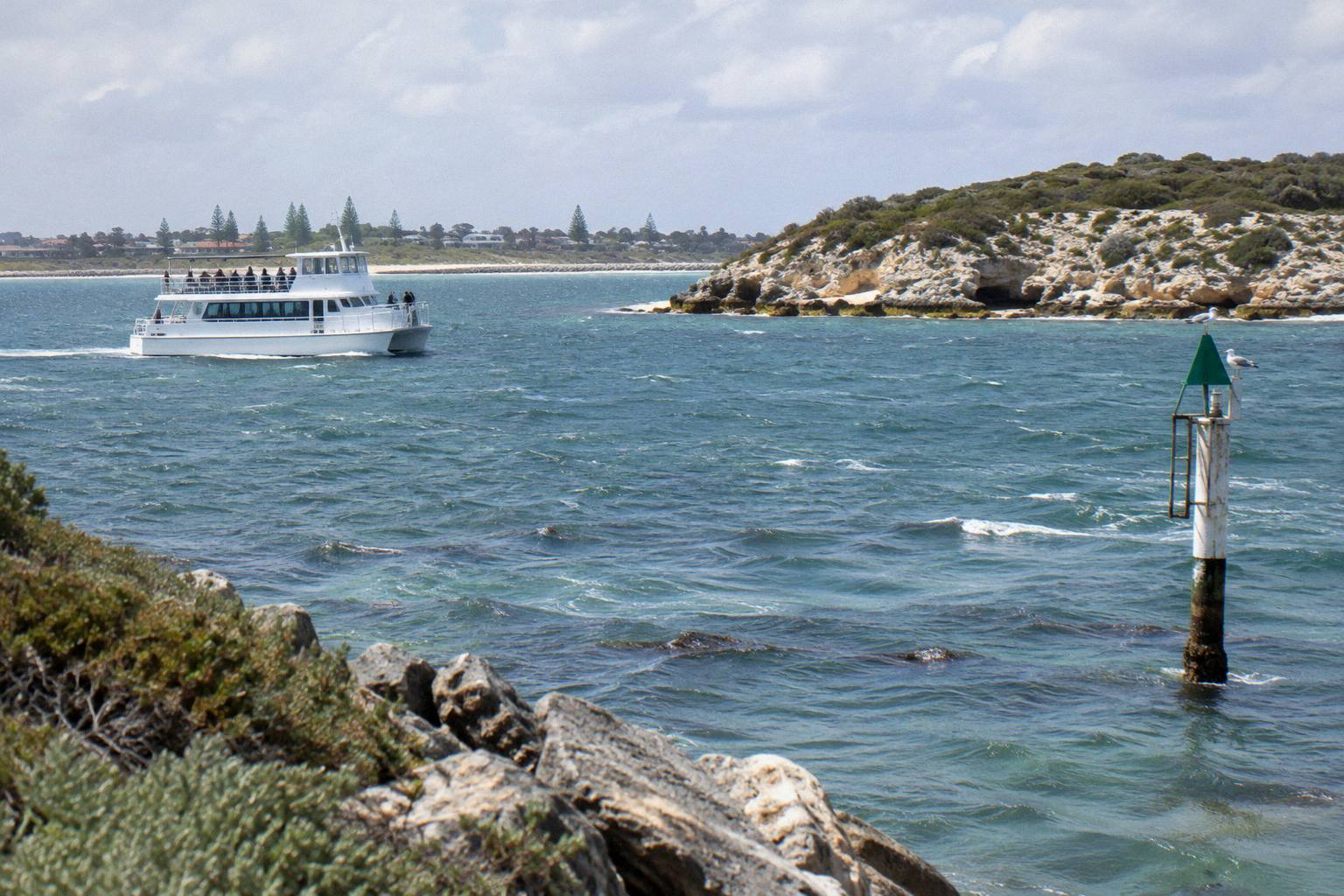
Two Mandurah details belong to their own booking pages only. The Mandurah Dolphin Cruise states hotel pickup is not included, and lists free parking close to the departure point along with live commentary from a skipper and a local expert. The Mandurah Giants And Dolphin Cruise describes a SuperCat with upper and lower decks, and says a fish-and-chip lunch is not included, with soft drinks and light snacks for sale on board or bringable. Neither detail transfers to the other cruise, and neither transfers to the swims. The cruise-with-giants option is a different day out entirely, and the guide comparing Rockingham and Mandurah dolphin experiences puts the two towns side by side.
The Bunbury swim deserves one more mention in the temperature context, because its season, November to April, maps onto the warmest months in the table while its kit list is the most generous on the shower-and-snack side. Its booking page shows free cancellation up to 24 hours, and the operator runs the swim daily at 7:45 am from the Dolphin Discovery Centre at Anchorage Cove, Koombana Bay, with swimmers 8 and over. The Koombana Bay resident group averages about 50 animals with another 100 or more visiting through the year, in the Centre's own statement about its own bay; no comparable count exists for Rockingham, and none is claimed here. The Centre's research on its dolphins research page is the source of that figure.
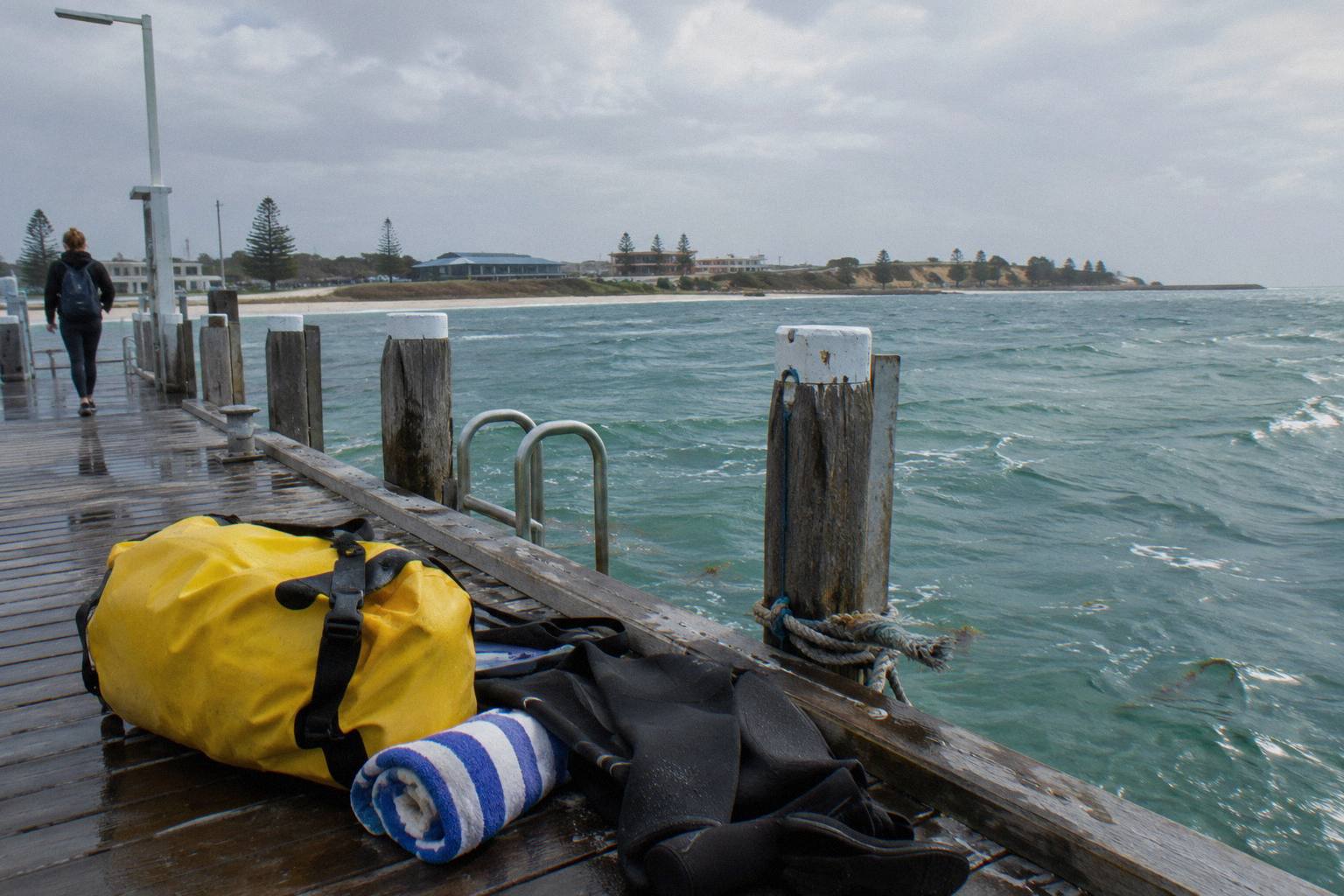
The species in these waters, per Murdoch University research on Perth's dolphin communities, is the Indo-Pacific bottlenose dolphin, Tursiops aduncus, living in four discrete communities across Perth metro waters: Cockburn Sound, Swan Canning Riverpark, Owen Anchorage and Gage Roads. The Murdoch University article on Perth's distinct dolphin communities describes the finding, which is worth knowing before you swim: the dolphins off Rockingham's Shoalwater side belong to a studied, mapped population, not a random passing pod. The operator's own page lists behaviours its cruises have observed, including hunting, mating, sleeping, chasing octopus and squid, hunting on the back of big stingrays, and the occasional sea lion joining in; those are the operator's observations, stated as such.
What Trips People Up When Preparing For The Water
Four preparation mistakes recur on temperature and wetsuit questions: assuming a wetsuit is a personal item to buy and bring, expecting a buoyancy aid for a hesitant child, mixing one operator's gear list with another's, and treating the September opening of the season as if it needed polar-grade equipment. Each of these is answered by a stated fact above, and each is avoided by asking the operator one direct question before booking.
The first mistake is the packing one. Both swims supply the suit, so a purchased wetsuit is money spent on something already provided; the only clothing decisions left are underneath and afterward. The second is the buoyancy-aid assumption, which collides with the Rockingham operator's explicit statement that a child who needs an aid is not suited to the cruise; a family that turns up expecting arm floats has misunderstood the format rather than the temperature. The third mistake, cross-attaching gear, happens when a reader sees fins and hot showers on the Bunbury page and books Rockingham expecting the same; the comparison table above keeps the two lists separate for exactly that reason.
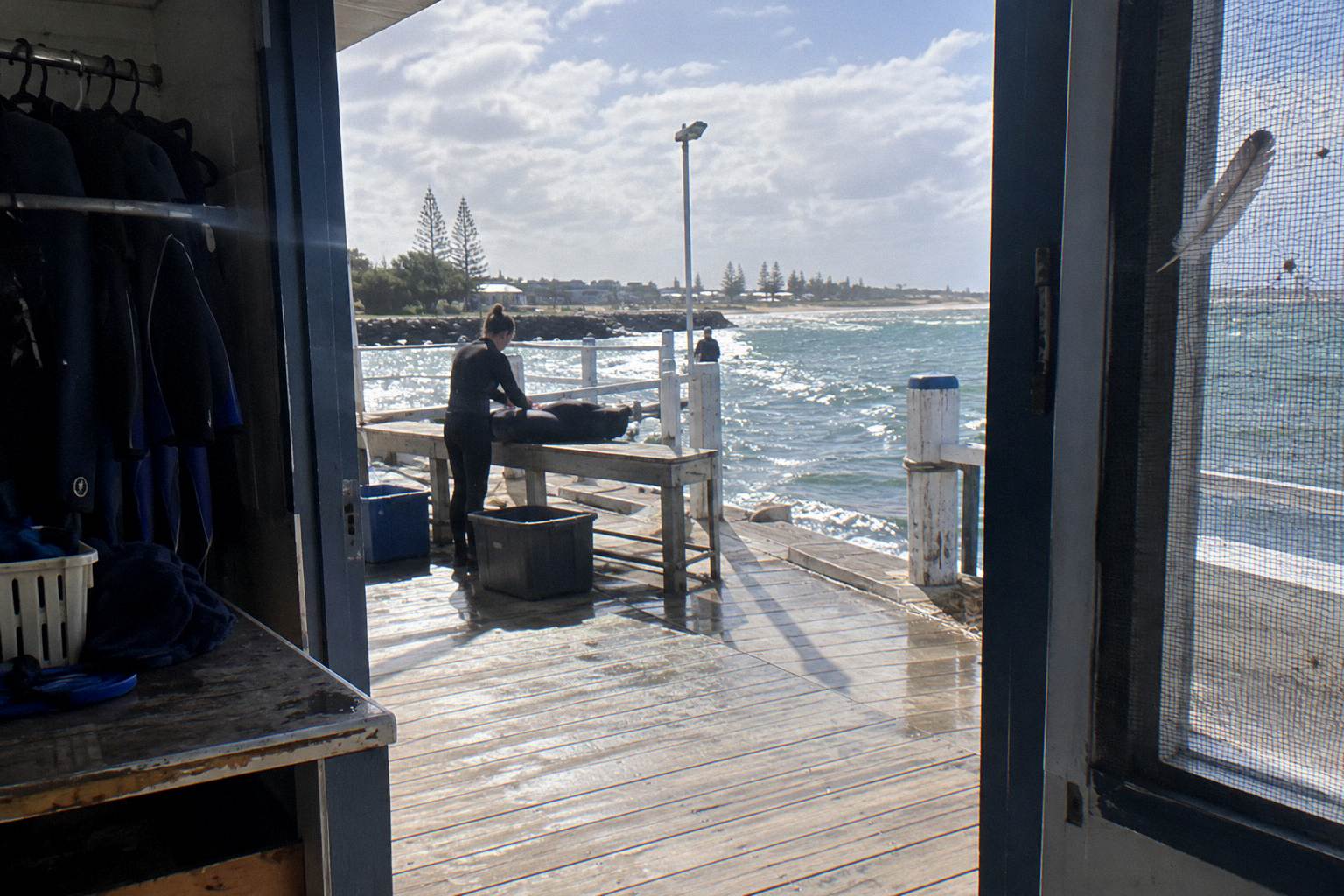
The fourth is over-preparing for cold. The water averages sit between 18.3 and 22.8 degrees on the Mandurah coast series, the operator hands every swimmer a 4 mm suit it describes as very buoyant, and the stated minimum preparation is a snorkel lesson, not cold-water training. None of that makes the water warm, and no comfort claim is made here about how any individual will feel in it; it does mean the gear question has a supplied answer before you shop for one. The remaining genuine variables, your own tolerance and your date, are exactly what a pre-booking question to the operator resolves, and the booking page's free cancellation up to 24 hours leaves a final exit if the conditions on your morning change your mind.
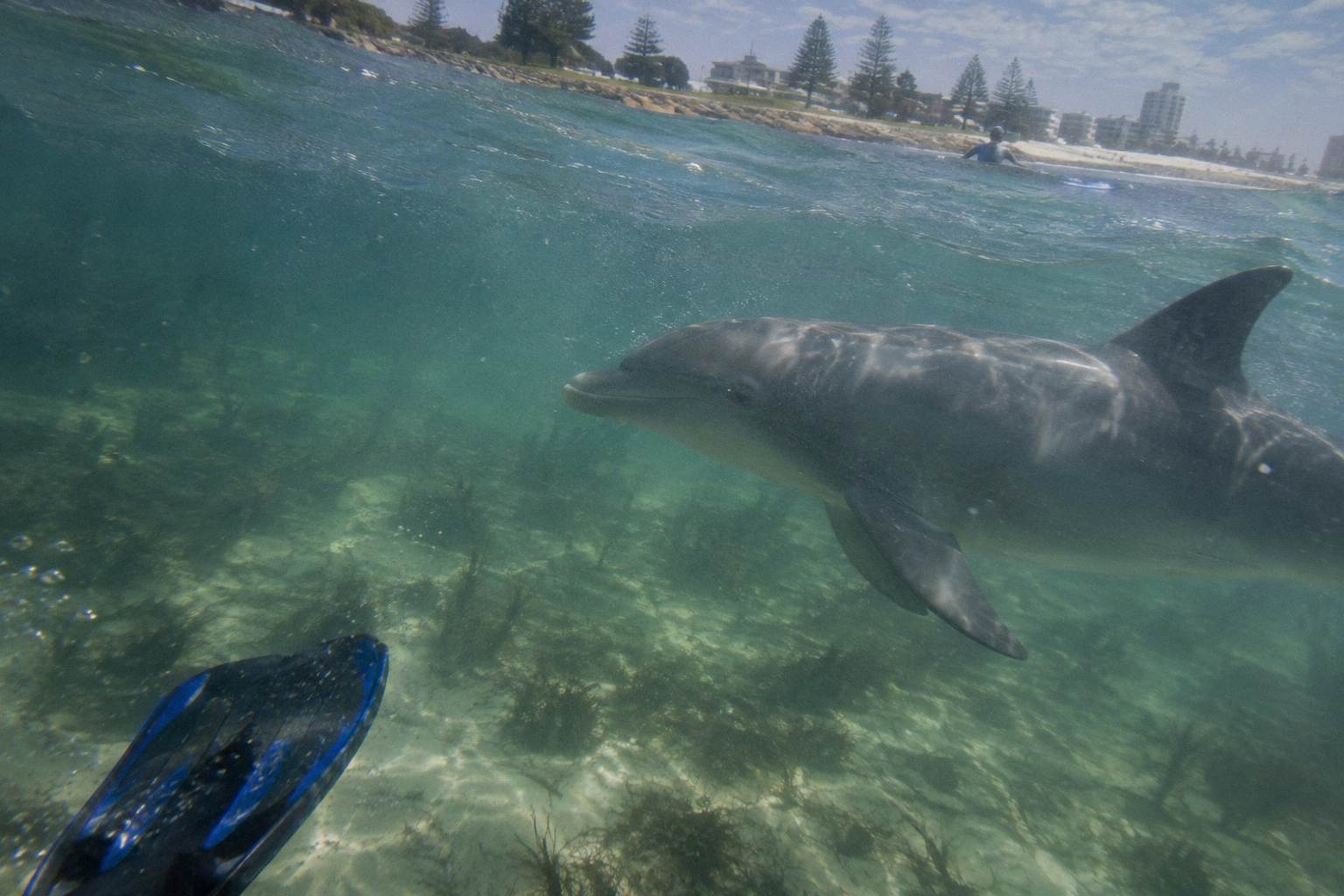
The wider rule framework also trips up some preparations. Under Western Australian regulations, a person in the water must keep 50 m from dolphins and a vessel 100 m, with fines of AUD 5,000 for getting closer, and touching any marine fauna carries a AUD 10,000 fine; a commercial swim operates under its own authorisation, which is what makes the guided format lawful. If a dolphin approaches a swimmer closer than the set distance, the swimmer must move away as soon as reasonably possible. Those rules are summarised from the Biodiversity Conservation Regulations 2018, and they explain why the swims are guide-led rather than free swimming. The distance rules in full are covered in the post on how close you can get to wild dolphins in the water.
Common Questions About Water Temperature And Wetsuits
How Cold Is The Water On A Wild Dolphin Swim Near Rockingham?
seatemperature.org lists monthly averages of 18.3 degrees Celsius in September to 22.8 in March for the Mandurah coast, the nearest measured place to Rockingham. The Rockingham operator separately describes water of 18 degrees in September rising to 25 degrees during summer and autumn.
Do You Need To Bring Your Own Wetsuit?
No. The Rockingham Wild Dolphin Swim supplies a 4 mm full-length wetsuit, described by the operator as very buoyant, plus mask, snorkel and an introductory lesson. The Bunbury Wild Dolphin Swim supplies a wetsuit, mask, snorkel, fins and a buoyancy vest if required.
Is A Hood Available For Cooler Water?
The Rockingham operator mentions hoods for cooler water on its FAQ page. Whether one is available on a given date, and whether it is included, is not stated; ask the operator when booking.
What Do You Wear Under The Wetsuit?
Neither operator states what swimmers wear underneath. Swimwear under a supplied suit, with a towel and dry clothes for after, is the usual approach; confirm any preference with the operator when you book.
Which Month Has The Warmest Water?
On the seatemperature.org series for the Mandurah coast, March has the warmest monthly average at 22.8 degrees Celsius, and the maximum figure peaks at 25.0 in February. The Rockingham swim season runs September to early June and the Bunbury season November to April, both as stated by their operators.
Can A Child Who Gets Cold Easily Still Swim?
The Rockingham operator supplies children's wetsuits in small sizes but does not recommend buoyancy aids, and says a child who needs one is not suited to the cruise. At Bunbury, swimmers must be 8 and over and accompanied by a swimming adult. Raise any concern about the cold with the operator before booking.