Can Non-Swimmers And Nervous Swimmers Join A Wild Dolphin Swim?
The short answer splits by operator. The Rockingham swim accepts nervous swimmers and asks for no previous snorkelling experience, while the Bunbury swim asks for independent, confident swimmers and lets non-swimmers sit on the boat. Watching cruises take everyone.
Short answer
The Rockingham Wild Dolphin Swim accepts nervous swimmers, requires no previous snorkelling experience, and tows each group of up to 7 behind a guide's aqua scooter at the surface. The Bunbury Wild Dolphin Swim asks for independent, confident swimmers aged 8 and over. Non-swimmers can watch from the boat at Bunbury, or take a watching cruise.
In short: a nervous swimmer can join the Rockingham Wild Dolphin Swim. The operator accepts nervous swimmers, states that "no previous snorkelling experience is required", and tows each group of up to 7 people behind a guide on an aqua scooter while everyone stays at the surface. A true non-swimmer, someone who cannot swim at all, should not book that swim. The Bunbury Wild Dolphin Swim is firmer still: the Dolphin Discovery Centre asks for independent, confident swimmers aged 8 and over, and says non-swimmers sit on the boat. For everyone else, three watching cruises run from Shoalwater and Mandurah.
If you have been scrolling through dolphin swim pages with one recurring doubt, whether your swimming is good enough, you are asking the right question before you pay. The answer is not one-size-fits-all. The two swim operators on this coast, Perth Wildlife Encounters at Rockingham and the Dolphin Discovery Centre at Bunbury, set different bars, and the gap between them matters. One builds the whole experience around towing weak and nervous swimmers at the surface; the other names its standard outright.
Start with what each operator states, then decide where you sit. The page on Rockingham Swim With Dolphins covers the local swim in depth; here the focus is the swimming-ability question, the gear that changes it, the spectator and cruise options for anyone staying dry, and a checklist of what to tell an operator before money changes hands.
| Tour | Type | From price (per person) | Rating | Length | Swimming expectation |
|---|---|---|---|---|---|
| Rockingham Wild Dolphin Swim | Swim | from A$249.72 | 4.7 across about 685 reviews | about 3 to 6 hours | Nervous swimmers accepted; no snorkelling experience required |
| Bunbury Wild Dolphin Swim | Swim | price on the booking page | 4.7 across 24 reviews | about 4 hours | Independent, confident swimmers; swimmers 8 and over |
| Penguin Island And Dolphin Cruise | Watching only | Not stated | Not stated | about 1 hour 30 minutes | None stated |
| Mandurah Dolphin Cruise | Watching only | from A$47 | 4.5 across 1,090 reviews | 75 minutes | Move around the vessel independently |
| Mandurah Giants And Dolphin Cruise | Watching only | from A$85 | 4.8 across 87 reviews | 2 hours | None stated |
Can A Non-Swimmer Join A Wild Dolphin Swim?
Not in the water: a complete non-swimmer cannot book the Rockingham swim as a swimmer, though that operator offers a spectator option with no price stated, and Bunbury lets non-swimmers sit on the boat. Nervous swimmers, meaning people who can swim but feel anxious or unpractised, are squarely within Rockingham's stated audience, because no previous snorkelling experience is required.
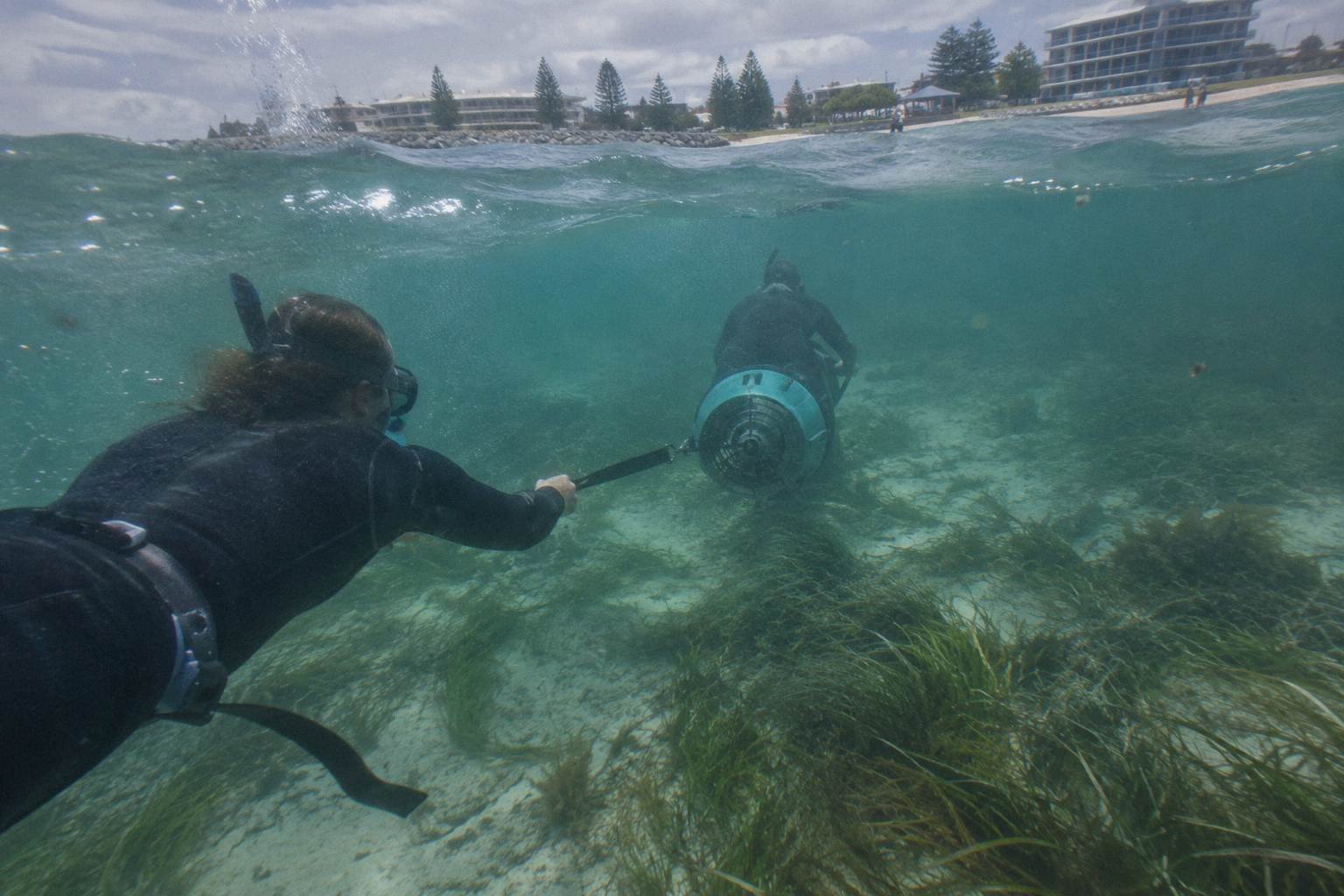
The Rockingham operator frames the day around people who have never snorkelled. Once dolphins are located, guests zip up wetsuits, put on mask and snorkel, and move to the swim deck. Entry to the water is in small groups of up to 7, each led by a guide on an aqua scooter. The guide tows the group among the dolphins while guests hold the guide's belt, and everyone stays at the surface. A second guide on a solo scooter works around the group. The design removes the two things that worry nervous swimmers on other tours: keeping pace under your own power, and diving beneath the surface.
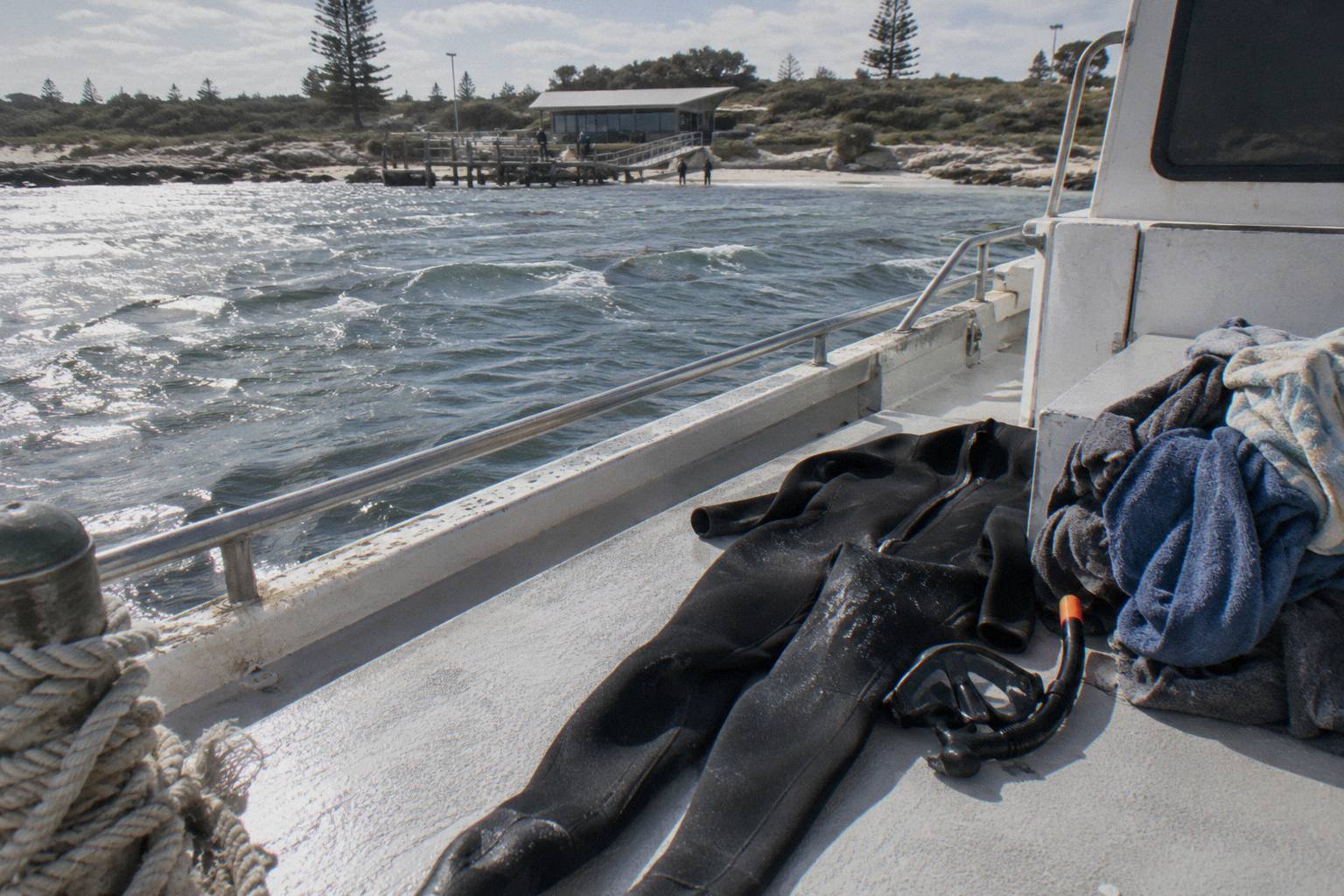
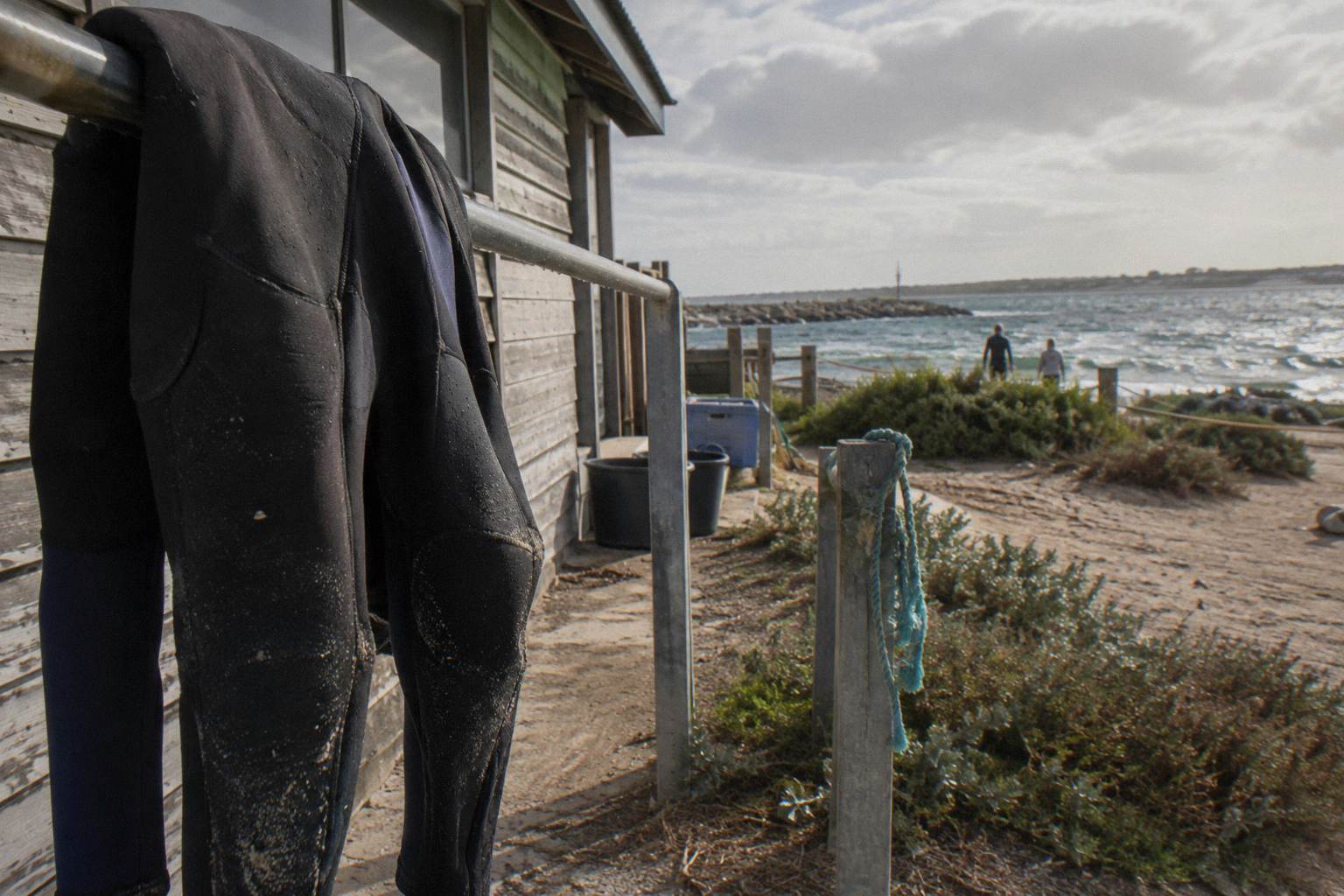
The 4 mm full-length wetsuit does quiet work here too. The operator describes it as a suit that "also keeps you very buoyant", and buoyancy is the difference between treading water and floating. An introductory snorkel lesson is part of the package, so the mask-and-breathing routine is taught before it matters, not discovered at the stern rail.
Buoyancy aids are a separate question and the operator is blunt about them. Aids are not recommended, and the operator says "if you feel your child needs a buoyancy aid this cruise is definitely not suitable". Read that sentence twice if a child is part of your group: it sets a real limit, and it applies to the Rockingham swim only. For adults deciding about their own ability, the plain reading is that the wetsuit does the floating, the scooter does the moving, and the belt gives you something to hold.
For guidance on kit in more depth, the guide to wetsuits and water temperature on a wild dolphin swim covers what the suit does and what to wear under it is not stated, so ask the operator when booking.
How The Rockingham Swim Handles Nervous Swimmers
The Rockingham Wild Dolphin Swim accepts nervous swimmers and requires no previous snorkelling experience; every group of up to 7 is towed by a guide on an aqua scooter, with swimmers holding the guide's belt and staying at the surface. Trips run about 3 to 6 hours depending on dolphin sightings, from A$249.72 per person, rated 4.7 across about 685 reviews.
Walk the mechanics in order and nerves calm down. The cruise leaves from Val Street Jetty, Rockingham, with the exact meeting point on your booking confirmation. There is a searching phase from the boat before anyone gets wet: the crew look for dolphins first, and only once dolphins are located do guests suit up and go to the swim deck. You are never asked to swim out into open water from a beach; you step into the sea from the vessel beside your guide.
In the water, your job is holding on and breathing through a snorkel. The guide's scooter supplies the propulsion. The group stays at the surface the whole time, so there is no duck-diving, no depth, and no need to clear your ears. The second guide on the solo scooter manages the dolphins' position relative to the group. The operator states no touching and no feeding, and those rules apply to every swimmer regardless of confidence.
Two health notes come from the operator and deserve attention before you book. The crew wear Shark Shields, and the operator says people with pacemakers or who are pregnant must not use the Shark Shield and should avoid swimming near anyone using one. If either applies to someone in your group, raise it with the operator directly when booking; the decision belongs to them and to you, not to a page like this one. The broader question of whether pregnant swimmers can join a wild dolphin swim is covered separately.
A parent's job is spelled out too. Parents are responsible for supervising their children in the water, staff do not supervise children, and children are not left on board unsupervised. The operator also says the swim is not recommended for children 6 years or younger. There is no swimming test, no weight limit and no height figure stated for the Rockingham swim; if you have read one somewhere, it did not come from the operator.
What The Bunbury Swim Expects From Swimmers
The Bunbury Wild Dolphin Swim sets clear requirements: swimmers must be at least 8 years old and, in the Dolphin Discovery Centre's words, independent, confident swimmers. Children need a swimming adult alongside them in the water, while confident swimmers 12 and over may swim unaccompanied, and non-swimmers watch from the boat instead of entering the water.
That is a different proposition from Rockingham, and the difference is the point. The Centre's swim is a guided swim in Koombana Bay where you move as a swimmer among dolphins rather than being towed in a scooter line. Group sizes run from a minimum of 8 swimmers to a maximum of 20 swimmers and 4 observers, per the operator's direct page. The kit list includes a wetsuit, mask, snorkel, fins, and a buoyancy vest if required, plus a snack and hot showers after; the booking page adds wetsuits in all sizes, floating devices, fresh drinking water, changing rooms and storage.
The operator's own age structure tells you how it thinks about ability. A child of 8 can swim but must be accompanied by a swimming adult, so the standard is really the pair of you together. At 12 and over, a confident swimmer may swim unaccompanied. The word confident appears in the operator's own requirement, and it is the word to measure yourself against: can you swim in open water, in a wetsuit, without holding anything?
Non-swimmers at Bunbury have a stated place: they sit on the boat. The Centre also describes itself as DBCA licensed and Advanced Eco-Tourism certified, and its booking page shows free cancellation up to 24 hours. Its operator-direct terms, for bookings made direct with the operator only, state that if no dolphins are sighted you go again free, with a full refund or reschedule up to 72 hours before and 100 percent charged inside 72 hours. Those terms never transfer to a booking-page purchase, which carries its own 24-hour cancellation window.
If you are weighing the two swims side by side, the guide to choosing between the Rockingham and Bunbury swims works through the full comparison, season, mechanics and structure, beyond the swimming question alone.
Watching Cruises As The Dry-Boat Alternative
If you would rather stay dry, three watching cruises still put dolphins on the itinerary without asking you to enter the water: the 75-minute Mandurah Dolphin Cruise from A$47 per person (4.5 from 1,090 reviews), the 2-hour Mandurah Giants And Dolphin Cruise from A$85 (4.8 from 87 reviews), and the roughly 1-hour-30-minute Penguin Island And Dolphin Cruise from the Shoalwater base. None of the three ever involves swimming.
The watching format suits several real groups: a non-swimmer travelling with swimmers, a family with a child under the operator's age guidance for the swims, anyone recovering from injury, or simply someone who would rather stay dry. On the decision of whether a swim or a watching cruise suits you better, the split is immersion versus reliability of comfort, not sightings, since dolphins are wild everywhere and no format promises them.
The Mandurah Dolphin Cruise lists live commentary from a skipper and a local expert, guided dolphin spotting, free parking close to the departure point, and free cancellation up to 24 hours; hotel pickup and drop-off are not included. Its booking page carries a come-again term in its own words: dolphins are wild and choose when and how they interact, so no sighting is promised, and if none are sighted you can return free until you see them, rebooking within 12 months, subject to availability, for guests on the original booking. The booking page also requires guests to move around the vessel independently and safely, including boarding, steps and staying seated in small waves without crew help, which matters for anyone with limited mobility.
The Mandurah Giants And Dolphin Cruise adds a SuperCat with a large open front, upper and lower decks and large windows, live commentary, and a fourth giant sculpture named on the booking page as seen from the water. A fish-and-chip lunch is not included, and the booking page says to contact the operator to add it; soft drinks and light snacks can be bought on board or brought your own. Free cancellation runs up to 24 hours. The Penguin Island And Dolphin Cruise meets at the operator base, 153 Arcadia Drive, Shoalwater, and everything beyond its length and meeting point, price, rating and cancellation, is not stated.
Wetsuits, Buoyancy And Cold Water
Yes, you need a wetsuit, and the 4 mm full-length suit supplied on the Rockingham swim does most of the work: the operator says it "keeps you very buoyant", it floats you without effort, and hoods are mentioned for cooler water. The operator puts the water at 18 degrees Celsius in September rising to 25 during summer and autumn, mild rather than tropical, so the suit, not your fitness, handles both warmth and float.
Compare the two stated temperature pictures and the message is consistent: this is temperate water, coldest at the September opening of the season, warmest in late summer. The operator's own figures bracket the season exactly, 18 at the start, 25 at the peak. Seatemperature.org's monthly means for the Mandurah coast sit slightly below the operator's summer figure, which is what you would expect of an average against a peak.
| Month | Mandurah coast average (C) | Month | Mandurah coast average (C) |
|---|---|---|---|
| January | 21.4 | July | 19.6 |
| February | 22.2 | August | 18.9 |
| March | 22.8 | September | 18.3 |
| April | 22.2 | October | 18.4 |
| May | 21.7 | November | 19.2 |
| June | 20.8 | December | 20.5 |
Monthly means listed by seatemperature.org for the Mandurah coast, the nearest measured stretch to Rockingham.
What this means for ability is simple. Cold water is a confidence tax: it makes you gasp and tire faster in the first minute. A wetsuit removes nearly all of it, both the cold and the sinking. Children's wetsuits come in small sizes on the Rockingham swim, so the float benefit is not adults-only. What you wear under the suit is not stated anywhere by the operator, so ask when booking rather than guessing; the answers in the post on what to wear for a dolphin swim cover the rest of the kit question.
Remember the buoyancy-aid warning from earlier when reading any of this: the operator does not recommend aids and rules the cruise unsuitable for a child who needs one. The suit floats you; an additional aid signals, in the operator's own framing, that the cruise is the wrong product. At Bunbury the equivalent statement is the vest, offered "if required", within a swim that still demands independent, confident swimmers.
What To Tell The Operator When You Book
Before you pay, tell the operator plainly whether you can swim at all, whether you have snorkelled before, any health condition they ask about, and whether anyone in your group is a child or a non-swimmer. Every condition that matters, from ages and supervision to the Shark Shield warnings and spectator option, depends on the operator knowing exactly who is on their boat.
The Rockingham operator gives you the opening: nervous swimmers are expected, and the snorkel lesson is introductory by design. Say "I can swim but I am nervous and I have never snorkelled" and you have described a large share of their customers, in the operator's own framing of who the lesson exists for. Say "I cannot swim at all" and you will get the spectator conversation, which the operator offers with no price stated, or a steer to a cruise.
| What to raise | The stated fact to anchor it | Where it comes from |
|---|---|---|
| You are a nervous swimmer | Nervous swimmers accepted; "no previous snorkelling experience is required" | Rockingham operator |
| You or a child needs a buoyancy aid | Aids not recommended; the cruise is "definitely not suitable" for a child who needs one | Rockingham operator |
| A pacemaker or pregnancy in your group | Must not use the Shark Shield; avoid swimming near anyone using one | Rockingham operator |
| A child in your group | Not recommended for children 6 years or younger; parents supervise in the water | Rockingham operator |
| Your child is 8 to 11 and a confident swimmer | Needs an accompanying swimming adult; 12 and over confident swimmers may swim without | Bunbury operator |
| A non-swimmer in your party at Bunbury | Non-swimmers sit on the boat | Bunbury operator |
| Any mobility limits on a cruise | Guests must move around the vessel independently, including steps | Mandurah Dolphin Cruise booking page |
Health questions go to the operator and, where relevant, to a doctor; no page like this one can clear you for open water. What a booking page does give you is room to change your mind: the Rockingham Wild Dolphin Swim shows free cancellation up to 24 hours, so raising your doubts at booking costs nothing. For timing questions, the guide to how far ahead to book a wild dolphin swim covers the booking window.
Ages, Supervision And Family Decisions
Each swim carries its own age rule: Rockingham is, in the operator's words, "not recommended for children 6 years or younger", with parents supervising their children in the water and no child left aboard unsupervised, while Bunbury takes confident, independent swimmers 8 and over, with those under 12 needing a swimming adult alongside them. The Mandurah cruises state no age or swimming requirements beyond independent movement on the vessel, and the Penguin Island cruise none at all.
A family with a seven-year-old lands in a genuine gap. At Rockingham the child is outside the not-recommended band but the parent does the supervising in the water, which means the parent's swimming matters as much as the child's. At Bunbury a seven-year-old cannot swim at all under the operator's rule, though a non-swimmer arrangement on the boat is stated for that product. The watching cruises take the family without an age rule attached to the water.
The post on whether under-7s can watch a dolphin swim from the boat works through the spectator question for young children, and the guide to age requirements for swimming with dolphins sets out both swim rules side by side. The family decision weighs the child's real confidence in deep water against the parent's capacity to supervise while also managing their own swim, since no crew member takes over that job on the Rockingham product.
What A Nervous Swimmer's Day Actually Looks Like
The day is built to protect anxious swimmers at every step: dolphins are searched for from the boat first, then wetsuits go on with an introductory snorkel lesson, and entry happens in a group of up to 7 towed behind a guide's aqua scooter while holding the guide's belt, staying entirely at the surface. There is no fixed finish time, so the crew keep searching instead of cutting things short.
The order of events is the reassurance. You spend the first part of the day on the boat, dry, watching the crew work. The suit goes on only once dolphins are located. The lesson happens beside the swim deck before the water. Then the group of up to 7 enters with the guide, and the belt is the point of contact for the whole swim: you hold, the scooter pulls, the dolphins come to the group as the second guide positions them. The operator's phrase is that the lead guide tows the group "right amongst the dolphins".
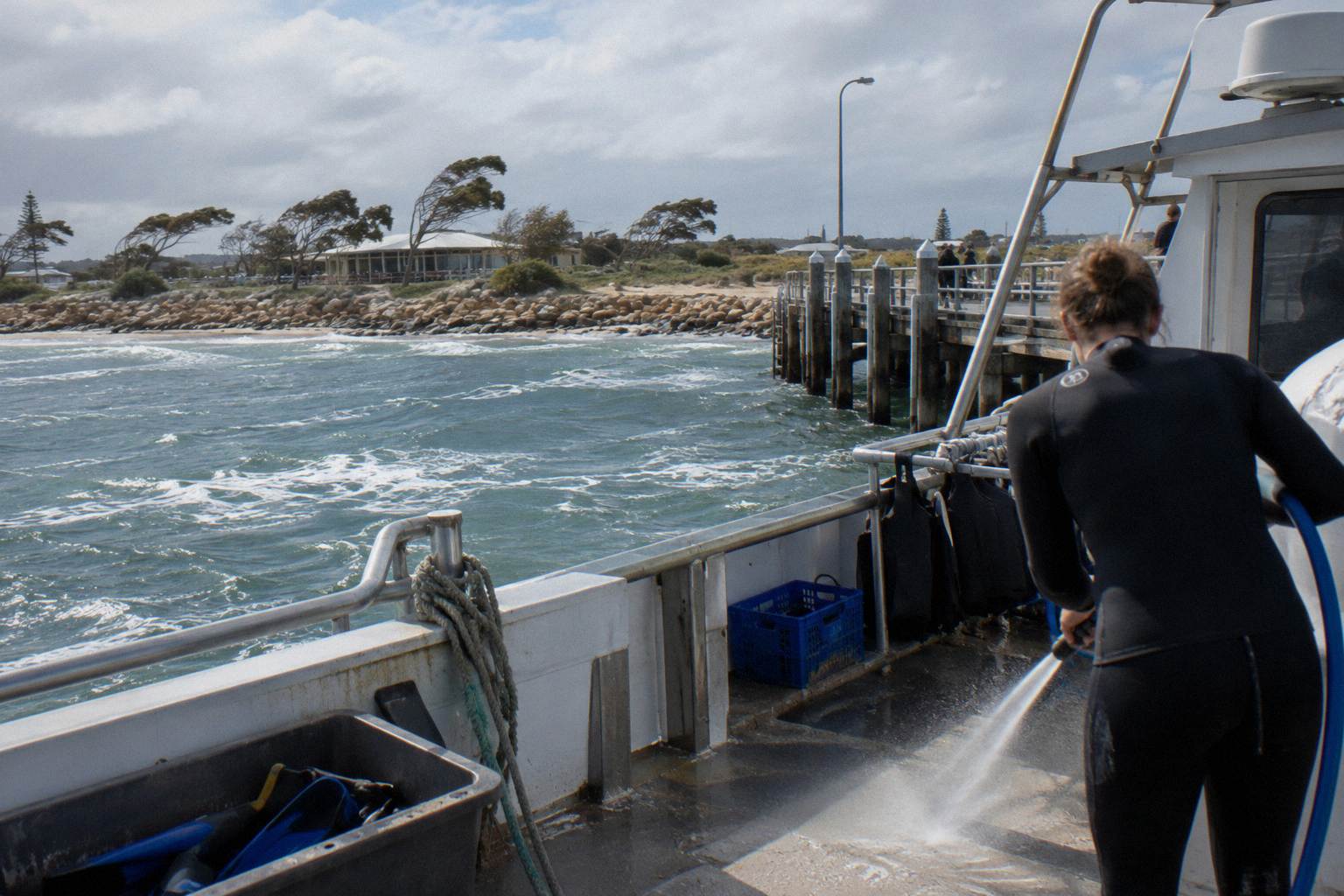
Crew film every swim and upload the photos online, per the operator, so a nervous swimmer does not have to juggle a camera while managing a snorkel; the guide on what to expect across a wild dolphin swim day from start to finish covers the full timeline. What the operator does not state is food and drink on board, pickup on the booking page, or the vessel's name and capacity, so ask those questions direct. The operator does state that a Perth CBD bus transfer exists at extra cost for bookings made direct with the operator, running late September to early June, with the pick-up point chosen when booking direct.
The Rockingham Wild Dolphin Swim is the tour this page keeps returning to for good reason: it is the product built for exactly the reader with doubts. You can compare it on its own page, Rockingham Wild Dolphin Swim, and check availability for your dates before the season's September-to-early-June window closes for the year.
Common Mistakes When Deciding As A Non-Swimmer
The most common mistakes non-swimmers make are assuming every dolphin swim follows the same standard, saying nothing at booking about a doubt, treating a stated age rule as a swimming rule, expecting one operator's come-again term or gear to apply to another, and ruling out the day entirely when a spectator seat or a watching cruise fits. Each is avoided with one plain sentence to the operator at booking time.
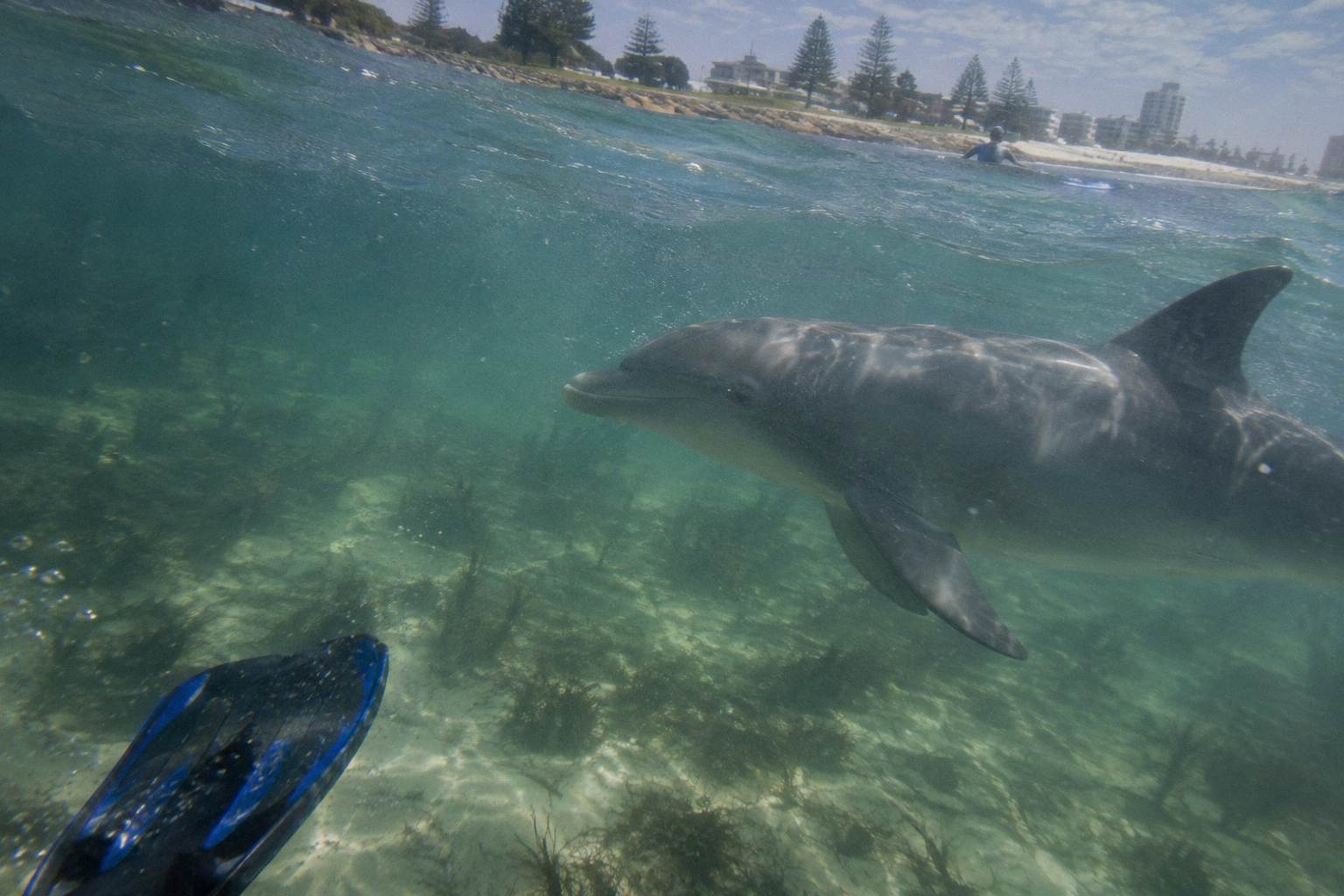
The first mistake is the quiet one. People read "dolphin swim" and picture one universal product, then book whichever page loaded first. The Rockingham and Bunbury standards differ on their face, one accepting nervous swimmers with a tow, the other requiring independent, confident swimmers. Booking the second while needing the first turns a good product into the wrong one.
The second mistake is silence at booking. The waiver, the Shark Shield warnings and the supervision rules all exist before boarding, and the operator can only plan around what it knows. A non-swimmer who says nothing on the Rockingham product, or a parent who assumes crew will supervise a child in the water, contradicts stated terms, not etiquette.
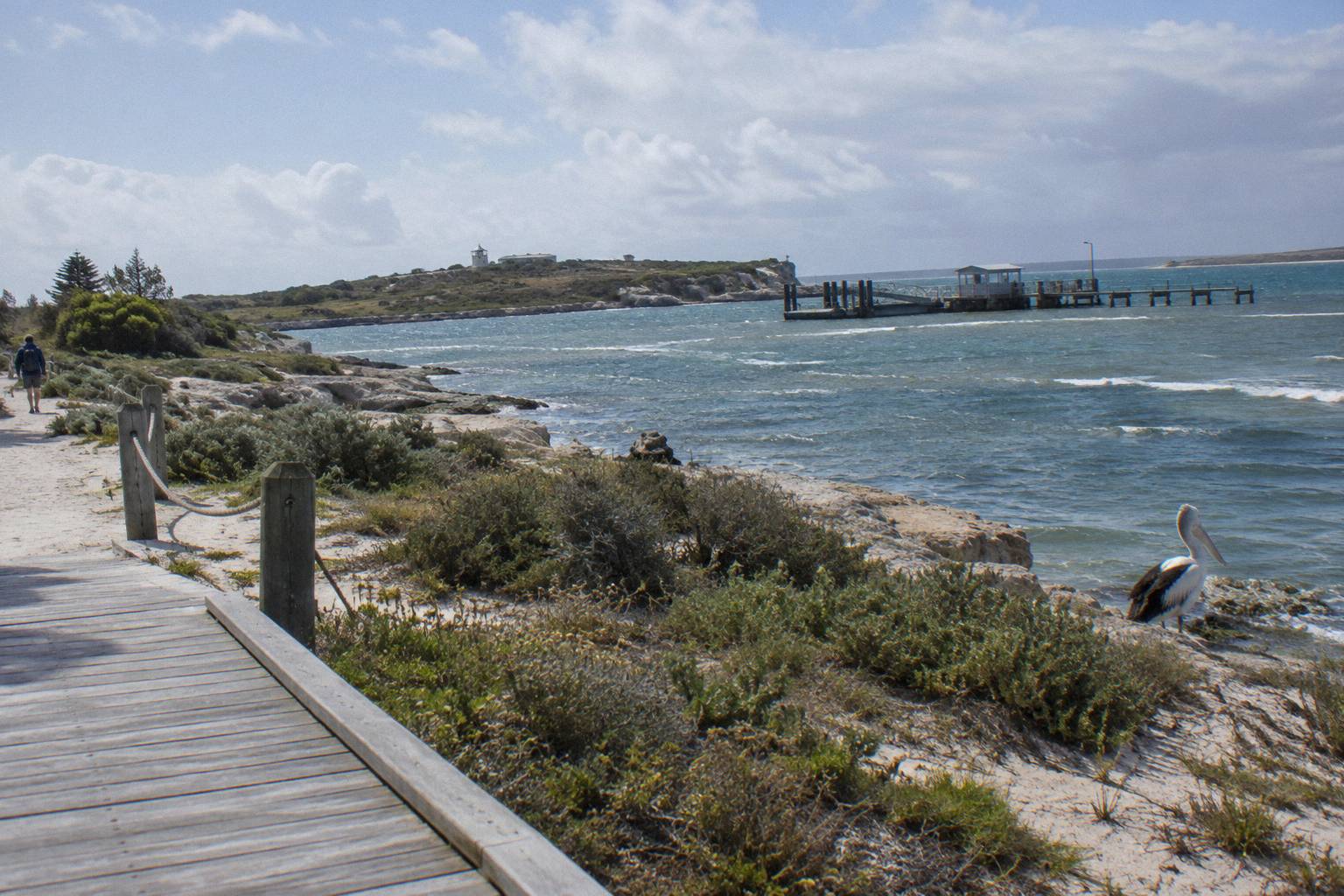
The third mistake is transposing terms between operators and channels. The Rockingham operator's come-again term, "you're welcome to come again free of charge" if no dolphins are seen or swum with, applies to bookings made direct with the operator, within the current season, subject to availability. The Bunbury operator's own term, if no dolphins are sighted you go again free with a 72-hour refund boundary, likewise belongs to direct bookings only. The booking pages for the swims show free cancellation up to 24 hours, a different mechanism entirely. The Penguin Island cruise states no cancellation term. None of these extends to another tour or another purchase channel, a trap the post on refunds when no dolphins show up untangles in full.
The Legal Backdrop In One Paragraph
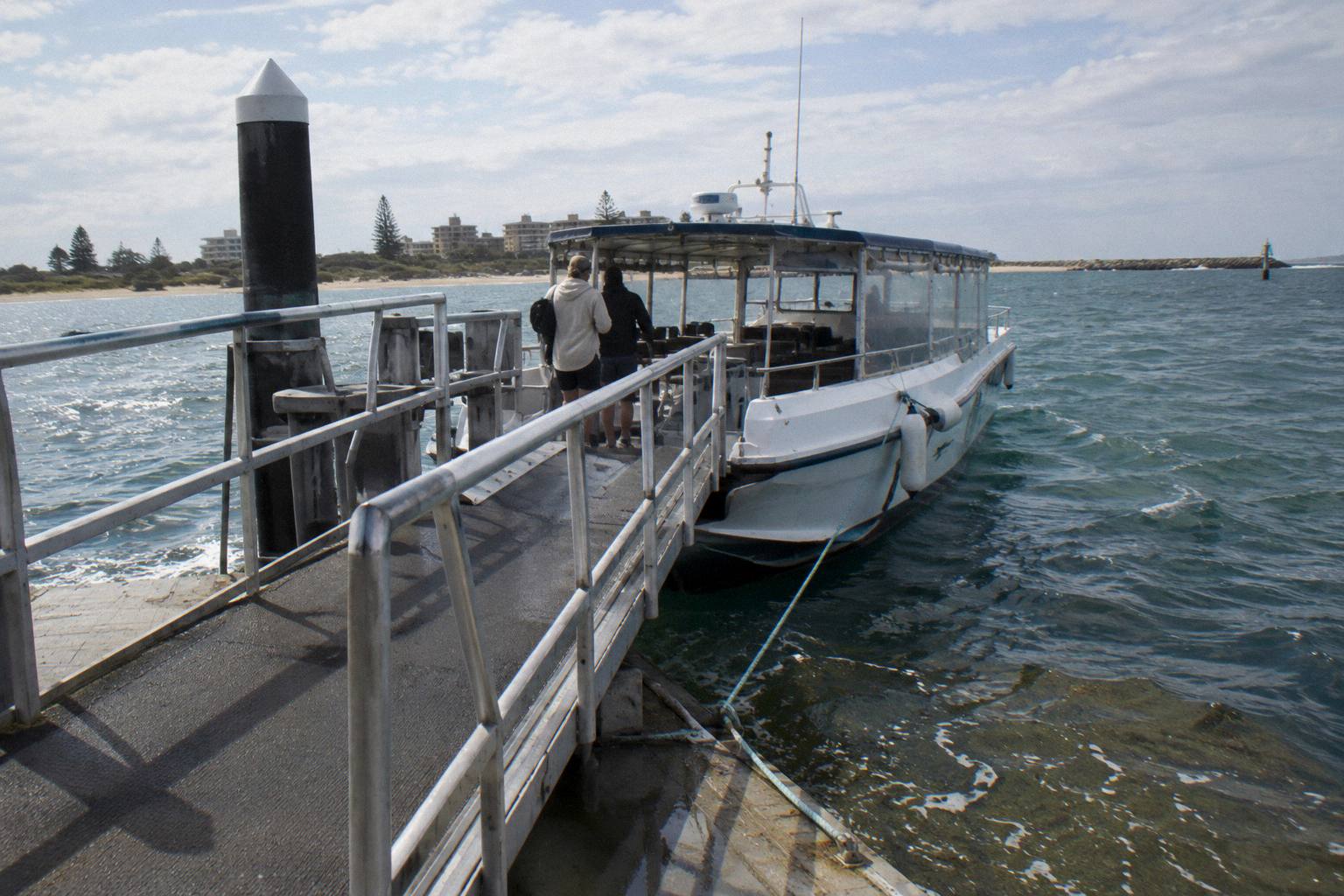
Under Western Australia's Biodiversity Conservation Regulations 2018, an unlicensed person in the water must stay 50 m from a dolphin, with a AUD 5,000 fine for getting closer, and touching or attempting to touch marine fauna carries a AUD 10,000 fine; a commercial swim operates outside those separation rules, which is the legal basis for the tours discussed here. If a dolphin comes to you, regulation 114 requires the swimmer to move away as soon as reasonably possible. The regulations are published at the consolidated WA legislation text, and a licence under regulation 30 authorises commercial interaction approaches. For a nervous swimmer the practical takeaway is that the guided format is what makes a close pass lawful; a freelance snorkeller who chases dolphins commits an offence. The distance rules in plain terms are covered in the post on how close you can get to wild dolphins in the water.
The swim mechanics themselves come from the operator's own page, the Perth Wildlife Encounters swim description, and the Bunbury standard from the Dolphin Discovery Centre's swim page. Where a fact is not stated, ask the operator; no other source speaks for them.
Common Questions About Non-Swimmers On A Dolphin Swim
Can A Non-Swimmer Join The Rockingham Swim?
Not as a swimmer. The operator accepts nervous swimmers and requires no snorkelling experience, but the product still involves holding a guide's belt and floating at the surface in open water. The operator offers a spectator option with no price stated; ask direct for current terms and availability.
Can A Non-Swimmer Join The Bunbury Swim?
Non-swimmers sit on the boat, per the Dolphin Discovery Centre. The swim itself requires independent, confident swimmers aged 8 and over, with children accompanied by a swimming adult and confident swimmers 12 and over able to swim without one.
Do You Need To Be A Strong Swimmer For A Dolphin Swim?
Not at Rockingham, where the operator accepts nervous swimmers with no snorkelling experience and tows each group of up to 7 behind an aqua scooter at the surface. At Bunbury the stated standard is an independent, confident swimmer. There is no stated swimming test, distance or lap requirement for either.
Are Buoyancy Aids Available?
On the Rockingham swim the operator does not recommend buoyancy aids and states the cruise is not suitable for a child who needs one; the 4 mm wetsuit itself is described as very buoyant. On the Bunbury swim a buoyancy vest is offered if required, within a product that still requires confident swimming.
What Can A Non-Swimmer Do Instead?
Three watching cruises run without any swimming: the Mandurah Dolphin Cruise, 75 minutes from A$47 per person; the Mandurah Giants And Dolphin Cruise, 2 hours from A$85 per person; and the Penguin Island And Dolphin Cruise, about 1 hour 30 minutes from the Shoalwater base. Spectator seats on the swims, where offered, are arranged direct with the operator.
Should You Tell The Operator You Are Nervous?
Yes, at booking. The Rockingham operator expects nervous swimmers and provides an introductory snorkel lesson; telling them in advance lets them answer with the facts that matter, the tow system, the surface-only format and the suit's buoyancy, and to flag anything, like the spectator option, that fits better.