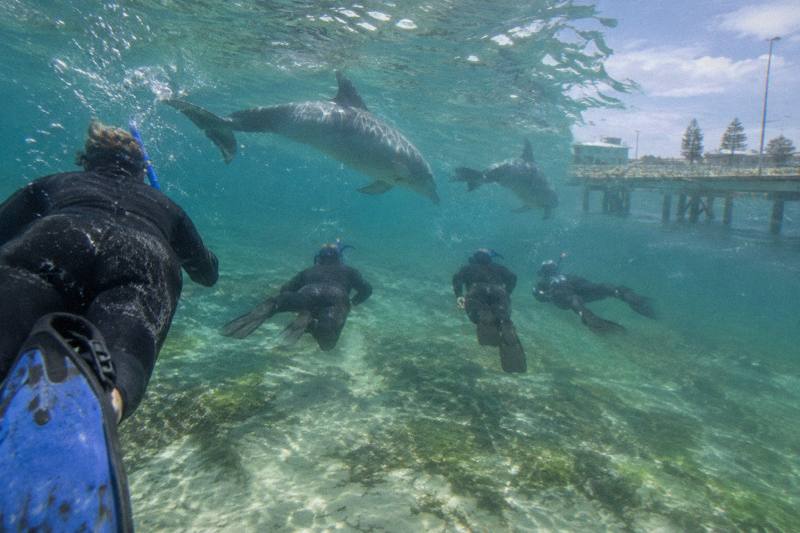
Is It Safe To Swim With Wild Dolphins In Western Australia?
Western Australia's guided wild dolphin swims run to strict rules: swimmers stay at the surface, hold a trained guide's tow line, and never touch the animals. Here is what the operators and the law each say, so you can judge the format for yourself.
Short answer
The two paid swims, the Rockingham Wild Dolphin Swim from Val Street Jetty and the Bunbury Wild Dolphin Swim in Koombana Bay, each use trained guides, full wetsuits and surface swimming only. WA law bans touching dolphins, with a AUD 10,000 fine, and sets a 50 m distance for unlicensed swimmers. No safety statistic exists for either swim, so the decision rests on the stated measures and your own fitness.
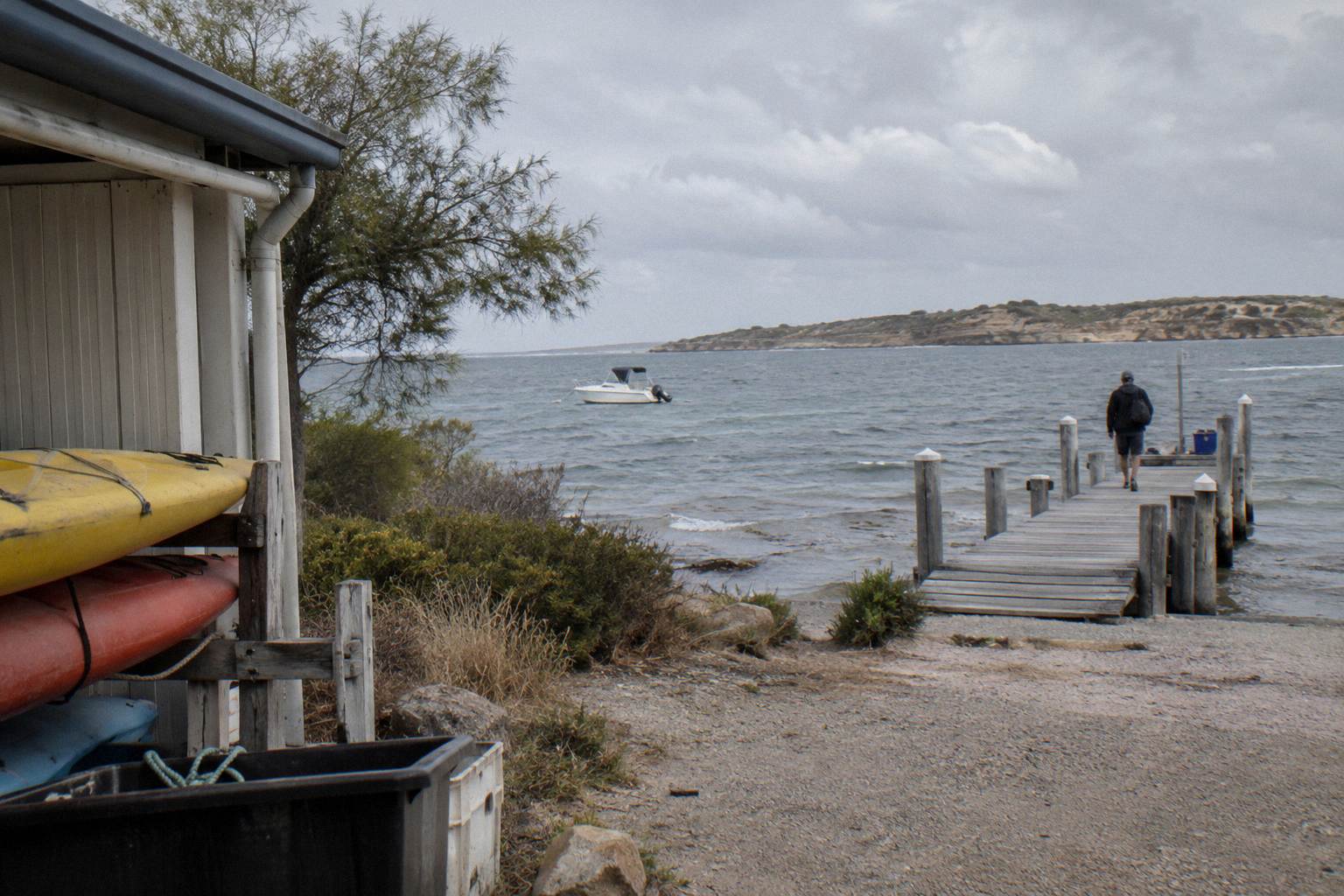
Wild dolphin swims in Western Australia are commercial operations, and the law that governs them is unusually specific about what a swimmer may and may not do. A dolphin is "prescribed fauna" under the Biodiversity Conservation Regulations 2018, touching one carries a AUD 10,000 fine, and a person in the water must keep 50 m away unless the approach happens under a licence. That legal frame, plus the measures each operator states, is what a booking decision rests on. The Rockingham Wild Dolphin Swim runs from Val Street Jetty in Rockingham with groups of up to 7 towed by a guide on an aqua scooter, and the Rockingham Wild Dolphin Swim is rated 4.7 across about 685 reviews, from A$249.72 per person; Check availability if a supervised format sounds right. For the wider context, the guide on Rockingham Swim With Dolphins covers every option in one place.
In Short
The short answer is that the two paid swims, the Rockingham Wild Dolphin Swim and the Bunbury Wild Dolphin Swim, each run with trained guides, full wetsuits and surface snorkelling only, while WA law bans touching, feeding and scuba around dolphins with fines up to AUD 10,000. No incident statistic exists for either swim and none is claimed here. The question for you is whether the stated format suits your swimming and your health.
The Rockingham swim puts each group of up to 7 swimmers with a guide on an aqua scooter, swimmers hold the guide's belt and stay at the surface, and the crew wear Shark Shields. The Bunbury swim, a separate operator, caps its groups at 20 swimmers, requires swimmers to be 8 or over and confident, and provides a buoyancy vest if required. Your doctor can help with the second part of the question. See the parent hub at Rockingham Swim With Dolphins for how each tour compares. The quick facts below pull the numbers together.
| Question | The Stated Position |
|---|---|
| Who supervises in the water | A guide on an aqua scooter tows each group of up to 7 (Rockingham, operator) |
| Do swimmers touch dolphins | No; touching carries a AUD 10,000 fine under WA regulation 118 |
| Minimum age | Rockingham: not recommended for children 6 or younger (operator); Bunbury: 8 and over (operator) |
| Snorkel experience needed | "No previous snorkelling experience is required" (Rockingham operator) |
| Sharks | The operator says crew wear Shark Shields and the chance of an encounter is very low |
What Does Western Australian Law Say About Swimming Near Dolphins?
Western Australian law, under the Biodiversity Conservation Regulations 2018, requires unlicensed swimmers to stay at least 50 m from a dolphin. Getting closer draws a AUD 5,000 fine under regulation 113 for a person or vessel, touching any marine fauna draws AUD 10,000 under regulation 118, and only licensed commercial operators may swim with dolphins under a separate framework that permits the interaction.
The full separation distances come from Schedule 5 of the regulations, and the consolidated regulation text sets out each one.
| Approach Type | Required Separation Distance | Regulation Reference |
|---|---|---|
| Person in the water | 50 m | Schedule 5, Division 3 |
| Vessel | 100 m | Schedule 5, Division 3 |
| Aircraft (not a helicopter) | 300 m | Schedule 5, Division 3 |
| Helicopter | 500 m | Schedule 5, Division 3 |
| Drone (aerial device) | 60 m | Schedule 5, Division 3 |
Regulation 114 adds a duty that surprises people: if a dolphin comes closer than the distance on its own, the swimmer must move away as soon as reasonably possible, and a vessel must go to neutral or move off at no more than 6 knots. The rules protect the animal's choice, not the swimmer's. Regulation 120 makes it an offence, at AUD 5,000, to obstruct or interfere with the natural movement of marine fauna while in the water, and regulation 121 requires a vessel to move away from visibly disturbed fauna.
Two further rules shape what a swim can be. "Diving" with marine fauna, meaning swimming with an artificial air supply, is banned under regulation 119, which is why every guided swim in WA is a snorkel at the surface rather than scuba. Feeding dolphins needs its own licence under regulation 32, and a commercial interaction licence never covers it. A paid dolphin swim is lawful because regulation 112 exempts an activity authorised under a licence, and regulation 30 defines the "fauna disturbing (commercial interaction) licence" that covers approaches to fauna for commercial purposes. No operator's licence number or licence conditions are published, so a group cap or time-in-water limit beyond what each operator states cannot be confirmed; ask the operator when booking if the detail matters to you.
How Does The Rockingham Swim Supervise People In The Water?
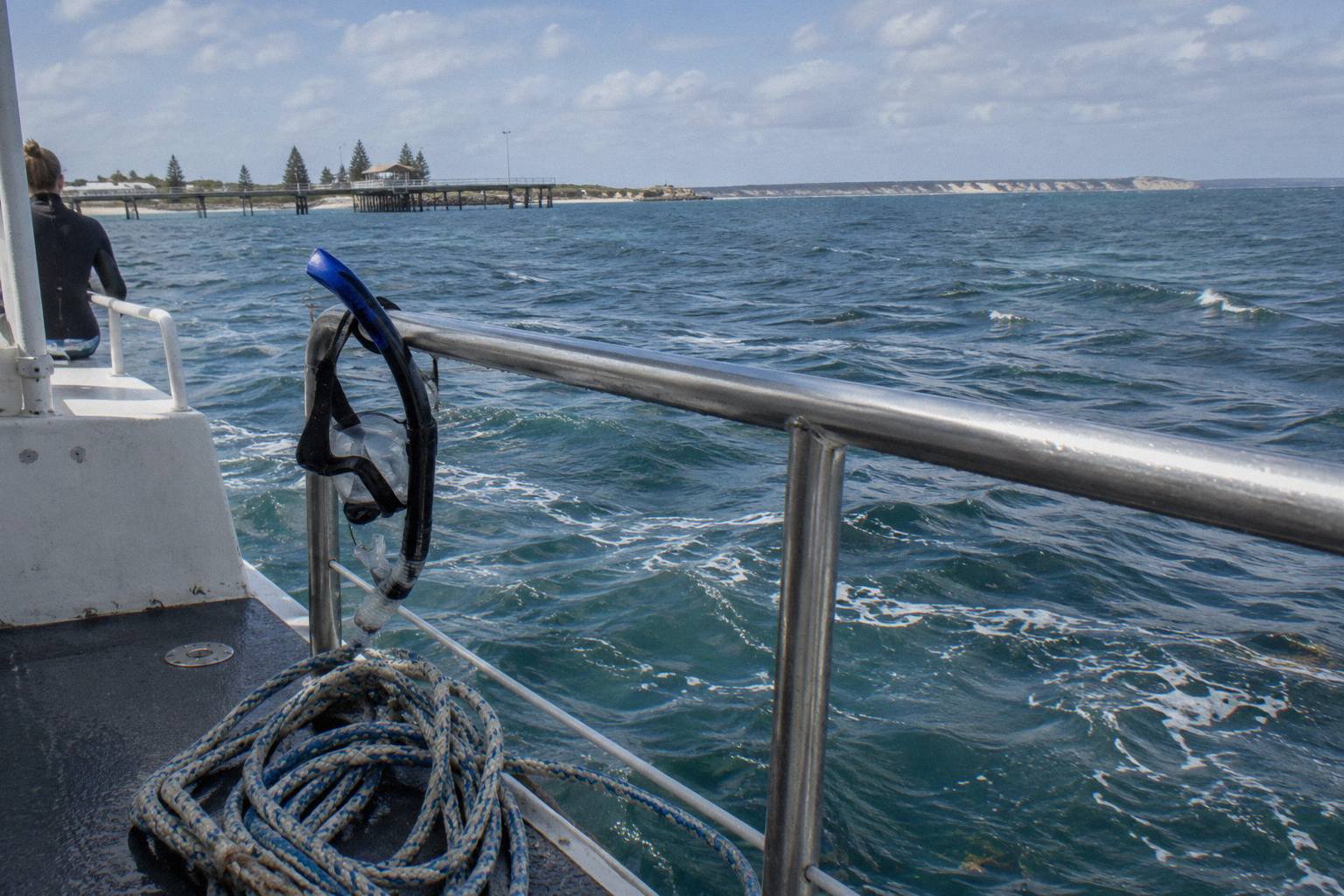
Each group of up to 7 swimmers enters the water with a guide on an aqua scooter, holding the guide's belt and staying at the surface. A second lead guide on a solo scooter works around the dolphins near the group; swimmers may not touch or feed the dolphins, the crew wear Shark Shields, and the operator says the chance of a shark encounter is very low.
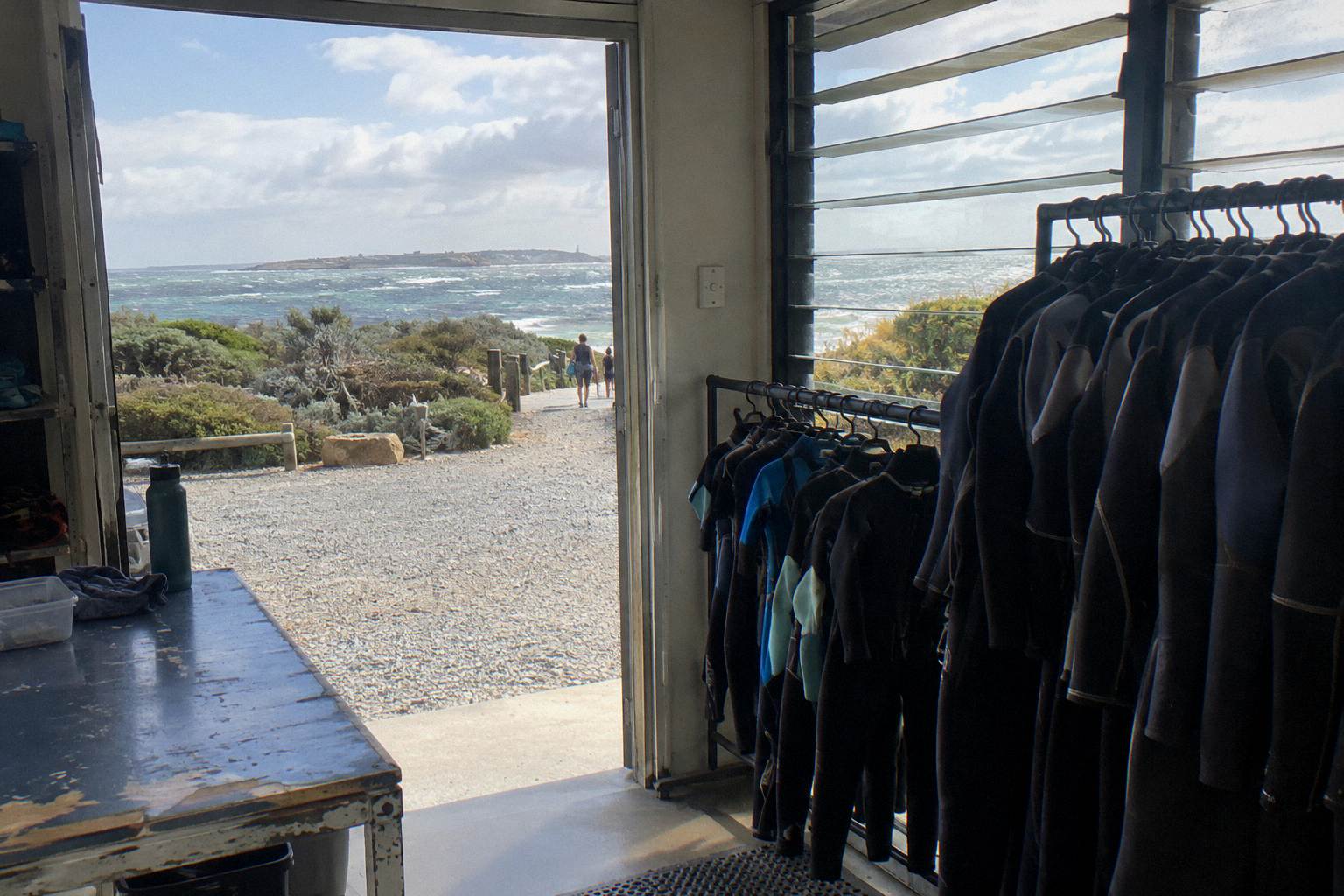
The tow format is the core of the answer for anyone asking whether the swim is manageable. Because the guide's scooter does the moving, a swimmer's job is to hold on, keep the mask clear and breathe through the snorkel, an introductory lesson covers the basics before anyone gets wet. The 4 mm full-length wetsuit, in the operator's words, "keeps you very buoyant", with hoods mentioned for cooler water and children's sizes available. Buoyancy aids beyond the suit are not recommended, and the operator is direct about the boundary: "if you feel your child needs a buoyancy aid this cruise is definitely not suitable". That sentence is one of the clearest suitability tests any operator publishes, and it is worth reading literally before booking for a family.
The same page answers the experience question plainly: "no previous snorkelling experience is required", and nervous swimmers are accepted. Cruises have no fixed finish time so the crew can keep searching, which the booking page frames as about 3 to 6 hours depending on dolphin sightings. A waiver is signed before boarding, the crew film every swim and upload photos online, and the operator says it has over 25 years' experience with local dolphins it calls territorial and very consistent. A spectator option exists for those who would rather stay aboard, with no price stated. The operator's own swim page gives the full mechanics, and the operator's swim page is where each statement above appears.
If a morning on the water without getting in appeals more, the question of whether seeing dolphins says anything about sharks nearby comes up for a lot of readers, and the short version is that no such link is claimed by any official source.
Is The Swim Suitable For Nervous Or First-Time Snorkellers?
The operator states that no previous snorkelling experience is required and that nervous swimmers are accepted, and the format supports both claims: swimmers hold a trained guide's belt, stay at the surface and are towed rather than asked to swim distances independently. The introductory snorkel lesson happens before entry, and the wetsuit adds buoyancy. The one firm boundary is buoyancy aids, which are not recommended, and the operator says a child who needs one should not be on the cruise.
Reading the format as a nervous swimmer, the load-bearing facts are these: you are never asked to free-swim toward dolphins, you hold on and are moved, and you stay at the surface with a guide in arm's reach in front of you. Mask clearing and snorkel breathing are taught before the deck. The suit itself floats you. What the operator does not offer is a middle option of extra flotation, and that matters for anyone who relies on a vest in open water; the Bunbury swim, by contrast, lists a buoyancy vest if required among its inclusions, which makes it the stated alternative for a swimmer who wants that support. The comparison of whether non-swimmers can join a wild dolphin swim works through the same question in more detail.
Anyone with a health condition should treat the booking conversation as part of the safety setup. The operator's own note is specific: people with pacemakers or who are pregnant must not use the Shark Shield and should avoid swimming near anyone using one wearing one, because the crew wear them in the water. Tell the operator when you book, and check with your doctor about snorkelling in open water for anything cardiac, respiratory or pregnancy-related. No medical or physiological claim appears on the operator's page beyond the pacemaker and pregnancy note, and none is added to it.
The free cancellation window matters here: the booking page for this swim allows free cancellation up to 24 hours before it starts, a full refund at least 24 hours out. For the operator's direct bookings the terms differ, with changes by email 48 hours or more before departure and no refund inside 48 hours, so the channel you book through sets the rule that applies to you.
What Are The Age And Supervision Rules For Children?
The Rockingham operator says the swim is "not recommended for children 6 years or younger", parents are responsible for supervising their own children in the water, staff do not supervise children, and children are not left on board unsupervised. No other age, weight, height or swimming-distance test is stated. The Bunbury swim sets a different rule: swimmers must be 8 or over, children swimming need an accompanying swimming adult, and confident swimmers 12 and over may swim without one.
These two age rules belong to their own operators and never swap. At Rockingham the supervision duty sits squarely with the parent in the water, which is the fact a family plans around: an adult swims beside their child the whole time, holding the same guide's belt. The operator's line about buoyancy aids doubles as the suitability test for younger children, since a child who cannot float in a wetsuit without an aid is, by the operator's own wording, not a fit for the cruise. At Bunbury the Dolphin Discovery Centre requires independent, confident swimmers, from 8 years, with the accompanying-adult rule to 12. For a family split between a swimmer and a non-swimmer, the Bunbury page allows observers on the boat, up to 4 per group, and the Rockingham operator offers a spectator option with no price stated.
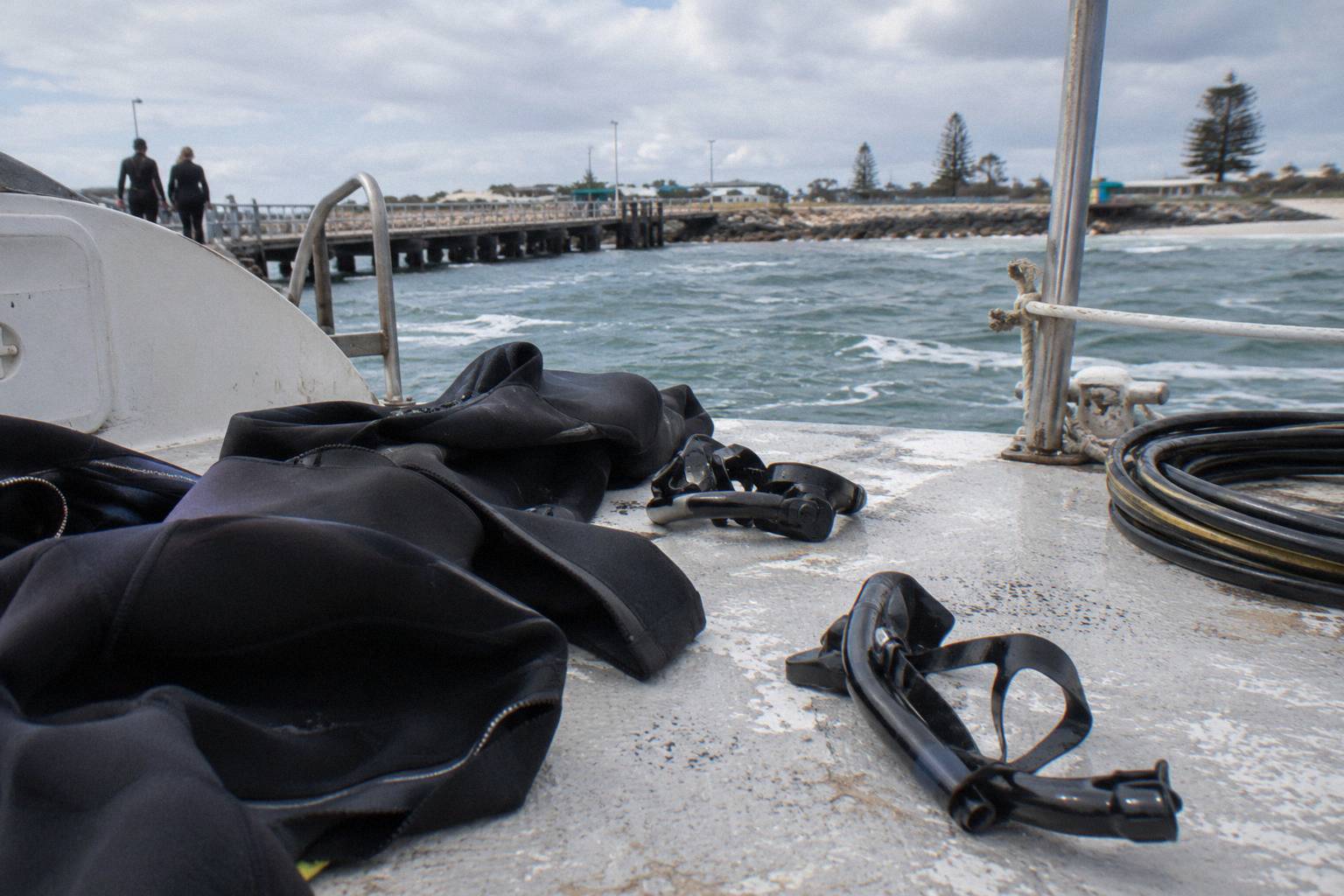
The ages in one view:
| Tour | Stated Age Rule | Who Stated It |
|---|---|---|
| Rockingham Wild Dolphin Swim | "Not recommended for children 6 years or younger"; parents supervise in the water | Operator |
| Bunbury Wild Dolphin Swim | Swimmers 8 and over; accompanying swimming adult for children; confident 12 and over may swim without | Operator |
| Penguin Island And Dolphin Cruise | Not stated | Not stated |
| Mandurah Dolphin Cruise | No age stated; guests must move around the vessel independently and safely | Booking page |
| Mandurah Giants And Dolphin Cruise | Not stated | Not stated |
For younger children or a mixed group, watching-only trips remove the swimming question entirely, and the guide to choosing between Rockingham and Mandurah dolphin experiences lays out the short-cruise side of that choice.
What Are The Rules On Touching, Feeding And Drones?
Touching or attempting to touch any marine fauna carries a AUD 10,000 fine under regulation 118, and feeding dolphins is banned without its own licence under regulation 32. A drone must keep 60 m from a dolphin under Schedule 5. If a dolphin approaches you closer than the allowed distance, regulation 114 requires you to move away as soon as reasonably possible rather than stay and enjoy it.
These rules apply to everyone in the water, licensed swimmer or not, and the operators repeat them as booking conditions: the Rockingham operator states no touching and no feeding, and the Dolphin Discovery Centre operates under the same fauna regulations. The 60 m drone distance is the one people break without thinking, since a drone launched from a boat or beach to film a swim can close that gap in seconds. Interfering with a dolphin's natural movement in the water carries its own AUD 5,000 fine under regulation 120, which covers chasing, blocking and grabbing, not only touching. A fuller walkthrough of the approach rules sits in the article on how close you can get to wild dolphins in the water, and on what to do if one comes to you.
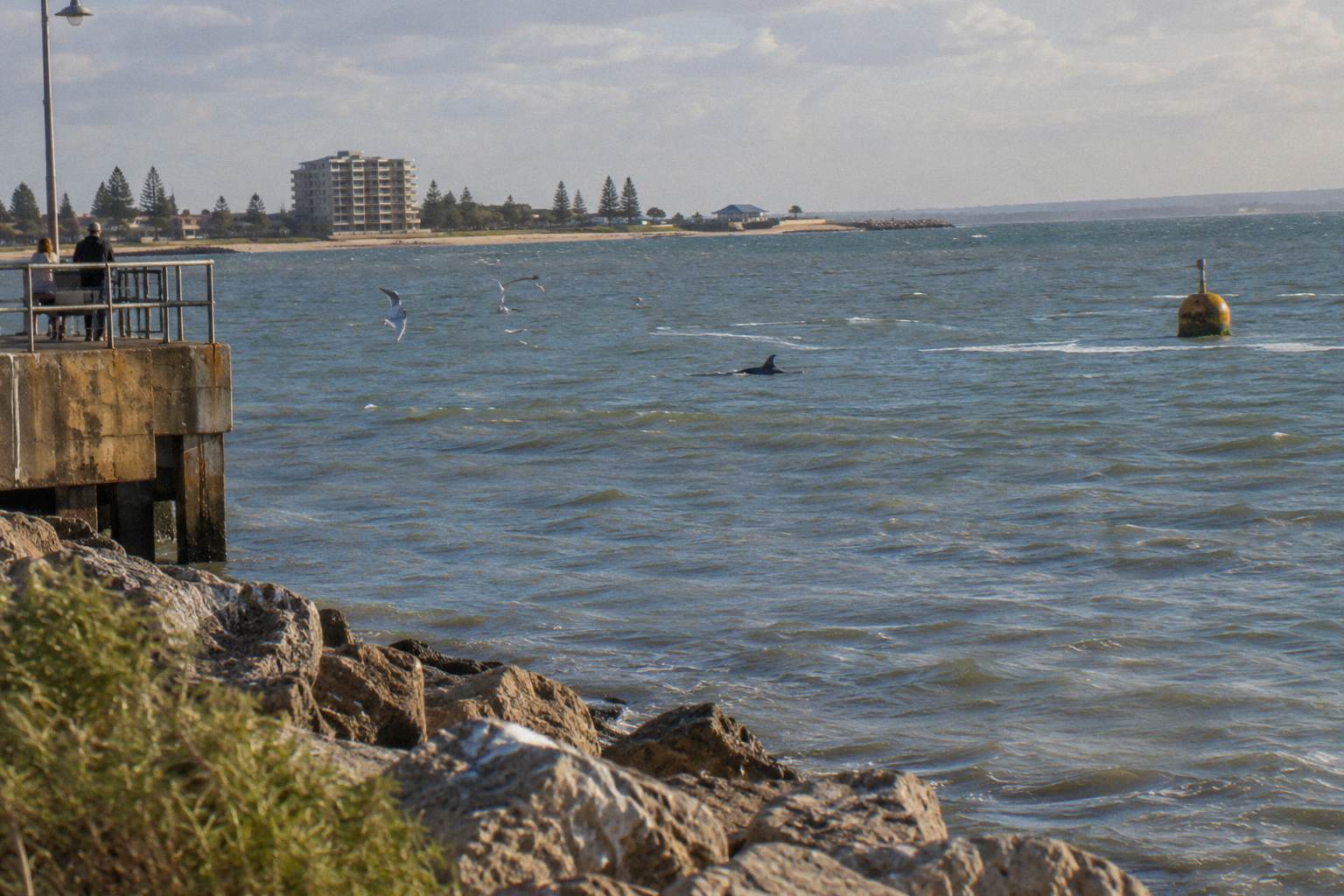
One adjacent fact is worth separating cleanly: the sea lion swimming trial that DBCA approved for one Shoalwater Islands Marine Park operator is a distinct licensed activity, not part of any dolphin swim, and no dolphin swim sold here includes swimming with sea lions. The DBCA announcement of the trial describes its own distances, 50 m in the water for seals, and it should never be read onto the dolphin products.
How Does The Bunbury Swim Handle Safety Differently?
The Bunbury Wild Dolphin Swim builds safety around swimmer standards and small guided groups: the Dolphin Discovery Centre requires every swimmer to be independent and confident from 8 years old, keeps groups to 8 to 20 swimmers plus up to 4 observers, supplies wetsuits, masks, snorkels, fins and a buoyancy vest if required, and runs as a DBCA licensed, Advanced Eco-Tourism certified tour.
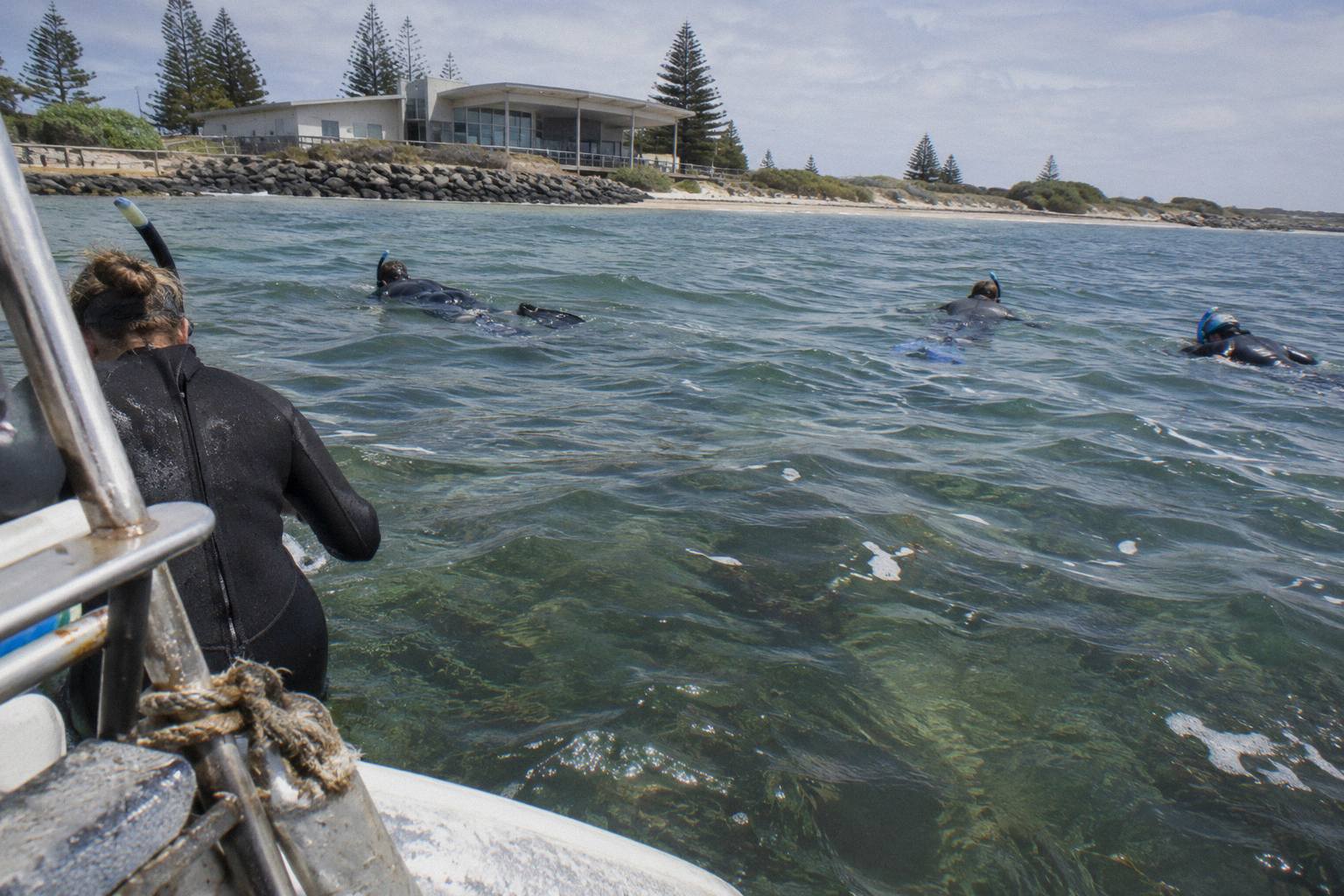
Where the Rockingham format tows small groups on scooters, the Bunbury format is a guided swim with a stated group size band and no scooter tow claimed on the Centre's page. The vest option is the practical difference for a swimmer who wants extra flotation, since the Rockingham operator does not recommend buoyancy aids. The booking page adds the shore-side comforts: wetsuits in all sizes, floating devices, fresh drinking water and a snack, a tea and coffee station at the Centre, changing rooms, storage and hot showers after. Cancellation splits by channel here in a way worth checking before you pay: the booking page says free cancellation up to 24 hours, while the Centre's own terms for direct bookings allow a full refund or reschedule up to 72 hours before and charge 100 percent inside 72 hours, with non-swimmers sitting on the boat and no refund. The Bunbury swim is rated 4.7 across 24 reviews, a small pool, and its price is on the booking page rather than shown here. The Centre's swim page states each of the terms above.
For choosing between the two swims on every axis that matters, the guide to Rockingham versus Bunbury for a wild dolphin swim compares season, format and group size side by side.
What If Someone In Your Group Would Rather Not Swim?
Watching-only options exist at every departure point, and none of them puts a guest in the water. The Rockingham operator offers a spectator option on the swim cruise, with no price stated. The Bunbury swim carries up to 4 observers who sit on the boat. The Penguin Island And Dolphin Cruise, about 1 hour 30 minutes from the Shoalwater base at 153 Arcadia Drive, and the two Mandurah cruises are dolphin watching products only, never swims.
For a group with one eager swimmer and one hesitant partner, the split is a swim ticket plus a spectator or cruise ticket, and the watching products carry their own stated comforts. The Mandurah Dolphin Cruise, 75 minutes and rated 4.5 across 1,090 reviews, from A$47 per person, includes live commentary from a skipper and local expert, lists free parking close to the departure point, states that hotel pickup is not included, and allows free cancellation up to 24 hours. Its booking page also notes that guests must be able to move around the vessel independently, including boarding, steps and staying seated in small waves without crew help, which is the mobility line for that product. Its come-again term, in the booking page's own words, is that dolphins are wild and choose when and how they interact, so no sighting is promised, and if none are sighted you can return free until you see them, rebooking within 12 months.
The Mandurah Giants And Dolphin Cruise, 2 hours from Mandurah Terrace, from A$85 per person and rated 4.8 across 87 reviews, runs a SuperCat with upper and lower decks, sells soft drinks and light snacks on board, excludes the fish-and-chip lunch, and carries the same join-again-free term on its own booking page. Neither Mandurah product is a swim, and no swim exists at Mandurah. The guide on a swim versus a watching cruise works through the trade-off for mixed groups.
What Should You Tell The Operator And Your Doctor Before Booking?
Three disclosures matter: any cardiac device, since the Shark Shield worn by the Rockingham crew is off-limits to people with pacemakers and to anyone pregnant swimming near one; any condition that affects swimming confidence or breathing through a snorkel; and any child whose floating depends on an aid, which the Rockingham operator names as a reason the cruise is not suitable. Tell the operator when you book and check with your doctor for anything medical.
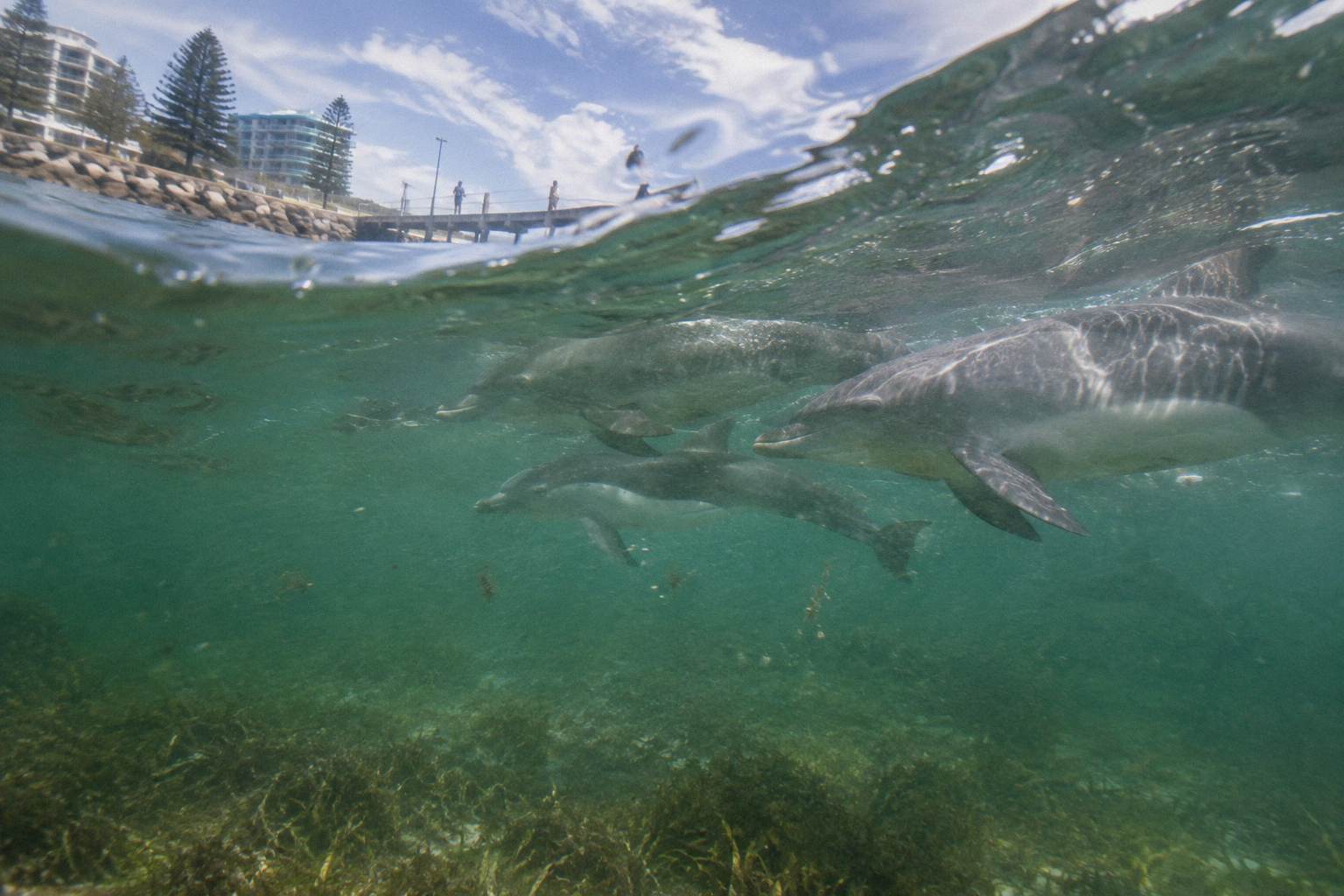
The practical checklist before you pay is short. Confirm the meeting point, Val Street Jetty in Rockingham or the Dolphin Discovery Centre at Anchorage Cove in Koombana Bay, from your booking confirmation. Ask the operator directly about anything not stated that matters to you: food and drink on the Rockingham swim is not stated, pickup on its booking page is not stated, and the operator's Perth CBD bus transfer is an extra-cost option for bookings made direct with the operator, available late September to early June, with the pick-up point chosen when booking direct. Sea temperature is worth knowing for comfort planning: the operator says the water runs 18 °C in September through to 25 °C in summer and autumn, and seatemperature.org lists monthly averages for the Mandurah coast from 18.3 °C in September to 22.8 °C in March, with a full breakdown in the guide to water temperature and wetsuits on a wild dolphin swim.
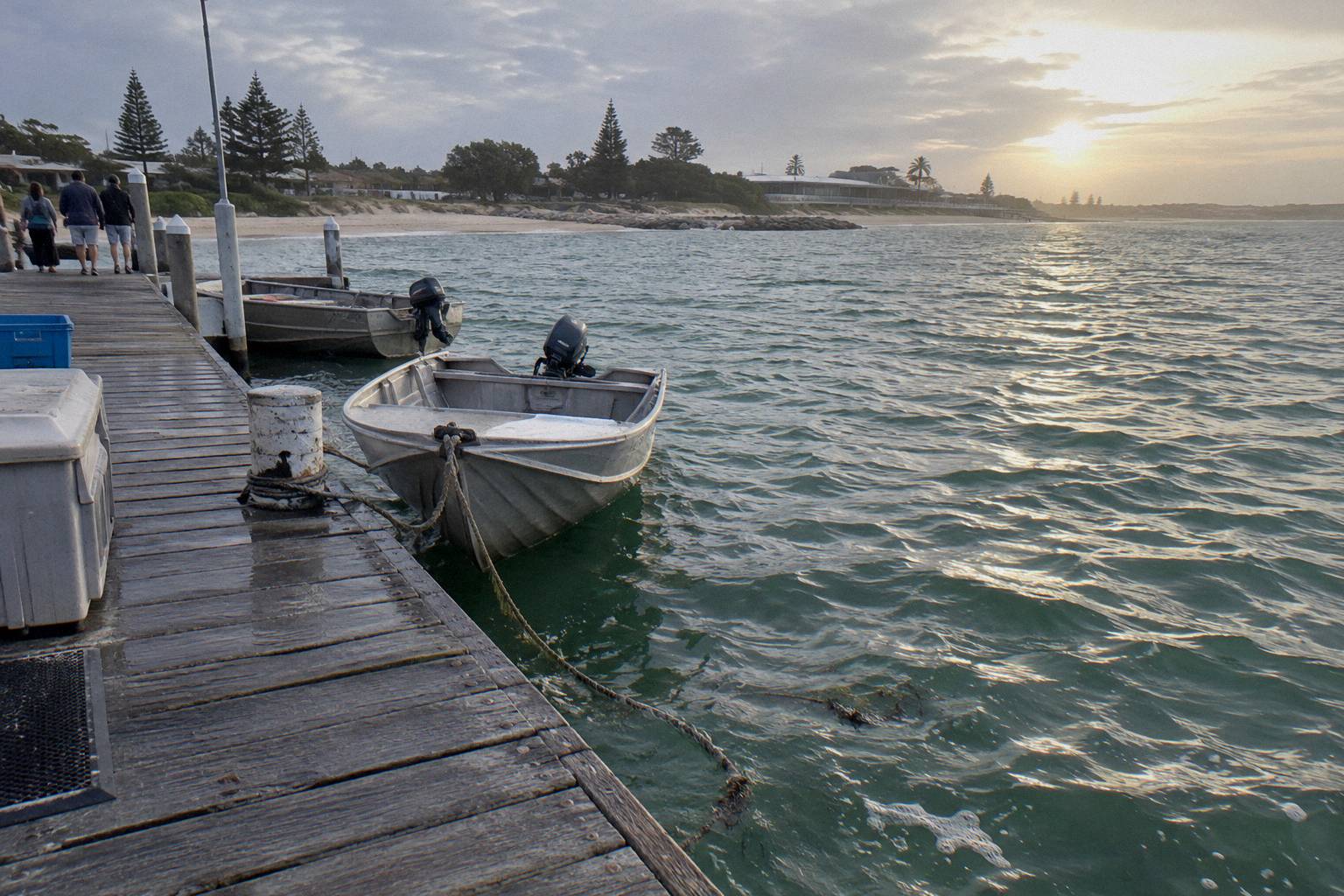
A first-timer's checklist built only from what the operators state:
- Read the operator's pacemaker and pregnancy note on the Shark Shield before booking, and raise it with your doctor if it applies to anyone in your group.
- Check the age rule for the swim you are booking: 6-and-under not recommended at Rockingham, 8-plus at Bunbury, each from its own operator.
- Decide on flotation plainly: the 4 mm wetsuit is the flotation at Rockingham; a buoyancy vest if required is stated only at Bunbury.
- Note which cancellation window applies to your channel: 24 hours on the booking pages that state it, 48 hours or 72 hours under the operators' own direct terms.
- Ask the operator, when booking, anything the pages leave as not stated, from food to pickup to time in the water.
What Trips People Up When Booking A Dolphin Swim
The recurring mistakes are mixing one operator's rules with another's, assuming a spectator spot floats a non-swimmer into the water experience, and reading a come-again term as a refund. Ages, flotation and supervision rules attach to a single operator and never transfer. Pickup is not part of any swim booking unless a page says so. Each cancellation window belongs to its own channel, direct with the operator or through the booking page, and the two never merge.
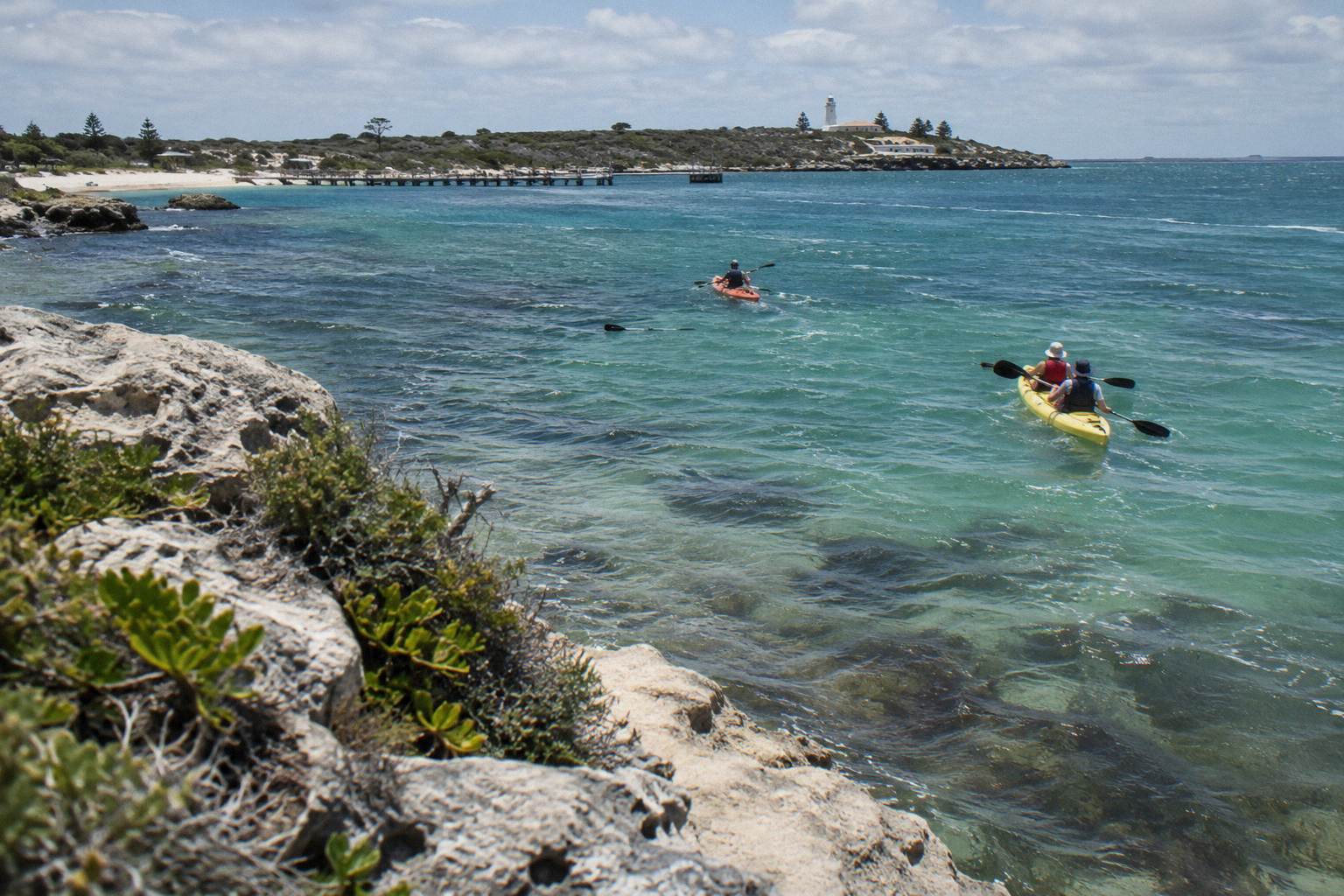
The specific traps, each drawn from what the operators state. The Rockingham operator's come-again term, in its words "you're welcome to come again free of charge" if no dolphins are seen or swum with, applies for bookings made direct with the operator, is not a refund, and requires rebooking within the current season; the booking page's own term is free cancellation up to 24 hours, which is a different thing entirely. The Centre's sightings term at Bunbury is likewise a direct-booking term, and the Centre's 72-hour refund cutoff is stricter than the booking page's 24 hours, so a late change costs differently depending on where you bought the ticket. The Penguin Island And Dolphin Cruise states no price, rating or cancellation term, and assuming the other tours' 24-hour window applies to it is a guess; ask before booking if that matters. None of the cruises includes a swim, and no sea lion swim can be added to a dolphin product. The guide on how far ahead to book a wild dolphin swim covers the timing side, including the September to early June season at Rockingham and November to April at Bunbury.
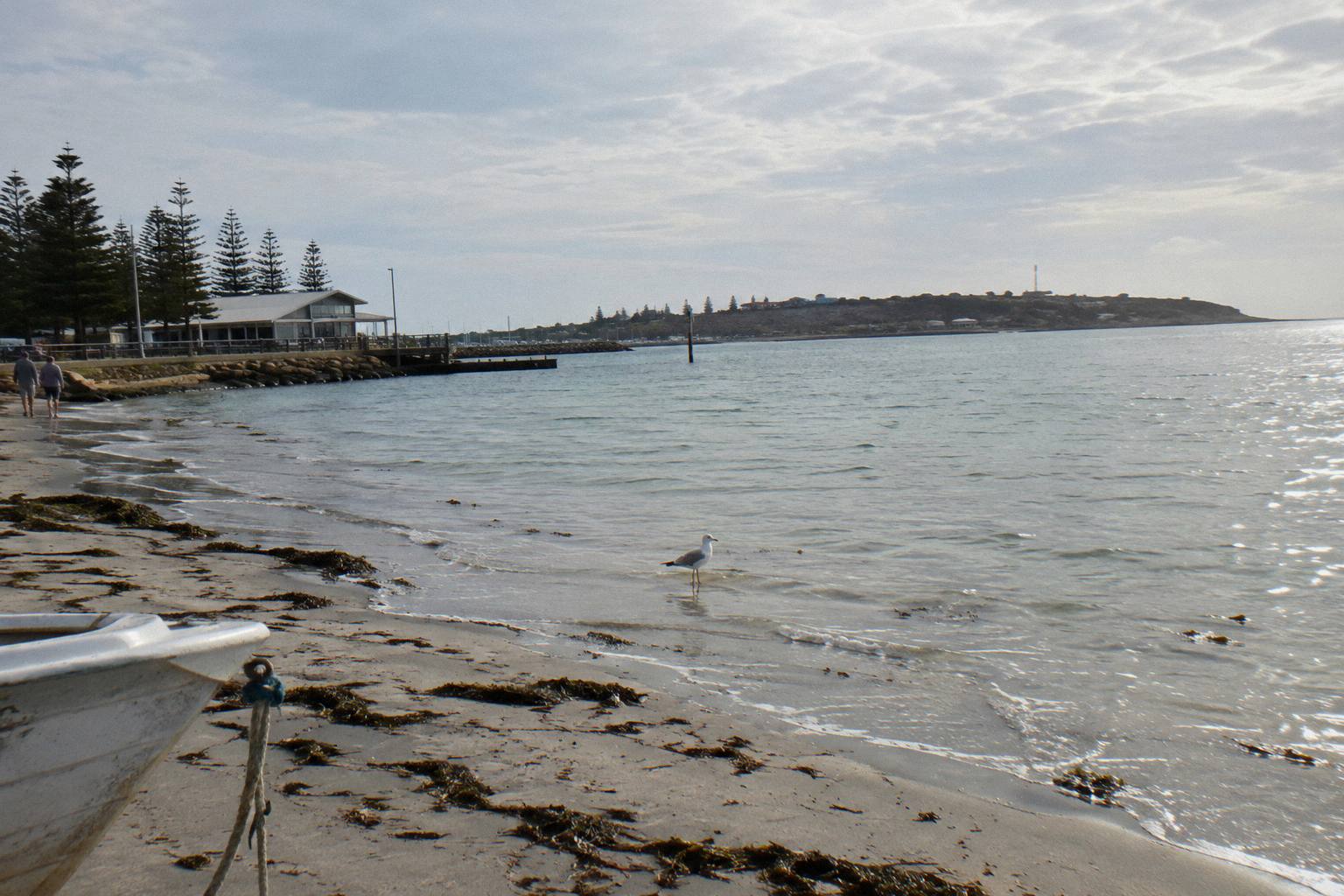
Common Questions About Swimming Safely With Wild Dolphins
Is It Safe To Swim With Wild Dolphins In Western Australia?
No verdict is offered here, because no incident statistic exists for either swim. What is stated: the swims run with trained guides, surface snorkelling only, no touching allowed and a AUD 10,000 fine for it, groups of up to 7 towed by a scooter guide at Rockingham and 8 to 20 swimmers at Bunbury. Judge the stated format against your own swimming and health, and check with your doctor.
Do The Swims Use Shark Protection?
The Rockingham operator says the crew wear Shark Shields and that the chance of a shark encounter is very low. People with pacemakers or who are pregnant must not use the Shark Shield and should avoid swimming near anyone using one, per the operator. No shark statistic beyond that statement is claimed.
Can You Touch A Wild Dolphin While Swimming?
No. Regulation 118 of the Biodiversity Conservation Regulations 2018 bans touching or attempting to touch any marine fauna, with a AUD 10,000 fine. Regulation 120 also bans obstructing a dolphin's natural movement in the water, at AUD 5,000.
How Close Can An Unlicensed Swimmer Get To A Dolphin?
50 m in the water under Schedule 5. A commercial swim operates under an exemption in regulation 112, which is how a paid tour can approach closer. If a dolphin approaches you under the distance, regulation 114 requires you to move away as soon as reasonably possible.
Do You Need To Be A Strong Swimmer?
At Rockingham the operator requires no previous snorkelling experience and accepts nervous swimmers, with a guide towing each group of up to 7 while swimmers hold the belt and stay at the surface. At Bunbury swimmers must be independent, confident swimmers 8 and over. Neither operator states a distance or fitness test.
Can Children Join A Dolphin Swim?
The Rockingham operator says the cruise is "not recommended for children 6 years or younger" and that parents supervise their own children in the water. The Bunbury swim takes swimmers from 8, with a swimming adult accompanying children and confident swimmers 12 and over swimming without one.