Wild Dolphin Swims In Australia Compared, And Where Western Australia Fits
Australia has several wild dolphin swim experiences, and the rules, operators and seasons behind them differ from state to state. Two swims sit within reach of Perth: the Rockingham Wild Dolphin Swim from Val Street Jetty and the Bunbury Wild Dolphin Swim in Koombana Bay, run by separate operators with separate terms.
Short answer
Two wild dolphin swims are covered here in full: the Rockingham Wild Dolphin Swim, from A$249.72 per person, about 3 to 6 hours, September to early June; and the Bunbury Wild Dolphin Swim, about 4 hours, November to April, price on the booking page. Other Australian regions have their own operators and rules. WA law sets a 50 m in-water distance for unlicensed swimmers.
Dolphin swims exist along several parts of the Australian coast, and no single national rulebook or operator covers them all. Each state sets its own approach distances, each swim is run by its own operator with its own season, ages and terms, and a price that holds for one product tells you nothing about the next. What can be compared fairly is the pair of wild dolphin swims within reach of Perth, one of which states a DBCA licence, plus the watching-only cruises around them.
In short: two wild dolphin swims are covered here: the Rockingham Wild Dolphin Swim, from A$249.72 per person, listed at about 3 to 6 hours depending on sightings, rated 4.7 across about 685 reviews, running September to early June; and the Bunbury Wild Dolphin Swim, about 4 hours, November to April, rated 4.7 across 24 reviews, with the price on the booking page. Three watching-only cruises sit alongside them. Other Australian regions have their own operators and rules and are not covered here. For the wider question of where in WA you can swim with dolphins, the short answer is those two swims and no others on these pages.
| Fact | Rockingham Wild Dolphin Swim | Bunbury Wild Dolphin Swim |
|---|---|---|
| Type | Swim | Swim |
| Operator | Perth Wildlife Encounters | Dolphin Discovery Centre |
| Departure point | Val Street Jetty, Rockingham | Dolphin Discovery Centre, Anchorage Cove, Koombana Bay |
| Season | September to early June | November to April |
| Listed duration | About 3 to 6 hours depending on sightings | About 4 hours |
| Booking-page price | From A$249.72 per person | Price on the booking page |
| Rating | 4.7 across about 685 reviews | 4.7 across 24 reviews |
| Minimum age | Not recommended for children 6 years or younger, operator | Swimmers 8 and over, operator |
| Cancellation on the booking page | Free up to 24 hours | Free up to 24 hours |
Where Can You Swim With Dolphins In Australia?
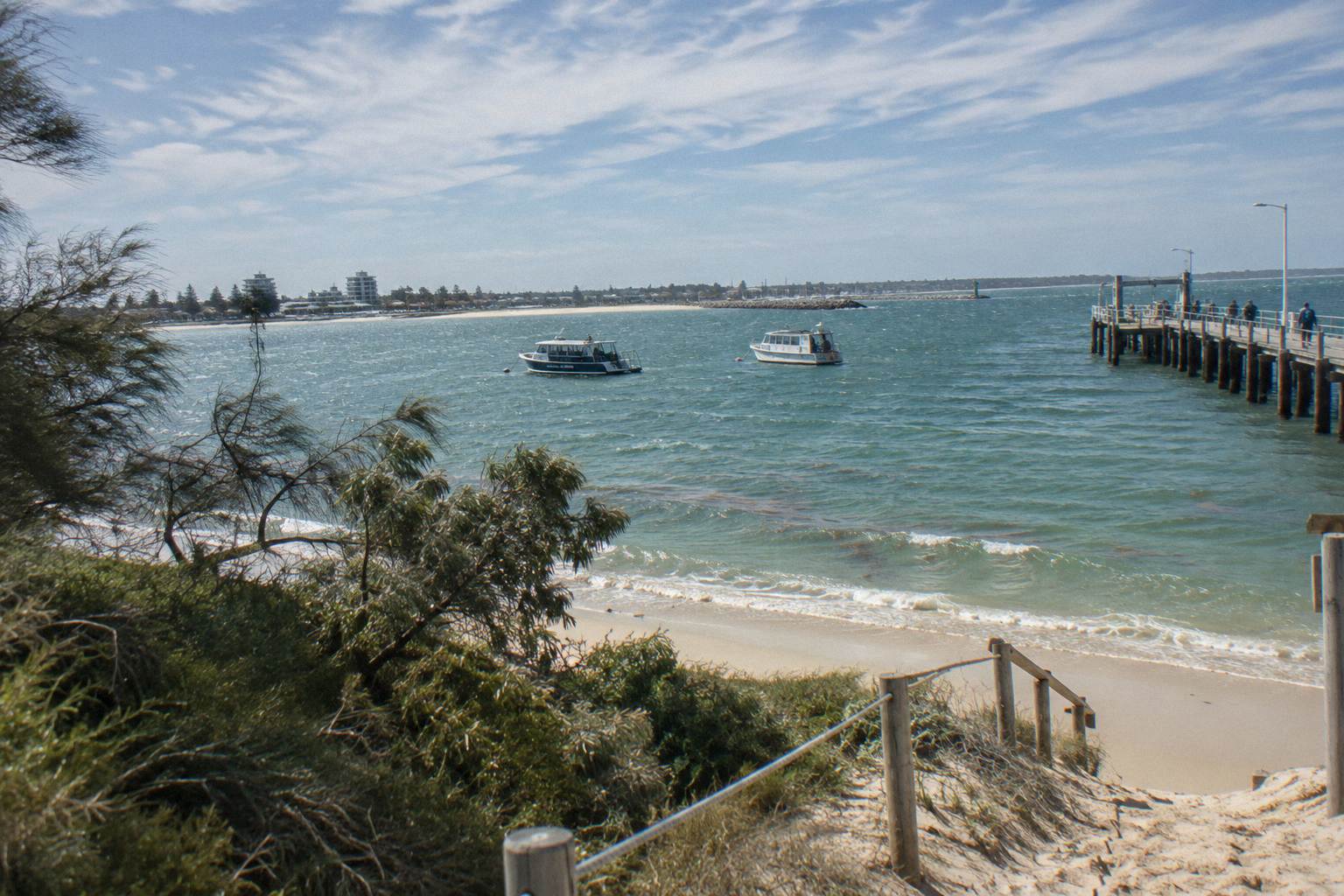
Dolphin swim experiences run in several Australian states, but the two covered in full here are both within reach of Perth: the Rockingham Wild Dolphin Swim, about 45 minutes away, and the Bunbury Wild Dolphin Swim further south. Monkey Mia, Sorrento and every region outside Rockingham, Mandurah and Bunbury have their own operators and rules, so compare each operator's stated season, ages and terms directly.
Western Australia's two swims share a legal framework, which makes them the only pair that can be compared line by line with confidence. Perth Wildlife Encounters runs the Rockingham swim from Val Street Jetty, with entry to the water in groups of up to 7 towed by a guide on an aqua scooter. The Dolphin Discovery Centre runs the Bunbury swim in Koombana Bay, with between 8 and 20 swimmers and a stated daily 7:45 am start. The mechanics, the seasons and the booking terms all differ, and each figure below is that operator's or that booking page's own statement.
Elsewhere in the country the picture is genuinely patchy from a buyer's point of view. Queensland, New South Wales, South Australia and Tasmania each have their own marine mammal rules and their own permitted operators, and a swim that is legal in one state may not exist in the next. Rather than guess at those products, the sound move is to treat any interstate swim the way you would treat these two: read the operator's own page for season, ages, group size and terms, and read the booking page for price and cancellation. The comparison method transfers even where the facts do not.
For a swim-by-swim look at the two WA products, see the guide comparing Rockingham and Bunbury swims. For sightseeing alternatives that keep you dry, the cruise versus swim decision guide works through the same trade-off with the watching-only tours.
How The Rockingham And Bunbury Swims Compare
Rockingham tows groups of up to 7 behind an aqua scooter among the dolphins, runs September to early June, lasts about 3 to 6 hours and is listed from A$249.72 per person, while Bunbury offers a 4-hour guided swim in Koombana Bay from November to April, caps swimmers at 20, requires ages 8 and over with water confidence, and posts its price on the booking page, with each price applying only to its own swim.
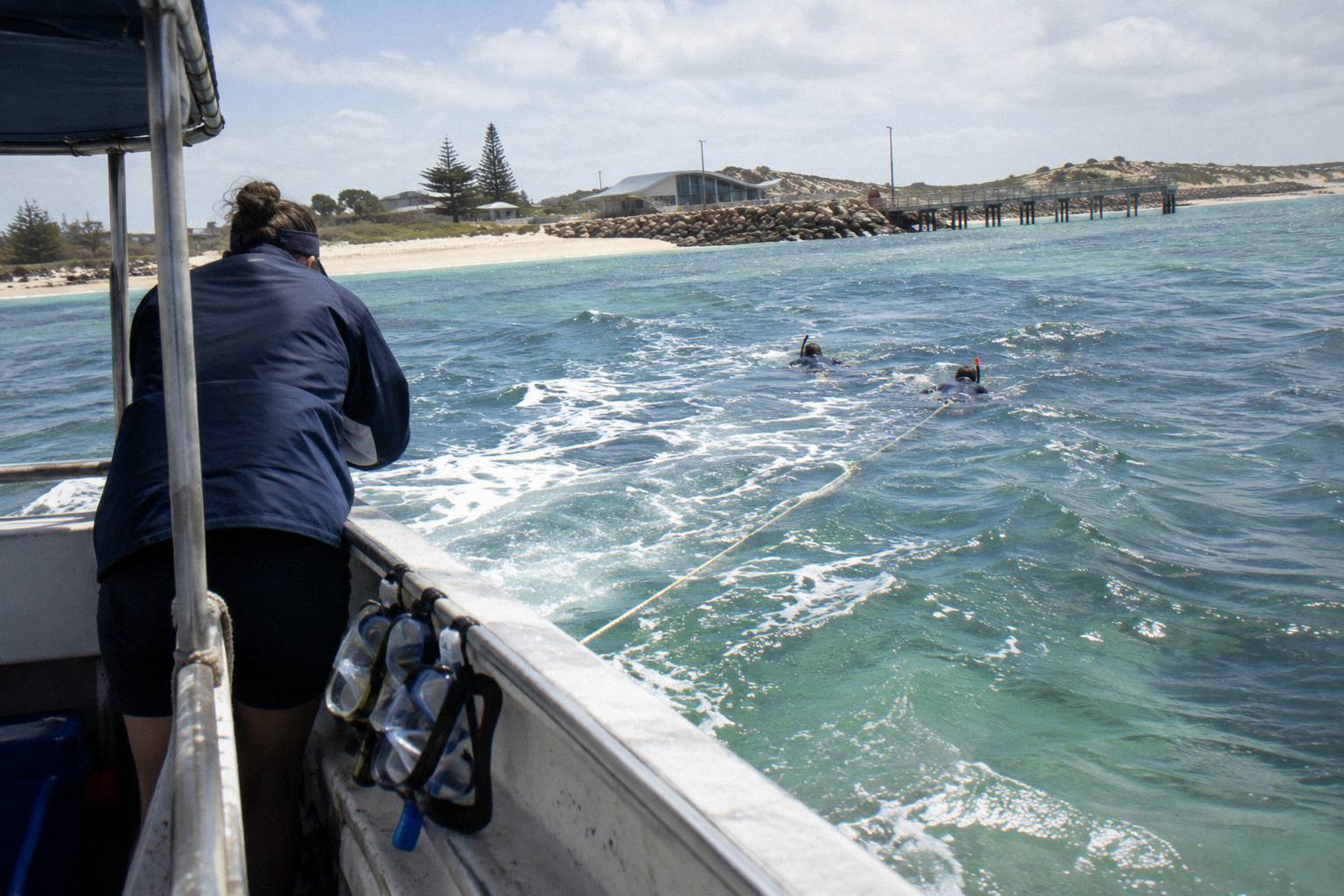
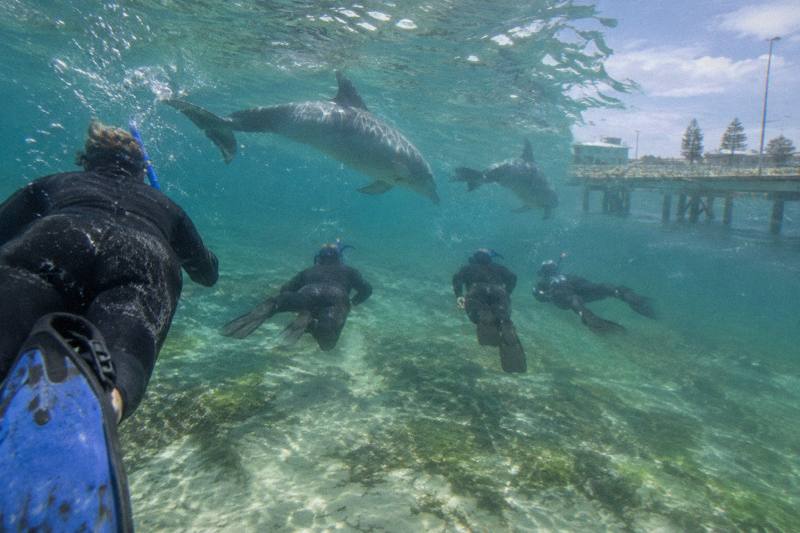
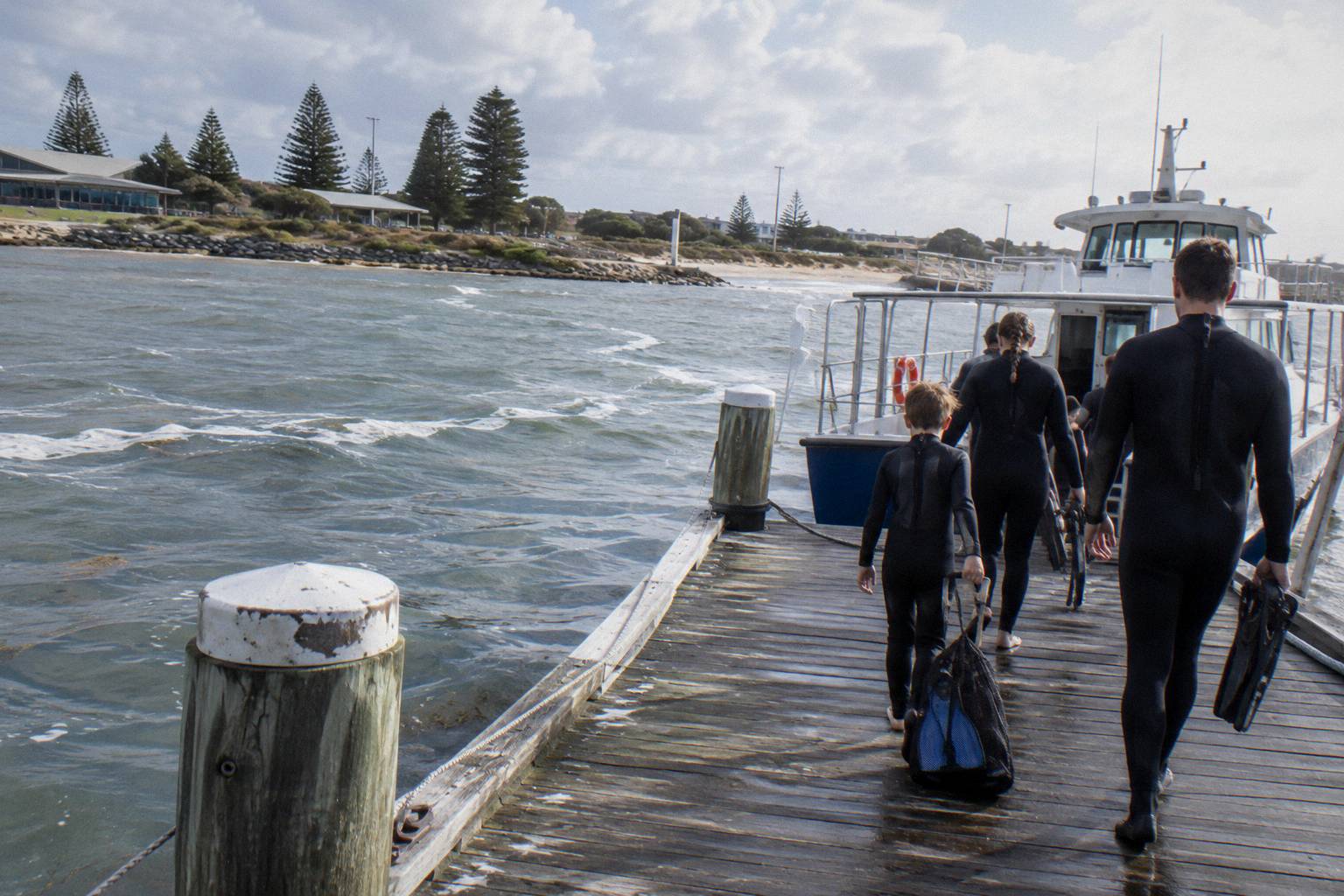
At Rockingham, the operator describes the sequence plainly: once dolphins are located, guests zip up wetsuits, put on mask and snorkel and move to the swim deck, then enter in small groups of up to 7, each led by a guide on an aqua scooter. Guests hold the guide's belt, stay at the surface, and a second guide on a solo scooter works around the group. The cruise has no fixed finish time, which the operator says lets the crew keep searching; the booking page's wording is "approximately 3 to 6 hours depending on dolphin sightings". No touching and no feeding, and the crew wear Shark Shields, with a stated caution that people with pacemakers or who are pregnant must not use the Shark Shield and should avoid swimming near anyone using one.
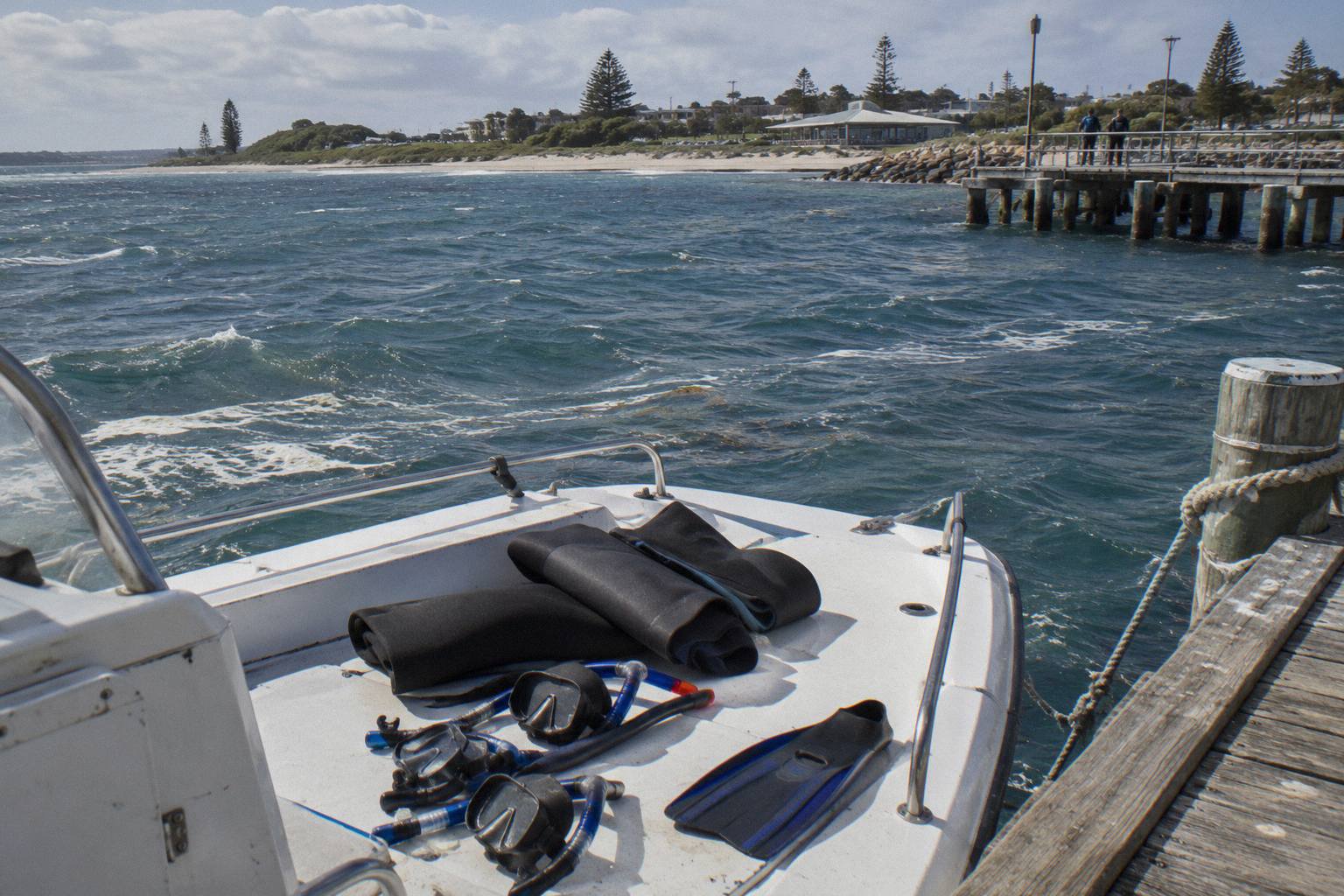
At Bunbury, the Dolphin Discovery Centre's own page describes a 4-hour guided swim in Koombana Bay with wetsuit, mask, snorkel, fins, a buoyancy vest if required, a snack and hot showers. Swimmers must be independent and confident in the water; children swimming must be 8 or over and accompanied by a swimming adult, and confident swimmers 12 and over may swim without one. The operator's group runs from a minimum of 8 swimmers to a maximum of 20 swimmers and 4 observers, and non-swimmers sit on the boat. The Centre describes itself as DBCA licensed and Advanced Eco-Tourism certified on its own swim page.
| Point of difference | Rockingham Wild Dolphin Swim | Bunbury Wild Dolphin Swim |
|---|---|---|
| Water entry | Groups of up to 7 towed by a guide on an aqua scooter | Guided swim, 8 to 20 swimmers and up to 4 observers |
| Skill needed | "No previous snorkelling experience is required", nervous swimmers accepted | Must be independent, confident swimmers |
| Gear | 4 mm full-length wetsuit, mask, snorkel, introductory lesson | Wetsuit, mask, snorkel, fins, buoyancy vest if required |
| Food and drink | Not stated; ask the operator | Snack and hot showers; tea and coffee station at the Centre |
| Start time | A morning start; exact time on the booking confirmation | Daily 7:45 am, operator |
| Spectators | Operator says a spectator option exists, no price stated | Non-swimmers sit on the boat |
| Come-again term | Come again free of charge if no dolphins, direct bookings only, this season | Sighting term or go again free, direct bookings only |
Two things should not be mixed up when comparing them. First, each come-again and refund term belongs to its own operator and to bookings made direct with that operator; both booking pages separately show free cancellation up to 24 hours. Second, each rating belongs to its own pool: 4.7 across about 685 reviews for Rockingham, and 4.7 across 24 reviews for Bunbury, a small pool that should be read as exactly that. Sighting likelihood is its own question, covered in how likely dolphin sightings are on a swim.
What Western Australian Law Says About Swimming Near Dolphins
Under Western Australia's Biodiversity Conservation Regulations 2018, dolphins are prescribed fauna, so a swimmer must keep at least 50 m away, a vessel 100 m, an aircraft 300 m, a helicopter 500 m and a drone 60 m. A licensed commercial interaction is exempt from the distance rules, which a paid dolphin swim needs in order to operate lawfully, and touching marine fauna carries a AUD 10,000 fine while getting closer than the separation distance draws AUD 5,000.
The distances are worth knowing even as a paying guest, because they explain the shape of a guided swim. Under regulation 112, the distance rules do not apply to an activity authorised under a licence, and regulation 30 defines the "fauna disturbing (commercial interaction) licence" that covers commercial approaches to fauna, never feeding. That is the legal footing a guided swim stands on; no licence number or licence condition is published here, and none should be guessed at. The full distances are in the consolidated regulations.
| Who or what | Separation distance from a dolphin | Fine for getting closer |
|---|---|---|
| Person in the water | 50 m | AUD 5,000 |
| Vessel | 100 m | AUD 5,000 |
| Aircraft, not a helicopter | 300 m | Under the regulations |
| Helicopter | 500 m | Under the regulations |
| Drone, an aerial device | 60 m | Under the regulations |
Two more rules shape behaviour in the water. If a dolphin approaches closer than the distance on its own, the swimmer must move away as soon as reasonably possible, and a vessel must go neutral or move off at no more than 6 knots. And regulation 118's AUD 10,000 fine for touching or attempting to touch any marine fauna is the sharpest number on the page, which is why both operators state no touching and no feeding as house rules rather than suggestions. Snorkelling at the surface is fine; "diving" with an artificial air supply is banned.
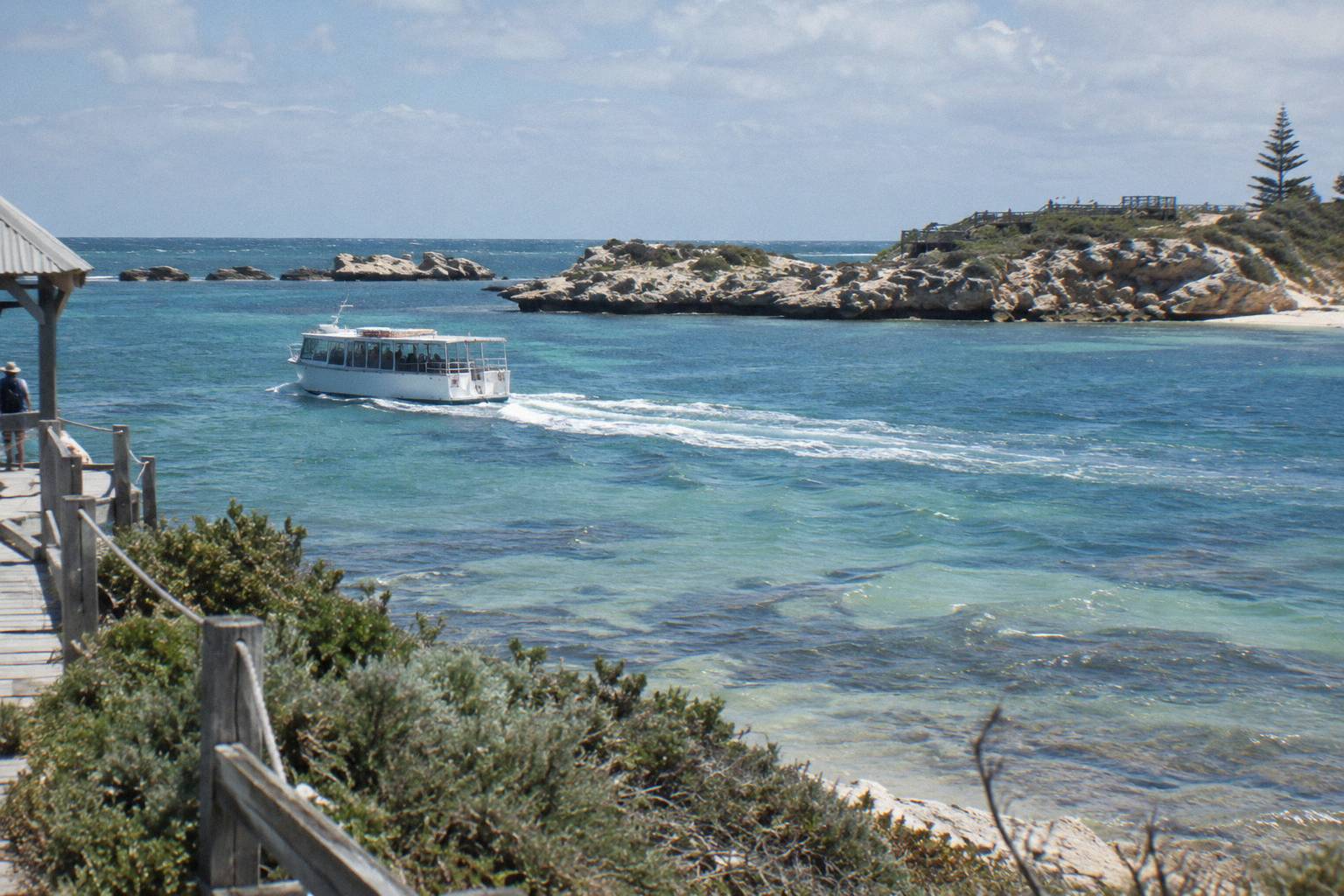
These are Western Australia's rules, not Australia's. Other states set their own distances and their own licensing, so a swimmer comparing a WA product with an interstate one is comparing different legal frameworks as well as different operators. The safe habit anywhere is the one these regulations encourage: let the dolphins control the encounter, and treat any approach by them as a moment to give ground. The wider context is interesting too, since Murdoch University research identifies four separate Indo-Pacific bottlenose communities in Perth metro waters, and the species around these swims is Tursiops aduncus.
A guided swim is the lawful way to be in the water near wild dolphins in WA, and the Rockingham product is the one this guide's tours keep returning to. The Rockingham Wild Dolphin Swim runs September to early June from Val Street Jetty, and the booking page shows free cancellation up to 24 hours; Check availability for the dates you have in mind before locking in travel.
Watching-Only Options If A Swim Is Not The Right Fit
Three cruises around Rockingham and Mandurah offer dolphin watching with no water entry at all: the Penguin Island And Dolphin Cruise, about 1 hour 30 minutes from a Shoalwater base; the Mandurah Dolphin Cruise, 75 minutes, from A$47 per person; and the Mandurah Giants And Dolphin Cruise, 2 hours, from A$85 per person. None of the three is a swim, and none should be booked by someone who wants to be in the water.
The watching products suit a different traveller: someone with children under the swim ages, a non-swimmer in a mixed group, or anyone who prefers a short commitment to a half-day on the water. The Mandurah Dolphin Cruise is rated 4.5 across 1,090 reviews, runs 75 minutes, and its booking page notes hotel pickup and drop-off is not included, with free parking close to the departure point and free cancellation up to 24 hours. The Mandurah Giants And Dolphin Cruise, rated 4.8 across 87 reviews, runs 2 hours on a SuperCat with upper and lower decks, and its page says a fish-and-chip lunch is not included, with soft drinks and light snacks for sale on board.
The Penguin Island And Dolphin Cruise is the shortest and sits closest to the swim's home water, meeting at the operator base at 153 Arcadia Drive, Shoalwater, for about 1 hour 30 minutes. Its rating, price and cancellation terms are not stated; ask the operator or check the booking page. The cruise is watching only, and the marine park it departs into is described on the DBCA park page, which notes free entry and sea lions on Seal Island.
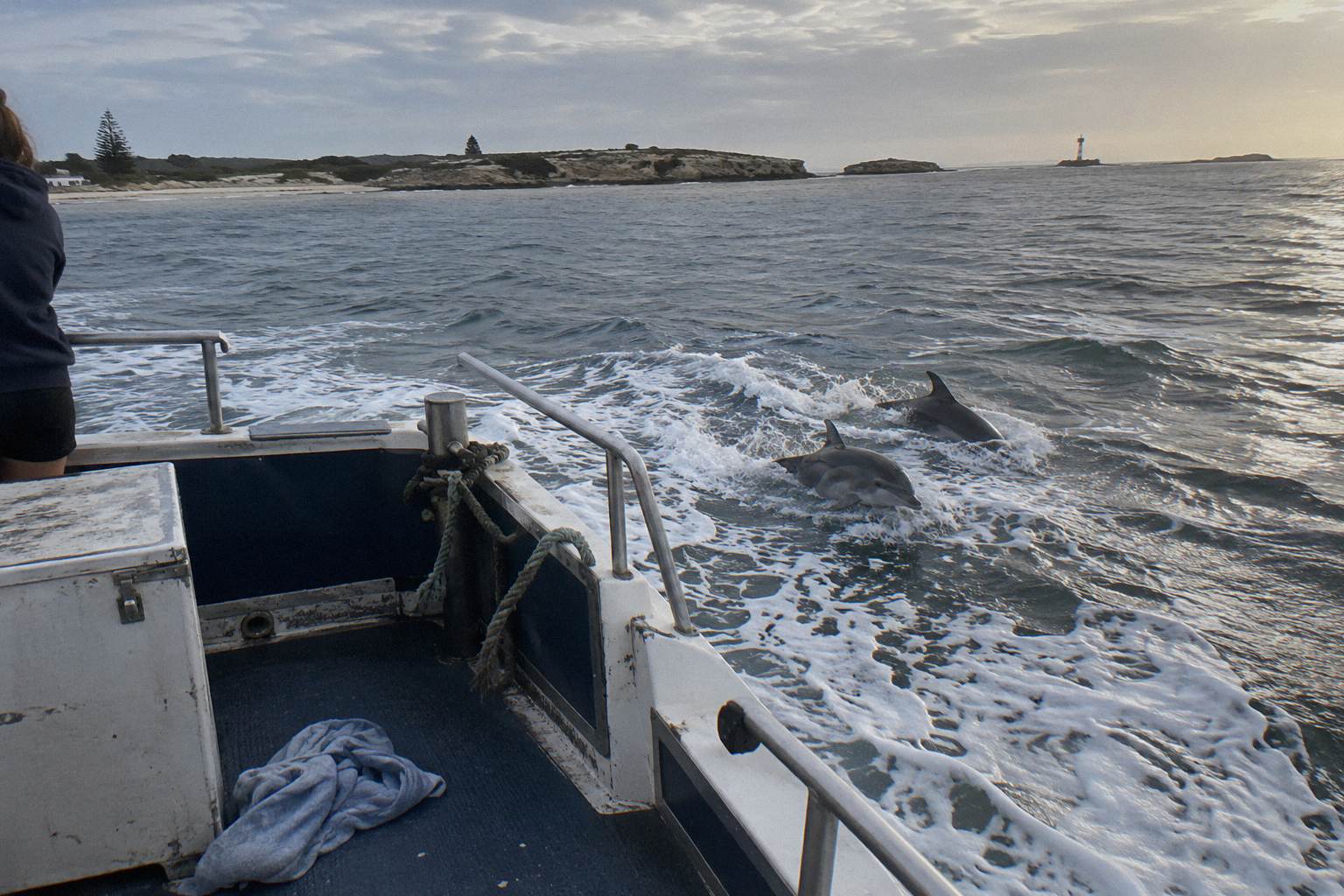
Two come-again terms attach to the Mandurah products themselves. The Mandurah Dolphin Cruise's booking page says dolphins are wild and choose when and how they interact, so no sighting is promised, but if none are sighted you can return free until you see them, rebooking within 12 months, subject to availability. The Giants cruise's page says if dolphins are not sighted you can join again for free. Both are those tours' own terms and neither transfers to any swim.
For a short, low-commitment first look at wild dolphins from the water, the 75-minute cruise is the natural entry point.
If two hours and a bigger vessel appeal, or a fish-and-chip lunch can be arranged with the operator, the Giants cruise covers the same water with a different format, and its 4.8 rating sits across 87 reviews.
Which Swim Suits Which Traveller?
Nervous first-timers belong on the Rockingham swim, since its operator asks for no snorkelling experience, tows groups at the surface and welcomes nervous swimmers; confident independent swimmers aged 8 or over, accompanied by an adult, suit either tour. Families with a 7-year-old fall in between, as Rockingham only advises against ages 6 and under while Bunbury holds a firm 8-and-over rule; non-swimmers should take a watching cruise or Bunbury's observer seats.
Take the nervous swimmer first. The Rockingham operator's own FAQ is unusually direct on the point: "no previous snorkelling experience is required", an introductory lesson is part of the day, and the 4 mm wetsuit "keeps you very buoyant". Buoyancy aids are not recommended, and the operator's blunt line is that if you feel your child needs one, the cruise is definitely not suitable. That single sentence does more sorting than any age chart, and it is worth reading in full on the operator's page. The tow format also means a swimmer is holding a guide's belt rather than swimming freely, which changes the psychological load of the day.
The confident swimmer of 12 or over has both swims open. Bunbury's requirements are stated as independence and confidence in the water, with children 8 and over accompanied by a swimming adult. The group there is larger, up to 20 swimmers, against Rockingham's groups of up to 7 per scooter. Neither format is better; they are different shapes of the same idea, and the guide to swim group sizes and the boat experience works through what each means on the day.
For the family split by age or appetite, the arithmetic is this: one adult swims while the other stays dry, or the whole group takes a watching cruise. Rockingham's operator says a spectator option exists, with no price stated, and children are not left on board unsupervised; parents supervise their own children in the water. Bunbury allows up to 4 observers alongside its 8 to 20 swimmers, and non-swimmers sit on the boat. The watching cruises remain the simplest answer for a group that cannot agree, and the question of whether under-7s can watch from the boat is answered by the same operator terms.
Season is the quiet decider that gets missed. The two WA swim seasons overlap but do not match: September to early June at Rockingham, November to April at Bunbury. A trip in October or May has exactly one swim open to it; a trip in midwinter has neither, though the Mandurah watching cruises still run and their free-cancellation terms are on their own booking pages. The question of the best month for a wild dolphin swim is really a question of matching your dates to each operator's stated season.
The Rockingham swim is the one readers here book against most often, and for good reason: it is the swim closest to Perth, its season is the longer of the two, and its booking page shows free cancellation up to 24 hours.
What To Ask An Operator Before Booking Any Australian Dolphin Swim
Ask five things before you pay: what the booking-page price actually includes, the exact minimum age and any swimming-ability requirement, the operator's own season and start time, the come-again or refund term and which booking channel it belongs to, and what gear is supplied versus what you bring. Each one changes between operators, states and years, so one short question settles any fact the booking page leaves out.
The questions matter more than the answers here, because they transfer to any Australian swim you might be comparing. A Queensland or South Australian operator will answer the same five differently, and the discipline of asking is what protects you from assuming one state's rules travel to another. Between these two products, the checklist below is already answered from each operator's and each booking page's own statements, so it doubles as a summary.
| Question to ask | Rockingham answer on record | Bunbury answer on record |
|---|---|---|
| Price on the booking page | From A$249.72 per person | Price is on the booking page |
| Minimum age | Not recommended for children 6 or younger, operator | Swimmers 8 and over, confident, adult with children |
| Season and start | September to early June; morning start, time on confirmation | November to April; daily 7:45 am, operator |
| Come-again or refund term | Come again free if no dolphins, direct bookings, this season | Sighting term or go again free, direct bookings, 72-hour refund window |
| Gear provided | Wetsuit, mask, snorkel, lesson | Wetsuit, mask, snorkel, fins, vest if required |
| Food and drink | Not stated; ask the operator | Snack, hot showers, tea and coffee station |
Notice how much of the table is channel-specific. The come-again terms belong to bookings made direct with each operator; the free cancellation up to 24 hours belongs to the booking pages. Neither term crosses to the other channel, and saying so in one sentence to the operator when you book, which channel am I in and which term applies, removes the ambiguity entirely. That habit is worth carrying to every swim product in the country.
Common Mistakes When Comparing Dolphin Swims In Australia
The mistakes that cost money are assuming one operator's terms apply to another, treating a watching cruise as a swim, and comparing prices across states as if the products matched. Terms, ages, seasons and gear are stated per operator and per booking channel, never per country. The fix is dull but effective: read each operator's own page and each booking page separately, and ask the operator directly where a fact is not stated.
The first mistake is term-blending. Perth Wildlife Encounters' come-again-free term belongs to direct bookings on its own cruises; the Dolphin Discovery Centre's 72-hour refund window belongs to its direct bookings; the booking pages' 24-hour free cancellation belongs to those pages. Mixing them, or extending one to a purchase made through another channel, is how a disappointed swimmer discovers the term they relied on does not cover them. The second mistake is format-blending: the Penguin Island And Dolphin Cruise, the Mandurah Dolphin Cruise and the Mandurah Giants And Dolphin Cruise are watching only, and no amount of wishing converts a 75-minute cruise into time in the water.
The third mistake is assuming WA's distances are Australia's. The 50 m in-water rule and the 100 m vessel rule are Western Australia's, from the state's own regulations, and an interstate swim operates under its state's framework. The fourth is season-blindness: booking flights for July and finding neither WA swim running, when a simple check of each operator's stated season, September to early June and November to April, would have caught it. And the fifth is reading a rating without its count: 4.7 across about 685 reviews and 4.7 across 24 reviews are different kinds of information, and the second should be read as a small pool, exactly as it is.
A final trap is unique to comparison shopping: the belief that a longer list of options means a better decision. Five tours exist on these pages, two swims and three watching cruises, and the strongest choice is usually made by crossing items off rather than adding them.
Common Questions About Dolphin Swims In Australia
Can You Swim With Dolphins Anywhere In Australia?
Several states offer wild dolphin swim experiences, each run by its own operator under its own state rules. The swims covered in full here are the Rockingham Wild Dolphin Swim and the Bunbury Wild Dolphin Swim in Western Australia. Other regions have their own operators and rules; ask each operator directly about season, ages and terms.
Which Is Better, The Rockingham Or The Bunbury Swim?
Neither is better; they are different products. Rockingham tows groups of up to 7 behind an aqua scooter, runs September to early June and needs no snorkel experience. Bunbury is a 4-hour guided swim in Koombana Bay, November to April, for confident swimmers 8 and over. Match the format, season and ages to your group.
How Much Does A Wild Dolphin Swim Cost In Australia?
The only printable figures here are booking-page prices: the Rockingham Wild Dolphin Swim from A$249.72 per person, varying by date and option, and the Mandurah watching cruises from A$47 and from A$85 per person. The Bunbury swim's price is on its booking page. Other states' prices are not covered.
Do The Same Rules Apply In Every State?
No. The separation distances described here, 50 m for a swimmer and 100 m for a vessel, are Western Australia's under the Biodiversity Conservation Regulations 2018. Other states set their own rules and licensing. Wherever you swim, follow the operator's instructions.
What Happens If No Dolphins Appear?
Each operator's term is its own. Perth Wildlife Encounters says that on direct bookings, if no dolphins are seen or swum with, you are welcome to come again free of charge within the season. The Dolphin Discovery Centre states a sighting term or a free return on its direct bookings. The booking pages separately show free cancellation up to 24 hours for four tours.
Can Children Join A Dolphin Swim?
Per operator: the Rockingham swim is not recommended for children 6 years or younger, and the Bunbury swim takes swimmers 8 and over, each accompanied by a swimming adult. Watching cruises carry no stated minimum age on these pages; ask the operator. Confirm ages when you book, since terms are per operator.