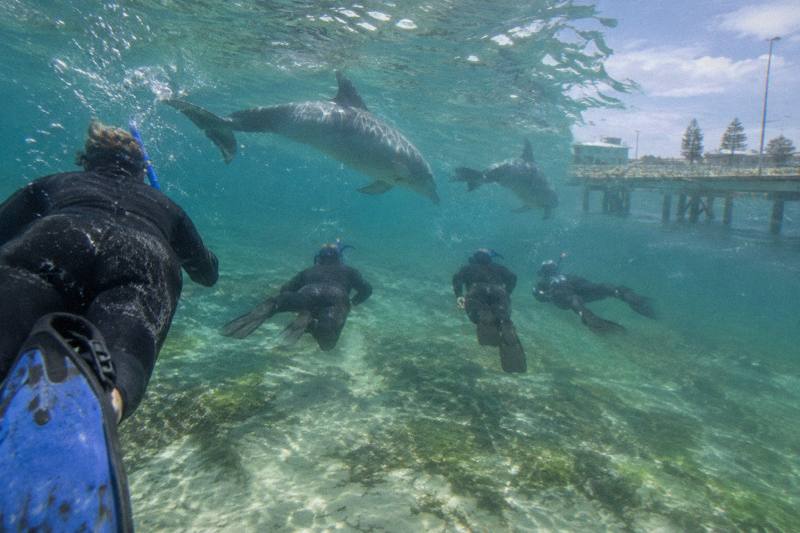
Can You Take Your Own Camera On A Dolphin Swim?
Whether you can bring your own camera on a wild dolphin swim near Rockingham and Bunbury, what the operators say about photos, and what to ask before you pack a housing.
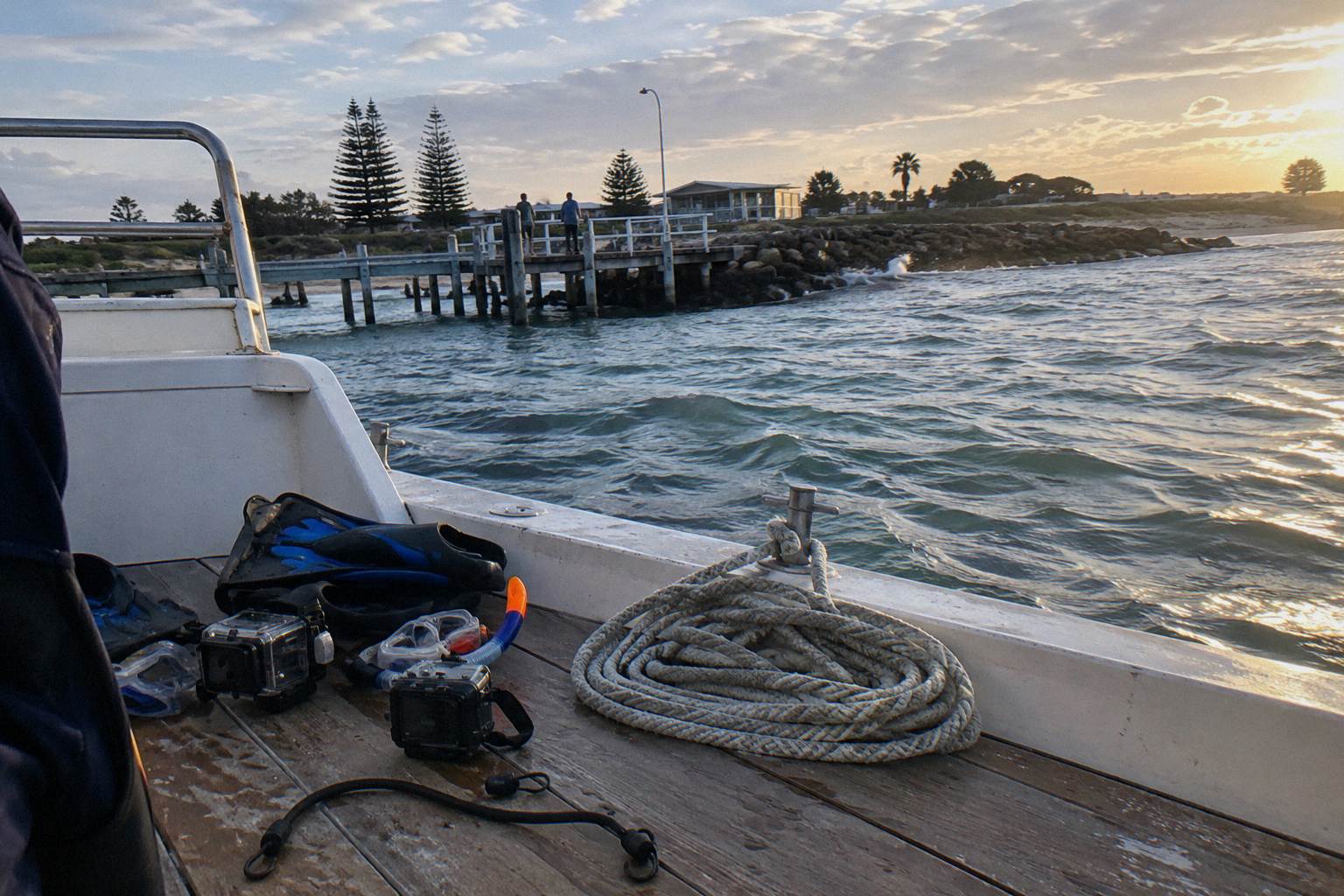
The short answer is that nobody has said no. Neither Perth Wildlife Encounters, which runs the Rockingham Wild Dolphin Swim, nor the Dolphin Discovery Centre in Bunbury states on its own pages whether guests may carry a camera in the water, and neither bans one in writing either. What the Rockingham operator does state is that the crew film every swim and upload the photos online, which shapes what a camera is actually worth on the day. Before packing anything, ask the operator directly, because a camera that fails, floods or gets in the way of a guide is a worse outcome than no camera at all.
For a fuller picture of what the two swims involve, the Rockingham Wild Dolphin Swim page collects the stated facts in one place, and you can check availability on the same decision. A reader planning around photos is, in practice, a reader planning to book, so the camera question deserves a real answer rather than a shrug.
Whether you can take your own camera on a wild dolphin swim near Perth is not stated by either operator, so the answer has to come from asking before you book. The Rockingham swim's crew film every swim and upload the photos online, the operator says, which covers the core memory even if your own device stays on the boat. The Bunbury swim lists gear and shore facilities with no mention of a camera rule either way.
Neither operator's pages say yes, and neither says no, which makes this a gap rather than a rule. The Bunbury swim's booking page lists wetsuits in all sizes, floating devices, water and a snack, a tea and coffee station, changing rooms, storage and hot showers, and no camera word appears anywhere in it. Nothing here is permission, and nothing is a ban, only a gap you close with one question.
The reason the gap exists is easy to see once you picture the swim itself. On the Rockingham Wild Dolphin Swim, once dolphins are located guests zip up wetsuits, put on mask and snorkel and move to the swim deck, the operator says. Entry to the water is in small groups of up to 7, each led by a guide on an aqua scooter who tows the group among the dolphins while guests hold the guide's belt and stay at the surface. A second guide on a solo scooter loops and spins the dolphins close to the group. Both hands are occupied. One holds the belt. The other is doing whatever the water and the moment demand.
Into that picture, insert a camera. It has to survive being towed, it has to survive other swimmers' fins, and it has to survive the operator's two hard rules: no touching and no feeding. A device that turns your attention away from the belt line and the guide's directions is a device the operator may reasonably want to talk about first. That is speculation about motive, though, and the facts do not state a reason. The stated facts are simpler: the crew film every swim, and whether a guest camera is welcome is not stated.
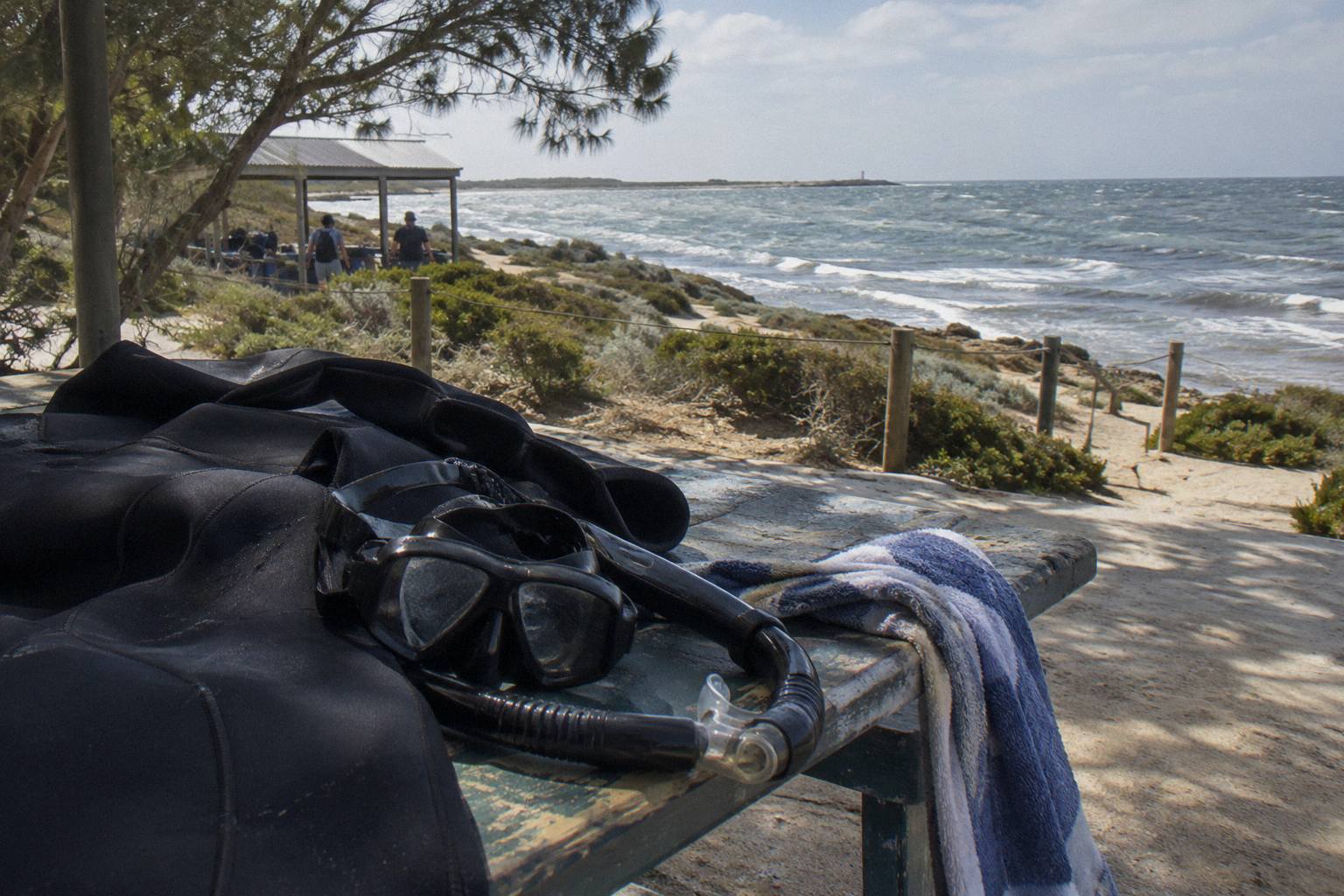
The two swims covered here are the Rockingham Wild Dolphin Swim and the Bunbury Wild Dolphin Swim. The three cruise products, the Penguin Island And Dolphin Cruise and the two Mandurah cruises, are watching only, and cameras on a dry deck are a different question with different stakes.
Why The Swim Itself Makes Cameras Hard Work
A wild dolphin swim is a hands-busy, surface-level, tow-along activity, and every one of those qualities works against a camera. The Rockingham operator describes swimmers holding a guide's belt while being towed on an aqua scooter in groups of up to 7, staying at the surface with dolphins spinning close to the group. Neither description leaves much spare attention for framing a shot, and salt water is hostile to almost every consumer device.
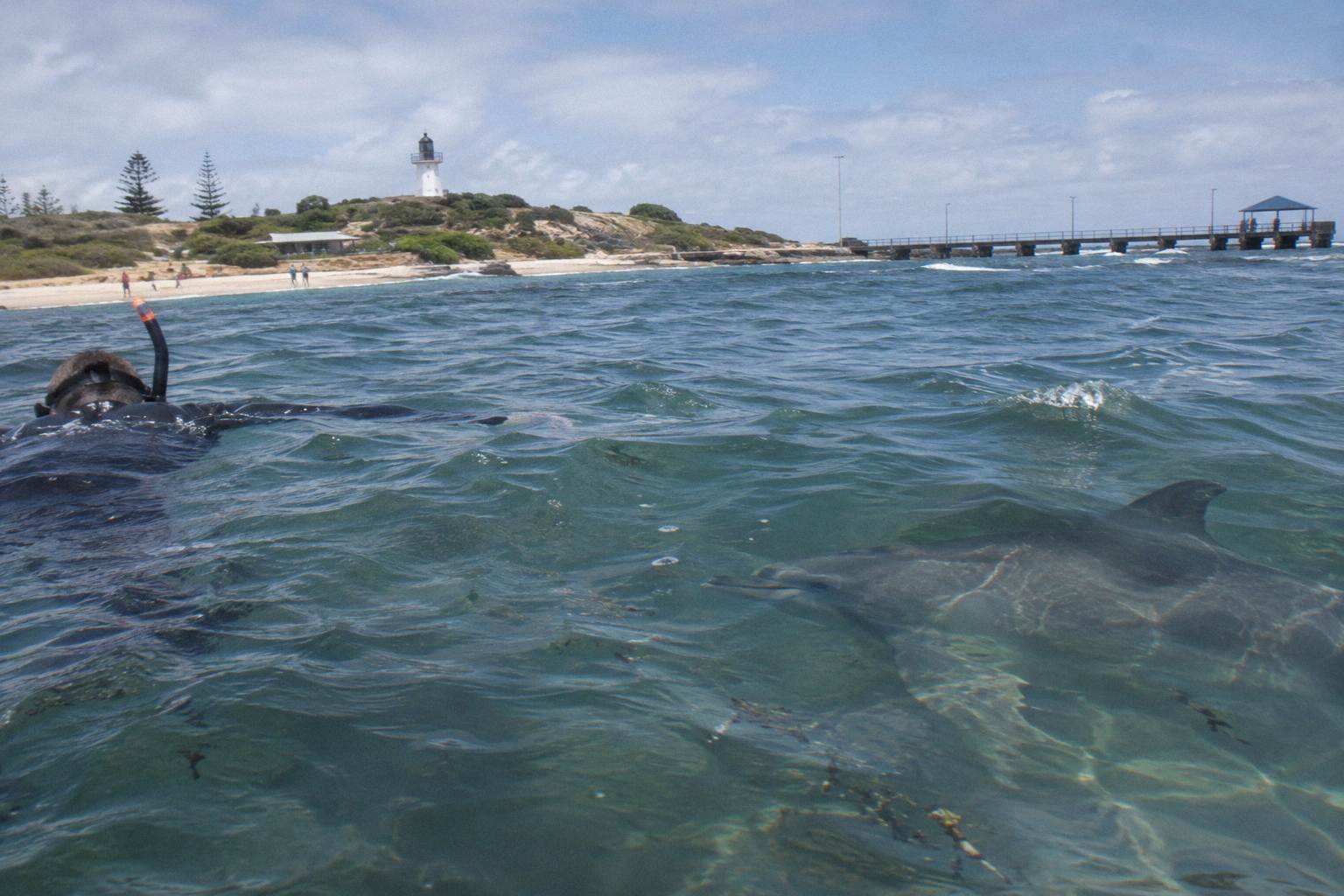
The Bunbury swim adds its own demand on attention: swimmers there must be independent and confident in the water, the operator says. Confidence and framing are different skills, and the second is not required by either swim. Start with the physical setup at Rockingham. The wetsuit is 4 mm full length, and the operator says it "keeps you very buoyant", with a hood mentioned for cooler water, plus mask, snorkel and an introductory snorkel lesson. Children's wetsuits come in small sizes. Buoyancy aids are not recommended, and the operator is blunt that if a child needs one, the cruise is not suitable. Nervous swimmers are accepted and "no previous snorkelling experience is required". All of that describes a swimmer whose gear is already spoken for before a camera enters the picture.
Then there is the water itself. The operator's own FAQ puts the temperature at "18 in September through to 25 degrees Celsius during the summer and autumn", and seatemperature.org averages for the Mandurah coast, the nearest measured stretch to Rockingham, run from 18.3 in September to 22.8 in March. Cold water, turbulence from the scooter, and a mask that fogs are the working conditions. The guide to water temperature and wetsuits on a wild dolphin swim goes deeper on the suit side of that equation, and the short version is that anything not strapped to you securely will not be with you at the end.
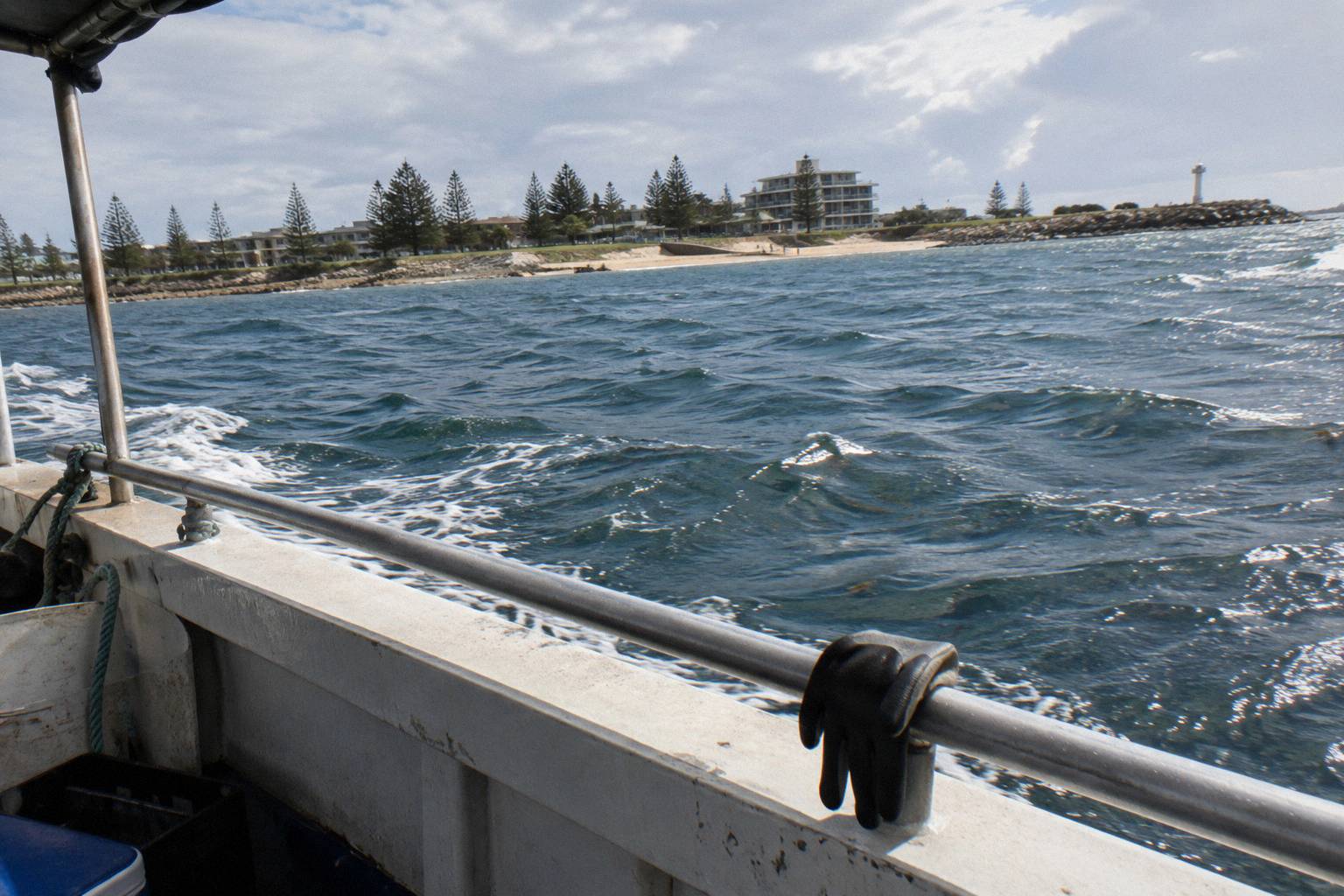
There is also a legal frame around the dolphins that touches photographers. Under WA's Biodiversity Conservation Regulations 2018, a person in the water must keep 50 m from a dolphin unless a licence authorises closer approach, and must move away as soon as reasonably possible if a dolphin comes closer. Touching marine fauna carries a AUD 10,000 fine, and obstructing the natural movement of marine fauna carries AUD 5,000. A commercial swim operates inside that framework, as the regulations make clear for authorised activities. What that means for a camera is not that photography is restricted, but that chasing a shot must never become closing distance or blocking an animal's line. The full distances are set out in the how close you can get to wild dolphins in the water post.
| Constraint on the day | Source of the rule | What it means for a camera |
|---|---|---|
| No touching, no feeding | Rockingham operator | A camera never becomes a reason to reach toward an animal |
| Hold the guide's belt while towed | Rockingham operator | One hand is committed, so gear must be hands-free or left behind |
| Stay at the surface | Rockingham operator | Underwater housings answer a need the swim does not create |
| Move away if a dolphin closes distance | WA regulations, reg 114 | Follow the guide, not the shot |
| Group of up to 7 per scooter | Rockingham operator | Other swimmers' fins are the nearest hazard to a loose strap |
What The Rockingham Swim Gives You Instead
The Rockingham operator states that the crew film every swim and upload the photos online, which means the swim's sharpest images come from crew who are not holding a belt line. That fact changes the camera calculation: your own device is competing with footage captured by people whose only job in the water is the swim itself. Access terms for those photos are not stated, so they belong on your question list before you book.
This is the single most decision-relevant fact on the page, so it deserves to sit in plain view rather than in a footnote. Crew-filmed footage solves the problem a personal camera is meant to solve, the memory, and it solves it with a camera operator who is not being towed. Whether the photos are included in the ticket price, sold separately, or free to download is not stated anywhere in the operator's or booking page material, so ask. It is the second question on the checklist below and, for many travellers, it retires the first. The operator's own page on the swim, swim-with-dolphins-perth, carries the current wording, and any question about access to the photos, their cost or their delivery belongs in the same pre-booking email as the camera question.
The swim runs from Val Street Jetty in Rockingham, a booking confirmation gives the exact meeting point, and the listed duration is about 3 to 6 hours depending on dolphin sightings, with no fixed finish time so the crew can keep searching, the operator says. A day that long, on a boat, in and out of the water, is a day of camera logistics even before the swim: where does the device live during the tow, who watches it, and what happens if the deck takes a wave. None of that is a stated rule, it is simply what a long day on the water involves, and it is the reason the checklist exists.
The booking page for this swim shows free cancellation up to 24 hours, a full refund at least 24 hours before it starts, which matters when your whole plan hinges on an answer the operator has not published. Ask first, book second, and the cancellation window is a backstop rather than a hope. The Rockingham Swim With Dolphins site's pages carry the rest of the swim-day detail, including the first timer's checklist for a wild dolphin swim, which is worth reading before any gear decision.
The Bunbury Swim And The Camera Question
The Bunbury Wild Dolphin Swim, run by the Dolphin Discovery Centre in Koombana Bay, is a 4-hour guided swim running daily at 7:45 am from November to April, the operator says, and like Rockingham it states no camera rule either way; its booking page does list staffed storage alongside hot showers and changing rooms, making the dry onshore base the practical place to leave a camera during the swim.
The Centre's facilities run further than the boat: the booking page also lists a tea and coffee station, so the shore base is a real place to spend time before and after, and confirming that storage covers valuables during the in-water portion is one of the questions to email ahead. The swim has a different shape from Rockingham. Swimmers must be 8 and over, must be independent, confident swimmers, and children swimming must be accompanied by a swimming adult, while confident swimmers of 12 and over may swim without one. Group sizes run from a minimum of 8 swimmers to a maximum of 20 swimmers and 4 observers, the operator says, and non-swimmers sit on the boat. More swimmers in the water means more fins, more arms and more bodies between any camera and its subject, and the observer seat is where a dry camera with a long lens genuinely belongs. The Centre describes itself as DBCA licensed and Advanced Eco-Tourism certified, and its own swim page carries the current terms.
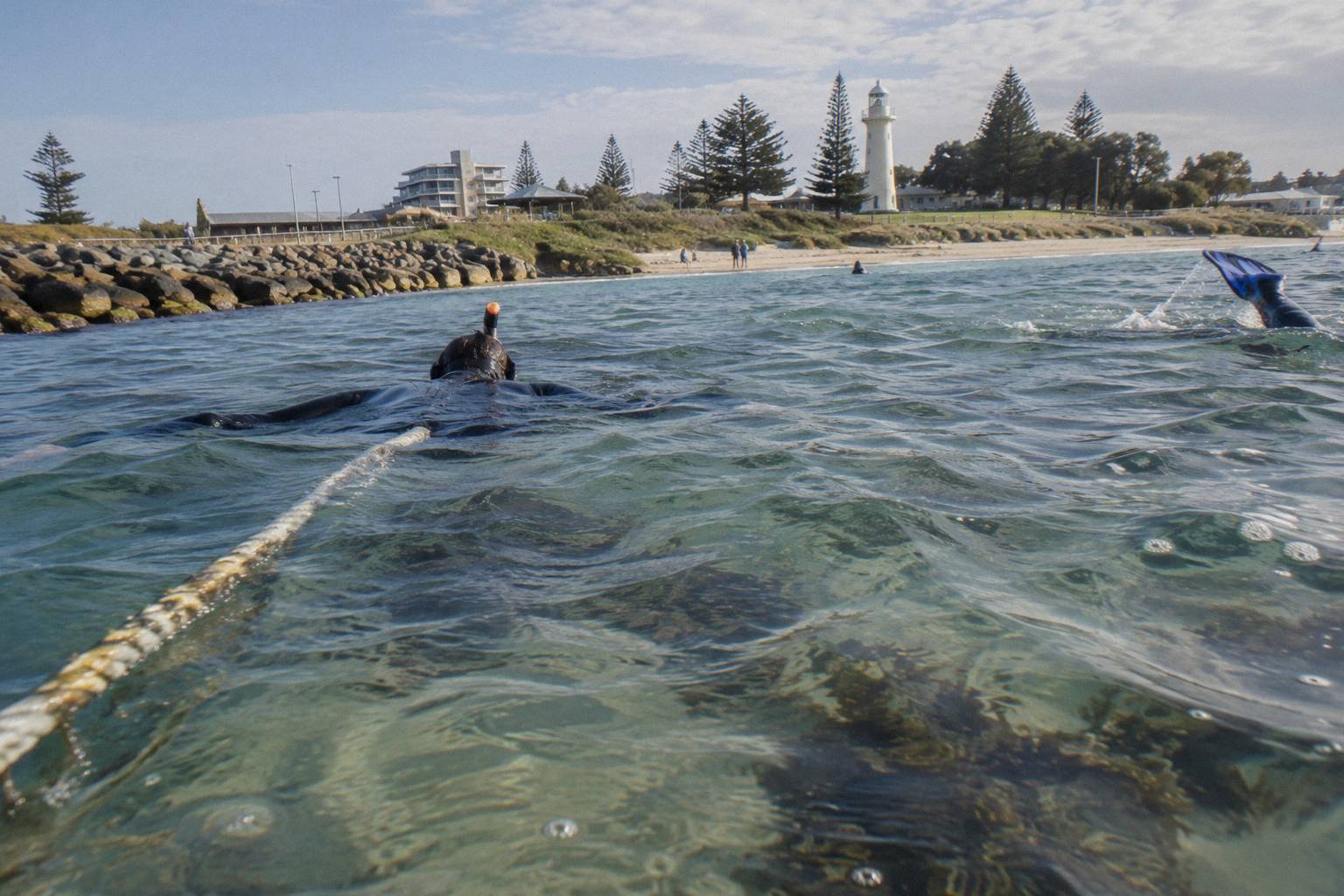
There is a photography angle unique to Bunbury, too. The Centre's research page states that the Koombana Bay resident group averages about 50 animals, with another 100 or more visiting through the year, a figure the Centre gives for its own bay and that appears nowhere else on any page here. A bay-based population of that scale is why the operator can state, for direct bookings, its come-again term: if no dolphins are sighted you go again free. That is the Centre's own term for bookings made direct with the operator, alongside full refund or reschedule up to 72 hours before and 100 percent charged inside 72 hours; the booking page separately shows free cancellation up to 24 hours. Two channels, two terms, and the do you get a refund if no dolphins show up post unpicks which applies to which purchase.
| What the two swims state about photos and gear | Rockingham Wild Dolphin Swim | Bunbury Wild Dolphin Swim |
|---|---|---|
| Camera policy in the water | Not stated | Not stated |
| Crew filming | Crew film every swim, photos uploaded online, operator says | Not stated |
| Gear included | 4 mm wetsuit, hood for cooler water, mask, snorkel, snorkel lesson | Wetsuit, mask, snorkel, fins, buoyancy vest if required |
| Snack and drink | Not stated | Water and a snack, tea and coffee station at the Centre |
| After the swim | Not stated | Changing rooms, storage, hot showers |
| Group size in the water | Up to 7 per scooter group, operator says | 8 to 20 swimmers, up to 4 observers, operator says |
| Observer or spectator option | Spectator option exists, no price stated, operator says | Non-swimmers sit on the boat |
Watching Cruises And Cameras: The Easy Case
On a watching cruise, the camera question answers itself, because you stay dry. The Mandurah Dolphin Cruise runs 75 minutes from A$47 per person, rated 4.5 across 1,090 reviews, and the Mandurah Giants And Dolphin Cruise runs 2 hours from A$85 per person, rated 4.8 across 87 reviews. A phone, a compact camera or anything with a decent zoom works from a seated deck in a way it never will mid-tow.
Both Mandurah booking pages show free cancellation up to 24 hours, and the Penguin Island And Dolphin Cruise runs about 1 hour 30 minutes from the Shoalwater base at 153 Arcadia Drive, with its rating, price and cancellation terms all not stated. The two Mandurah products are built for exactly the photographer the swim cannot accommodate. The Mandurah Dolphin Cruise's booking page describes live commentary from a skipper and local expert, guided dolphin spotting, free parking close to the departure point, and hotel pickup and drop-off explicitly not included. The Giants cruise's booking page describes a SuperCat with a large open front, upper and lower decks and large windows, live commentary, and soft drinks and light snacks for sale on board, with a fish-and-chip lunch not included but addable by contacting the operator. Both booking pages carry a come-again term if no dolphins are sighted, each worded as that page's own promise, and the differences between dry-deck and in-water photography are laid out in the wild dolphin swim or dolphin watching cruise comparison.
A long lens on a deck is not the same photograph as a wide lens held at the surface, and it is not trying to be. What the deck gives up in proximity it gains in stability, battery life and the freedom to shoot continuously. For a traveller whose group contains one swimmer and one photographer, the pairing that works is one swim ticket and one cruise ticket, with the camera going to the cruise. The Mandurah Giants And Dolphin Cruise adds the sculpture trail from the water, the booking page naming a fourth giant sculpture visible on the route, and the Penguin Island and dolphin swim combined day guide covers how the Shoalwater cruise fits alongside other plans.
What To Ask Before You Bring A Camera
Email the operators one message before booking and ask five questions: whether your own camera can go in the water, what the crew-filmed photos cost and how they are delivered, whether the boat has secure dry storage, what happens to devices left on board, and whether an observer or spectator seat is available for the photographer in your group. None of the answers is published for either swim, and the email costs nothing.
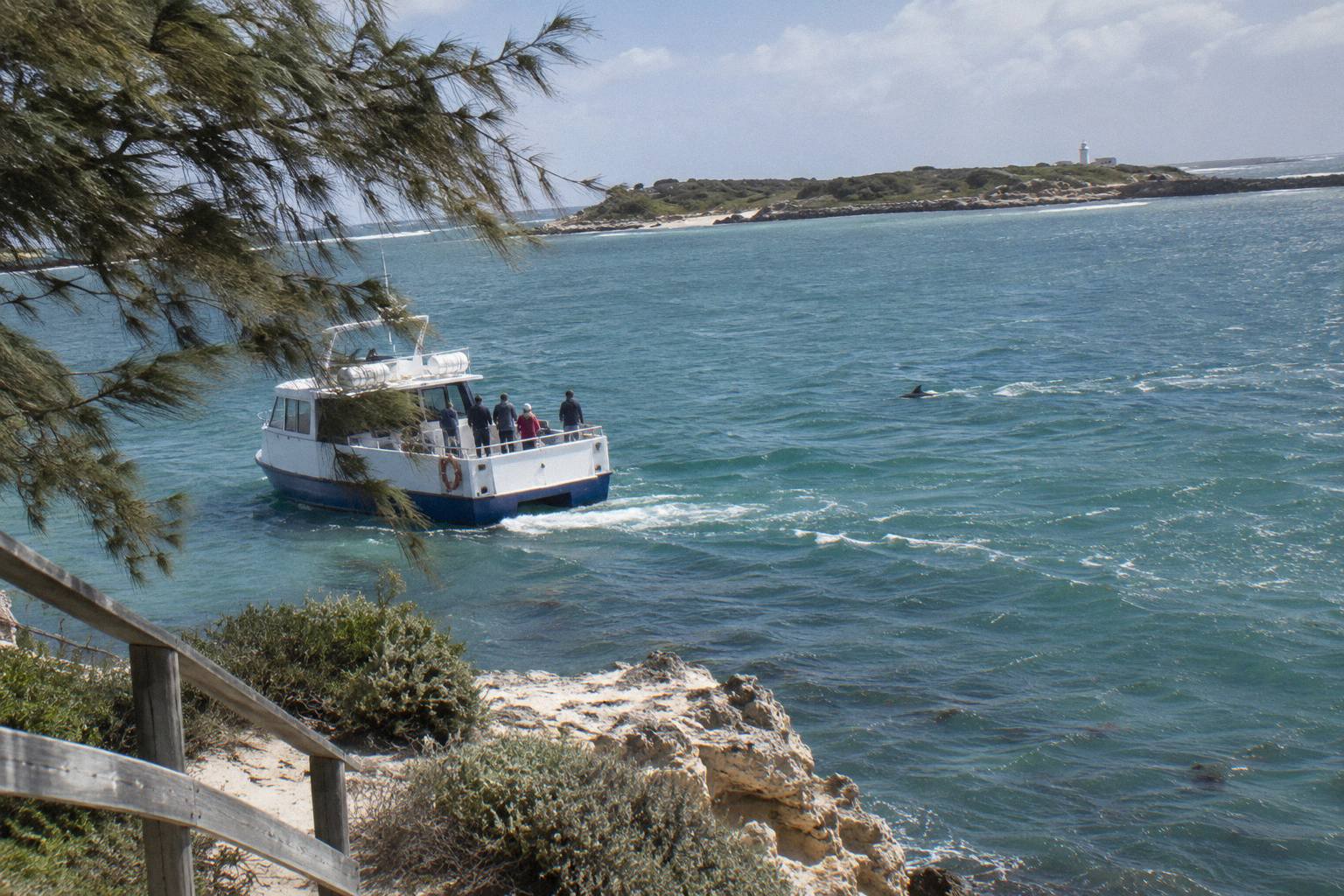
Each question has a real answer from a real operator, so build the message from the stated facts and the operator can answer precisely rather than generally:
- Ask whether guests may take their own camera into the water on the swim, and if the answer depends on the type of device.
- Ask how the crew-filmed photos from every swim are shared on the Rockingham swim, and whether access is included in the ticket.
- Ask what dry storage exists on board for valuables during the in-water portion.
- Ask whether a spectator or observer place can be booked, and what it costs, since the Rockingham operator says a spectator option exists without stating a price and the Bunbury operator allows non-swimmers on the boat within its observer caps.
- Ask about the Shark Shield note if it applies to anyone in your group: the operator says people with pacemakers or who are pregnant must not use the Shark Shield and should avoid swimming near anyone using one, which affects where a person, and any camera they carry, should be on the day.
- Ask the waiver question: the operator says a waiver is signed before boarding, and reading it in advance tells you what you are agreeing to about your own equipment.
The answers come back as a set of facts you can plan around, and the booking page's free cancellation up to 24 hours on the Rockingham swim, the Bunbury swim and both Mandurah cruises gives you a clean exit if the camera answer is a dealbreaker. The Penguin Island And Dolphin Cruise states no cancellation term at all, so for that one the question goes in the email too.
What Trips People Up When Packing A Camera For A Swim
The recurring mistakes are treating an unstated rule as permission, treating an unstated rule as a ban, and planning the swim around a device that the swim's own mechanics put at risk. Swimmers hold a guide's belt while being towed, stay at the surface, and enter in groups of up to 7, the Rockingham operator says. The fix in every case is the same: ask first, plan second, and treat crew-filmed photos as the primary record.
A hand-held camera competes with the one grip that matters, and the specific traps, in the order people fall into them, are these:
- Assuming yes. An operator that films every swim has thought about cameras; the absence of a written policy is a gap, not consent.
- Assuming no. Nothing in either operator's pages bans a guest camera, so leaving it behind without asking throws away an answer you could have had for free.
- Overestimating the shot. The dolphins work close to the group, the operator says, a second guide spinning them near the swimmers, but framing that from the surface while holding a belt is harder than it looks from shore.
- Underestimating the deck phase. With about 3 to 6 hours listed for the Rockingham day, the device needs to survive the whole outing, not just the tow.
- Forgetting the shark shield rule. The operator's pacemaker and pregnancy note about Shark Shields changes where some swimmers should be, and where their camera should be with them.
- Skipping the spectator seat. The Rockingham operator says a spectator option exists, and a non-swimmer with a camera on the boat gets the photo without the flood risk.
Every one of those is avoidable with a single email, and the first timer's checklist for a wild dolphin swim covers the non-camera versions of the same preparation.
Common Questions About Cameras On A Dolphin Swim
Can You Take Your Own Camera On A Dolphin Swim?
It is not stated for either the Rockingham or the Bunbury swim, so ask the operator before you book. Neither operator bans a camera in writing, and neither permits one in writing either. The Rockingham crew film every swim and upload the photos online, the operator says, which covers the memory even if your own device stays ashore.
Do The Crew Take Photos You Can Buy On The Rockingham Swim?
The operator states that the crew film every swim and upload the photos online. Whether access is included in the ticket, sold separately, or free to download is not stated, so it belongs on your pre-booking question list alongside the camera policy.
Is There Somewhere To Leave A Camera During The Swim?
Not stated for the Rockingham swim. The Bunbury booking page lists changing rooms, storage and hot showers at the Dolphin Discovery Centre, which is a workable base for valuables, and confirming on-board dry storage is one of the questions to email ahead.
Can A Non-Swimmer Take Photos From The Boat?
Yes, on the products that allow observers. The Rockingham operator says a spectator option exists, with no price stated, and the Bunbury operator allows non-swimmers on the boat within its cap of 4 observers. The watching cruises in Mandurah and Shoalwater keep everyone dry by design.
Are Phone Cameras Suitable In The Water?
No device suitability is stated by either operator, so nothing can be recommended here. The swim involves being towed while holding a guide's belt in groups of up to 7, the operator says, and salt water is hostile to equipment that is not built for it. The device question goes to the operator with the rest of the checklist.
What Camera Rules Exist On The Watching Cruises?
None are stated on the cruise booking pages. The Mandurah cruises describe vessels with open fronts, upper and lower decks and large windows, all of which keep passengers dry, and a camera on a seated deck faces none of the in-water constraints of a swim.