Does Seeing Dolphins Mean Sharks Are Near?
A plain look at what the dolphin swim operators actually say about sharks near Rockingham, what the rules and the science state, and what to ask before you book.
The question arrives in two directions. Some people spot dolphins from a Rockingham beach and wonder what else shares the water. Others are weighing up a swim and want to know whether dolphins and sharks cross paths. The short version is that no operator or official page connected to the Rockingham Wild Dolphin Swim makes any claim linking dolphin presence to shark presence, in either direction. What the operator does say is specific: crew wear Shark Shields, and the chance of a shark encounter is described as very low. Everything beyond that, including any ecological link between the two species, is not stated anywhere in the operator, park or university material, and any such question is best put to the operator directly.
No, according to the operator and official pages behind this article, seeing dolphins tells you nothing about sharks either way: the operator's material, the marine park information and the Murdoch University study of Perth's dolphin communities never claim the two species exclude each other or that dolphins signal danger. The Rockingham swim operator instead notes crew wear Shark Shields and calls the chance of a shark encounter very low, so ask them directly for anything more.
That is an unsatisfying answer for a nervous reader, so the rest of the page works through what can be said. The distinction that matters is between a stated fact and a comfortable assumption. People sometimes repeat the line that dolphins keep sharks away, or that dolphins and sharks never share water. Neither version is supported by anything on the operator pages for the tours covered here, and a page that carried either would be guessing on a question about safety.
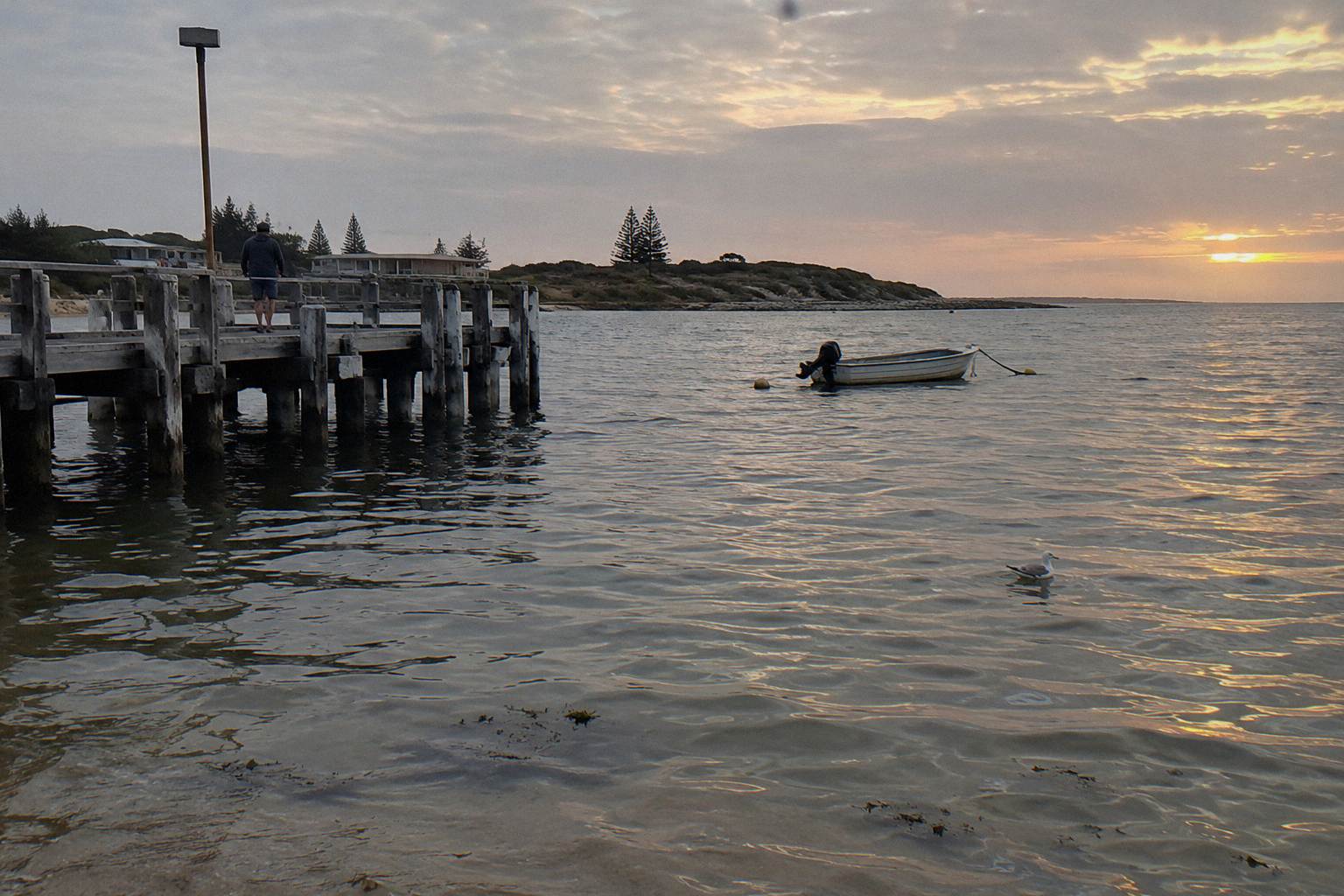
What can be said is narrower and better. Perth Wildlife Encounters, the operator of the Rockingham Wild Dolphin Swim, makes two statements relevant to sharks: the crew wear Shark Shields, and the chance of a shark encounter is very low. Both are the operator's own words, and both attach to the Rockingham swim specifically, not to any other product or stretch of coastline. The swim leaves from Val Street Jetty, Rockingham, runs September to early June, and is rated 4.7 across about 685 reviews, from A$249.72 per person.
For a reader whose shark question sits between them and the booking button, the practical decision looks like this: take the operator's stated position at face value, ask the crew the question directly when booking or on the day, and match the product to your comfort level in the water. There is also a completely dry way to see the same animals, which is worth holding in mind.
What The Rockingham Operator Actually Says About Sharks
Perth Wildlife Encounters makes just two statements about sharks, both about the Rockingham swim only: the crew wear Shark Shields, and the chance of a shark encounter is described as very low, with no incident figures, safety statistics, or comparisons with other locations anywhere in the material. The operator also warns readers with pacemakers, or who are pregnant, not to use a Shark Shield and to avoid swimming near anyone wearing one.
The Shark Shield detail deserves a careful read. It is a piece of equipment the crew wear, and the operator's conditions mention it in the context of who should not come close to one in the water. That is a statement about the equipment, not a statement about shark likelihood, and the two should not be blurred. The "very low" phrasing is the operator's own assessment of the chance of an encounter, and it is the operator's to make: the swim has run from Val Street Jetty since well before the current booking pages existed, and the operator describes over 25 years of experience with the local dolphins.
If the shark question is the thing holding up a booking, the practical move is the first-timers checklist for a wild dolphin swim, which pulls together every stated restriction and inclusion in one place. The Rockingham Wild Dolphin Swim is bookable with free cancellation up to 24 hours on the booking page, so a nervous swimmer can lock a date, ask the operator the shark question directly by email or phone, and still walk away with a full refund inside the window. Check availability for the dates you are weighing up.
For a fuller treatment of the stated restrictions, the wetsuit and the waiver, read whether it is safe to swim with wild dolphins in Western Australia, which sticks to the same sourcing rules: what the operator, the regulator and the park body say, nothing else.
How The Swim Works, And Why That Matters To A Nervous Swimmer
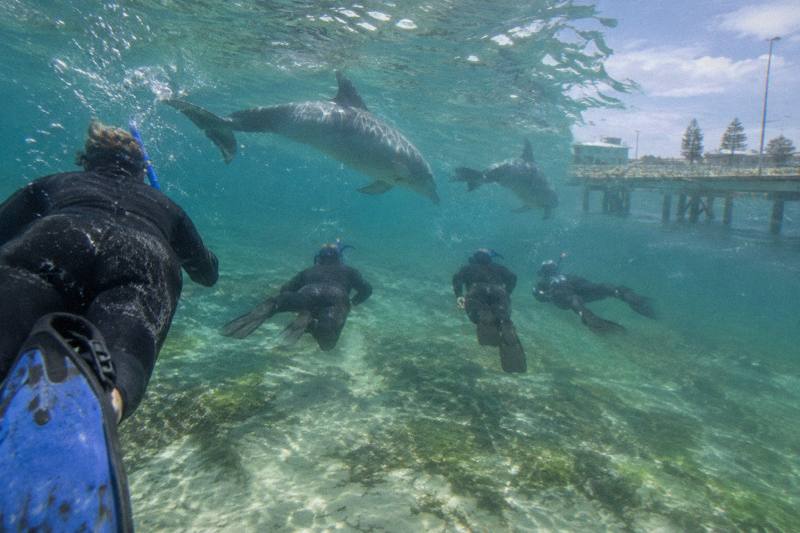
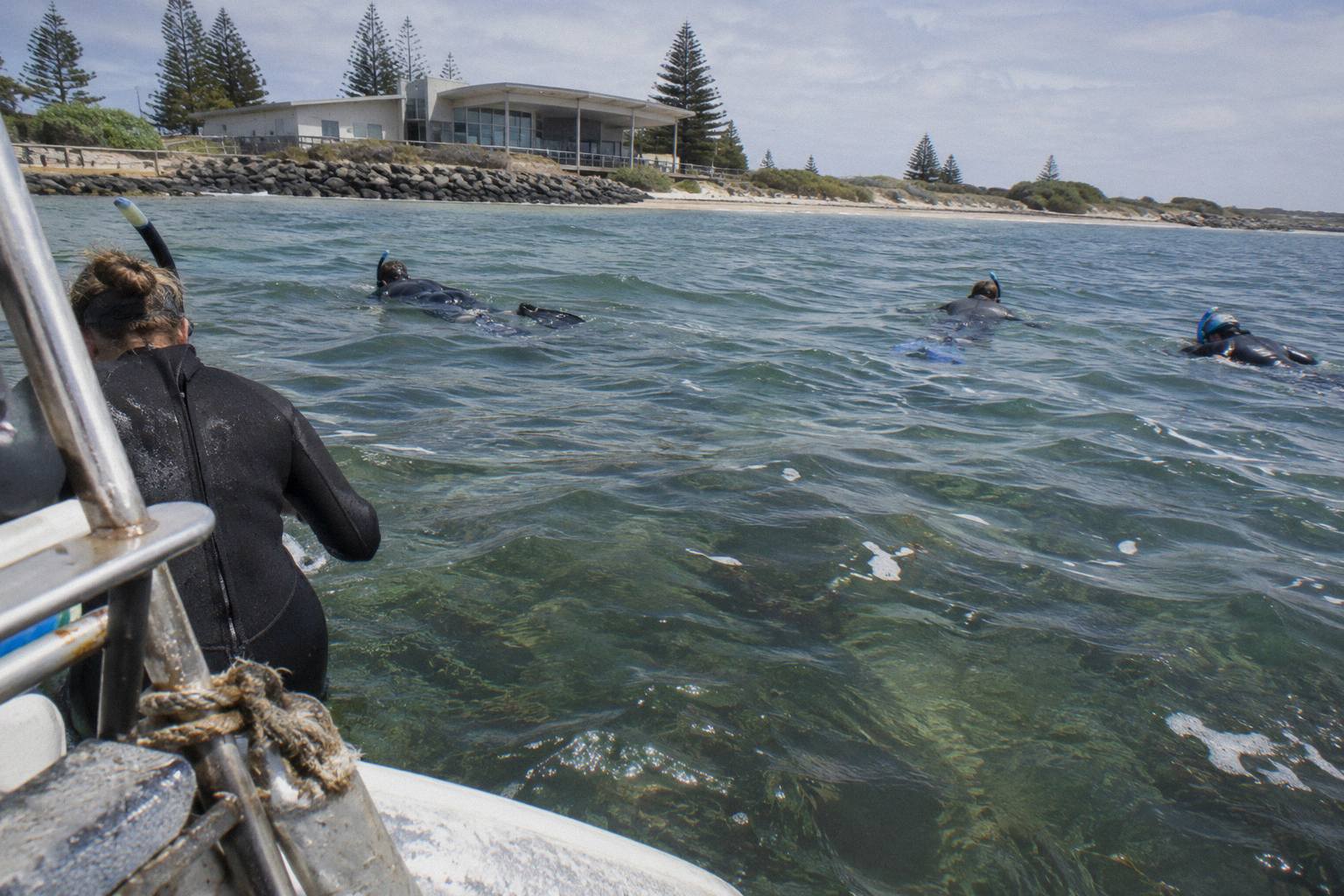
Swimmers enter the water in groups of up to seven, each holding a trained guide's belt while being towed on an aqua scooter, with a second guide on a solo scooter working around the group. You stay at the surface the whole time with no free swimming, diving, or solo dolphin contact, no snorkelling experience is needed, and nervous swimmers are explicitly accepted.
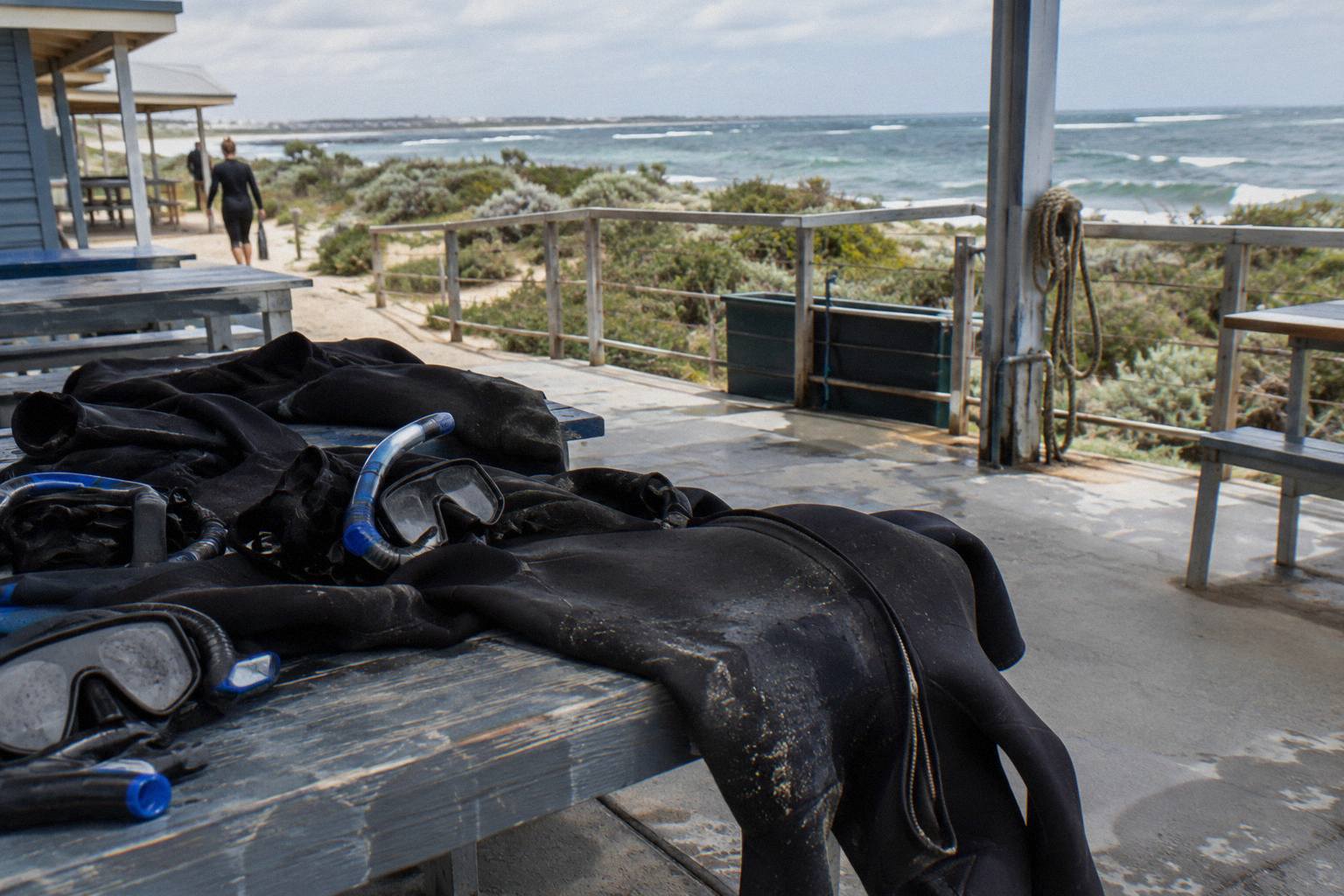
That structure answers a fear that shark questions often sit inside: the fear of being alone in open water. On the Rockingham Wild Dolphin Swim you are never swimming solo. You hold a belt, a guide is within arm's reach on the scooter in front of you, and a second guide is nearby on another scooter. The operator also states that guests stay at the surface, which means the swim is closer to being towed than to diving. The 4 mm full-length wetsuit is described by the operator as keeping you very buoyant, which is the operator's own reason for saying buoyancy aids are not recommended.
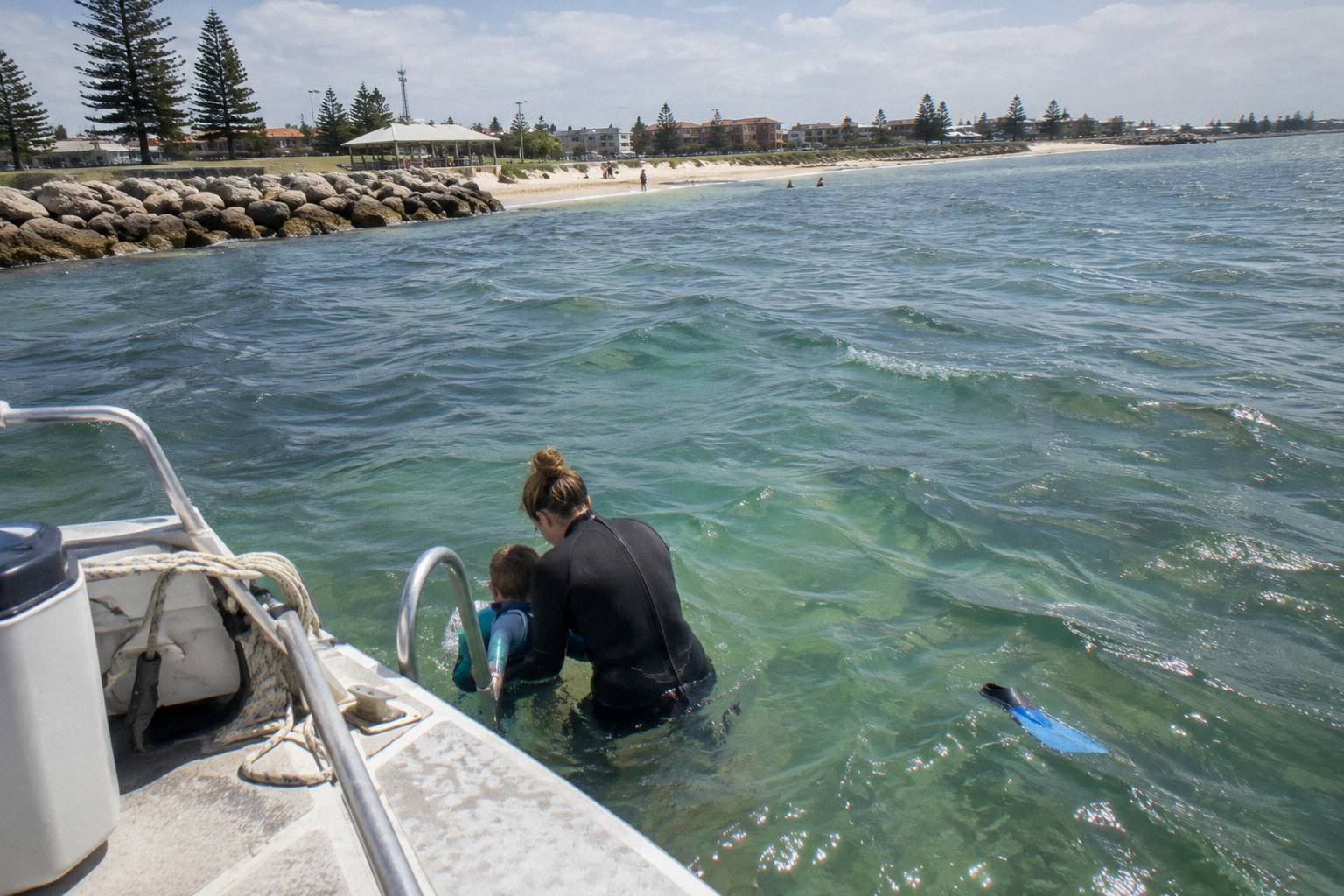
The kit list and the supervision rules are stated plainly. Children's wetsuits come in small sizes, but the operator says the cruise is not recommended for children 6 years or younger, and adds that if a parent feels a child needs a buoyancy aid, the cruise is not suitable. Parents supervise their own children in the water, staff do not supervise children, and children are not left on board unsupervised. A waiver is signed before boarding, and the crew film every swim, with photos uploaded online afterwards, so a nervous swimmer's hands stay free the whole time.
None of this is a shark fact, and it is not presented as one. It is the context in which the operator's "very low" statement sits: a guided, surface-level, group-format swim with crew wearing deterrent equipment, not a lone snorkel across a bay. Whether that context is enough is a personal call, and the operator takes questions before booking.
Who The Dolphins Around Rockingham Actually Are
A Murdoch University study identified four separate Indo-Pacific bottlenose dolphin communities in Perth metro waters: Cockburn Sound, the Swan Canning Riverpark, Owen Anchorage and Gage Roads. The species is Tursiops aduncus. Rockingham's Shoalwater side sits beside Cockburn Sound, but no operator or official page states that the dolphins on the swim belong to the Cockburn Sound community, and no dolphin count for Rockingham exists on any operator or official page at all, so none is offered here.
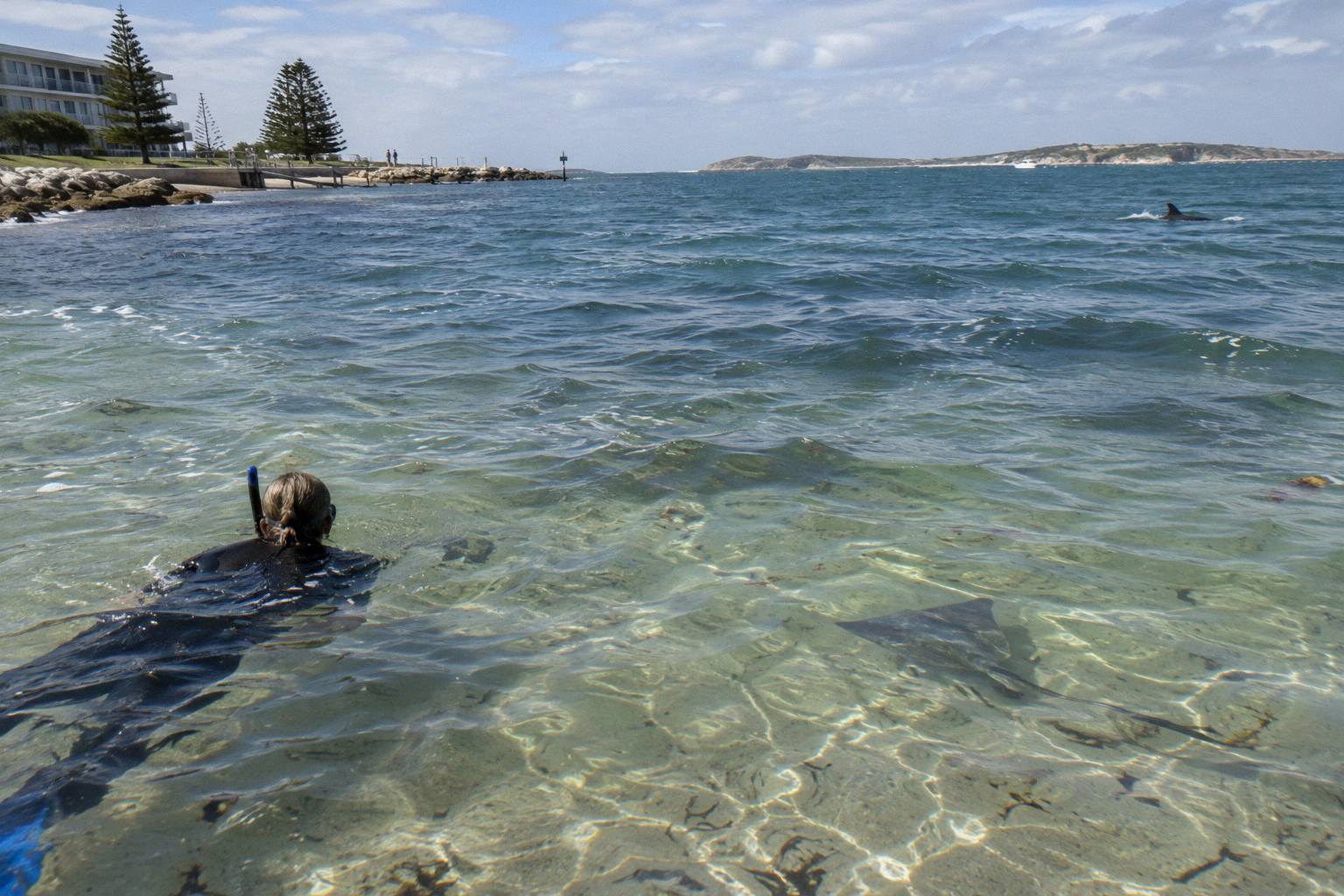
The study matters to the shark question in one narrow way: it establishes that the dolphins around Perth are discrete, local communities rather than wandering visitors, and that the species is a coastal bottlenose. The Murdoch University findings on Perth's dolphin communities are worth reading directly, since they discuss how each community uses different habitat. What the study does not do, and what no operator or official page does, is connect dolphin distribution to shark distribution.
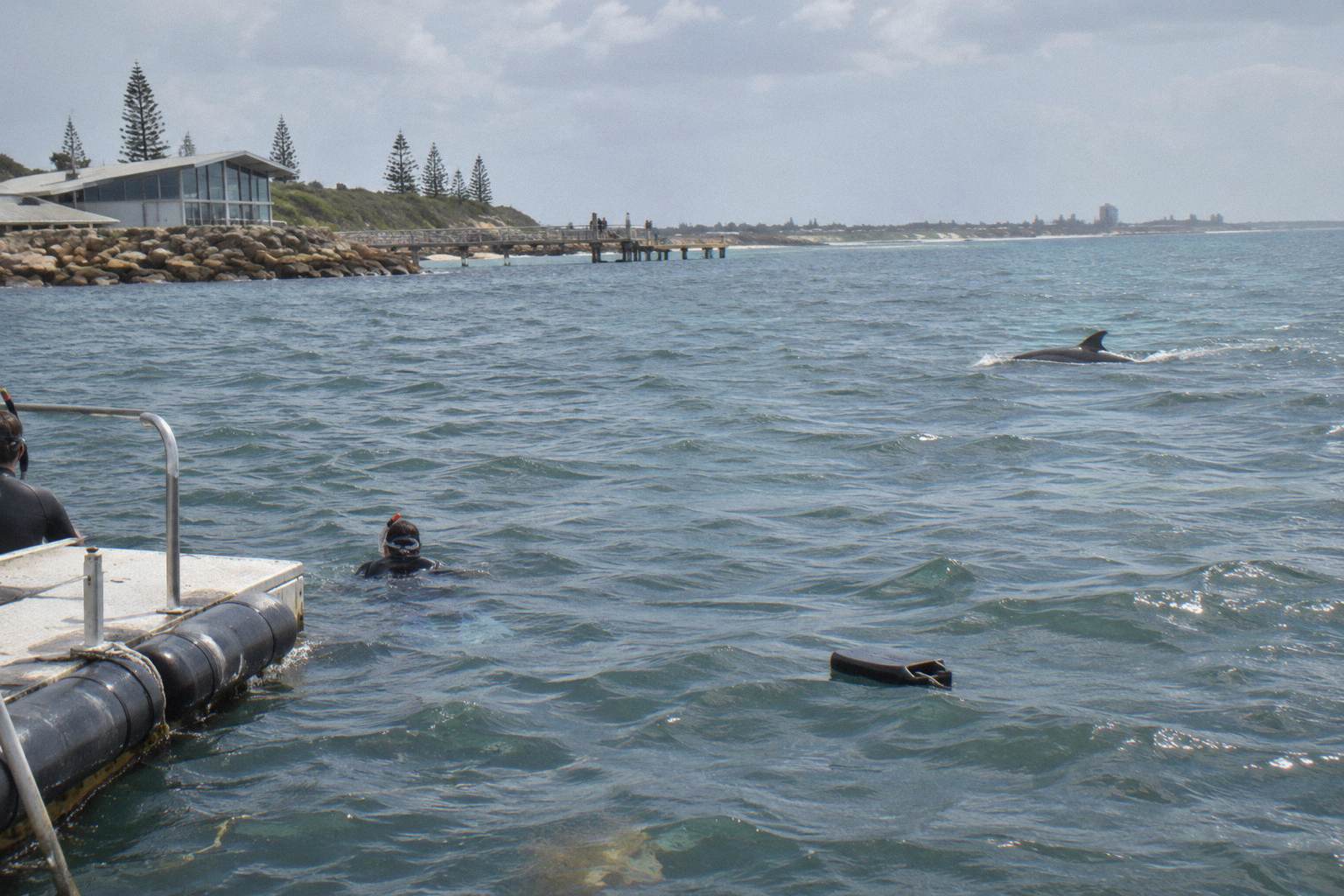
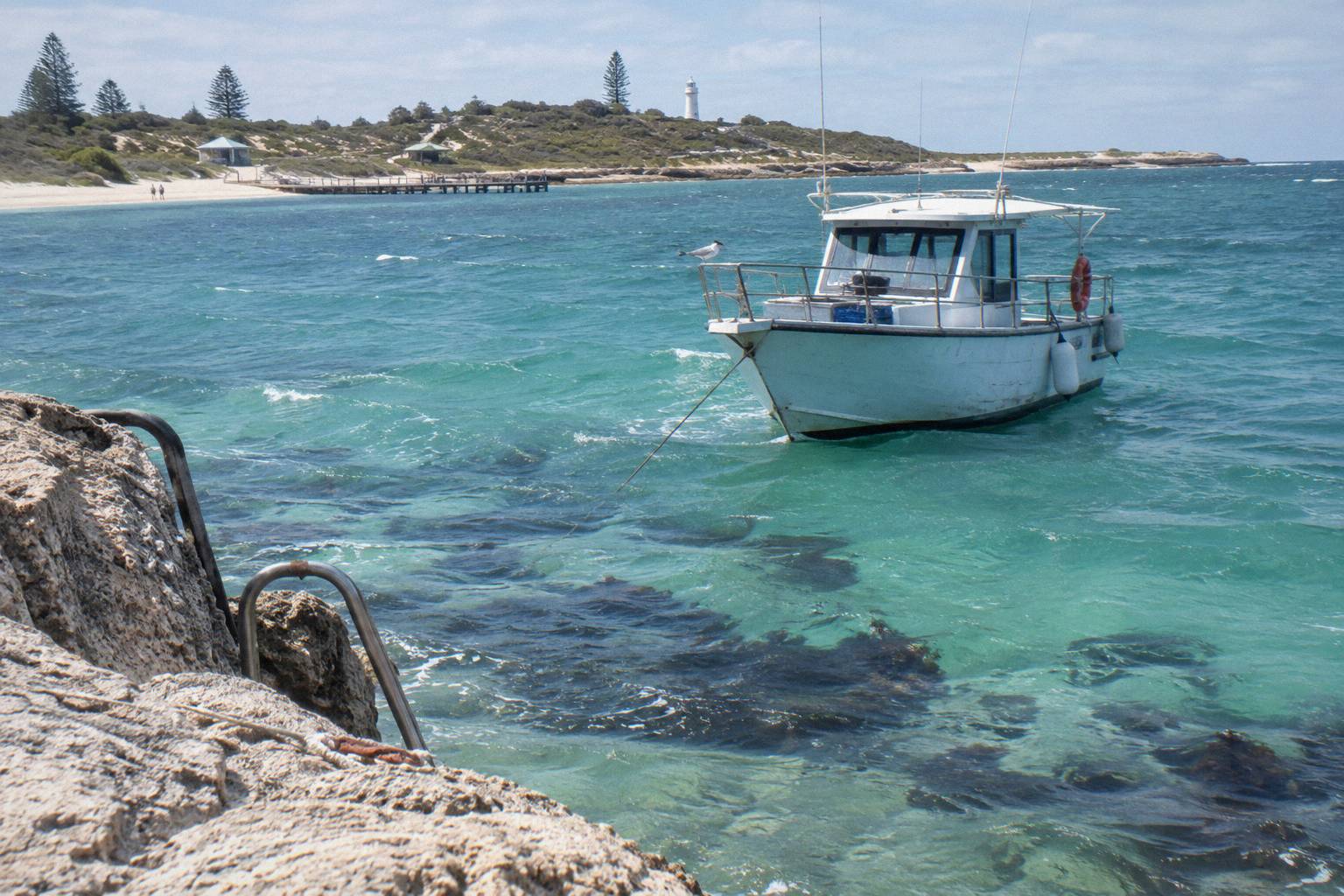
The operator adds its own observations on the swim page: the dolphins are described as territorial and very consistent, and the behaviours listed include hunting, mating, sleeping, chasing octopus and squid, hunting on the back of big stingrays, and occasionally a sea lion joining. Those are operator statements about dolphin behaviour, nothing more. The Shoalwater Islands Marine Park page from the parks service describes the park's wildlife, including sea lions on Seal Island, and notes the park lies about an hour from Perth. It makes no statement about sharks relative to dolphins either.
The shape of the page so far: the dolphin side of the question is well documented, the shark side consists of one operator sentence and one piece of crew equipment. A reader who wants more than that has one good option, which is to ask, and the section on questions to ask below gives a list.
What Is Not Stated, And How To Handle It
Everything ecological about the dolphin and shark relationship is absent from the operator and official pages: no statement that dolphins deter sharks, no statement that they attract them, no statement that shared water means anything at all. No safety statistic, incident count or comparison between locations appears anywhere, and the shark question beyond the operator's two sentences is simply not stated. The right response is one short clause, not a guess: ask the operator.
A nervous reader deserves to know where the floor is. The floor is this: the operator says crew wear Shark Shields, the operator says the chance of a shark encounter is very low, and beyond that the question has no documented answer in any material connected to these tours. A page that filled the gap with marine biology trivia, reassurance invented from a dolphin documentary, or an unsourced claim about shark behaviour would be doing the reader a disservice on precisely the question they care about. The rest of the planning pages sit on Rockingham Swim With Dolphins.
What fills the space instead is decision logic. The table below separates what is stated from what is not, so the boundary is visible at a glance rather than implied.
| Question a nervous reader asks | What is stated, and by whom | Status |
|---|---|---|
| Do dolphins mean sharks are near? | Nothing: no operator or official page links the two | not stated; ask the operator |
| Do dolphins keep sharks away? | Nothing anywhere in the operator, park or university material | not stated; ask the operator |
| What does the operator say about sharks? | Crew wear Shark Shields; chance of an encounter described as very low | stated, Perth Wildlife Encounters, Rockingham swim only |
| Are there incident or safety figures? | None exist on any operator or official page | Not stated |
| Who should avoid the Shark Shield? | People with pacemakers and people who are pregnant, per the operator | stated, operator conditions |
| What about Bunbury? | No shark statement appears in the Dolphin Discovery Centre material | not stated; ask the operator |
One more boundary worth drawing: the rules that govern swimmers and dolphins say a lot about keeping distance, and nothing about sharks. Under WA's Biodiversity Conservation Regulations, a person in the water must keep 50 m from a dolphin and a vessel 100 m, and touching any marine fauna carries a AUD 10,000 fine. Those rules exist for the animals' protection under the wildlife regulations; they are not a shark measure and should not be read as one. The detail is covered in full in how close you can get to wild dolphins in the water.
Staying Dry: Dolphin Options That Never Leave The Boat
Yes, three of the five dolphin tours here keep you dry on deck from start to finish: the Penguin Island And Dolphin Cruise (about 1 hour 30 minutes), the Mandurah Dolphin Cruise (75 minutes, from A$47), and the Mandurah Giants And Dolphin Cruise (2 hours, from A$85). Every one of them is watching only, with no in-water segment at any point.
This is the answer for a reader whose shark concern is really a deep-water concern. Watching from a vessel is not a consolation prize: the dolphins are the same animals, the commentary is live on both Mandurah cruises, and the Mandurah Dolphin Cruise's booking page describes a free return until dolphins are sighted, claimable with your booking reference and rebookable within 12 months. The Giants cruise's booking page says the same style of term, if dolphins are not sighted you can join again for free, and names a fourth giant sculpture seen from the water.
For anyone deciding between the two formats, the fuller comparison is in choosing between a wild dolphin swim and a dolphin watching cruise, which sets out the stated differences in duration, price and what each includes.
The Penguin Island And Dolphin Cruise is the shortest commitment at about 1 hour 30 minutes and carries no stated price, rating or cancellation term, so everything specific to it needs to come from its booking page at the moment you look.
The Giants cruise suits a reader who wants a longer morning on the water with the dolphin spotting folded in: 2 hours on a SuperCat with an open front, upper and lower decks and large windows, soft drinks and light snacks for sale on board or bring your own, and free cancellation up to 24 hours. A fish-and-chip lunch is not included and is added by contacting the operator. Hotel pickup is not included on the Mandurah Dolphin Cruise, and parking near the departure point is described as free and close on that cruise's booking page.
Traveller Types And The Shark Question
How each traveller type answers the shark question depends on the operator statements: a nervous first-time swimmer needs the group format and surface-only rule spelled out, a parent needs the age guidance (not recommended for children 6 or younger at Rockingham; swimmers 8 and over at Bunbury with an accompanying adult in the water), a confident snorkeller still follows the same format, and a non-swimmer can take the spectator option or a watching cruise.
Take the nervous swimmer first. The operator says no previous snorkelling experience is required, an introductory lesson is part of the day, nervous swimmers are accepted, and the wetsuit itself is described as very buoyant. The shark question for this reader is one to put to the crew in advance: ask directly what the Shark Shields are, where the crew wear them, and what the operator's own words mean in practice. A crew that answers plainly is itself information.
The parent has a different set of stated facts to work through. On the Rockingham Wild Dolphin Swim, the operator does not recommend the cruise for children 6 years or younger, parents supervise their own children in the water, and the operator is blunt that a child who needs a buoyancy aid should not be on the cruise. On the Bunbury Wild Dolphin Swim, the Dolphin Discovery Centre sets swimmers at 8 and over, accompanied by a swimming adult, with confident swimmers of 12 or older allowed without one. Nothing in either set of statements concerns sharks, and the age question for children is covered in depth at how old kids need to be to swim with dolphins.
The confident snorkeller sometimes expects a freer format than the one on offer. Holding a guide's belt, staying at the surface, entering in groups of up to 7: that is the swim as the operator describes it, for everyone, regardless of experience. The non-swimming partner has two stated routes: the Rockingham operator says a spectator option exists, with no price stated, and the Bunbury operator caps observers at 4 alongside 8 to 20 swimmers, with the booking page noting non-swimmers sit on the boat. The suitability question is explored further in whether non-swimmers can join a wild dolphin swim.
The spectator and observer routes are the quiet middle ground in the shark conversation: same water, same dolphins, same crew, no swimming. For a group split between eager and nervous, one swimmer plus one spectator on the Rockingham cruise, or a family on a Mandurah cruise, resolves the debate without anyone having to argue about marine biology.
What Trips People Up When Shark Nerves Meet A Booking Page
The predictable mistakes are treating the operator's "very low" sentence as a promise, assuming the Shark Shield is worn by swimmers rather than crew, mixing one operator's terms into another tour, and inventing an ecological link between dolphins and sharks from folk wisdom. Each one is avoidable by checking which tour, which operator and which channel a statement belongs to, and since four of the five tours allow free cancellation up to 24 hours, asking questions first costs nothing.
The first trap is scope. "The chance of a shark encounter is very low" is Perth Wildlife Encounters speaking about the Rockingham swim. It is not a statement about the Bunbury Wild Dolphin Swim, whose material carries no shark statement, and not a statement about the watching cruises, where nobody enters the water. Attaching it to the wrong product turns an operator's own assessment into a borrowed reassurance.
The second trap is the equipment. The crew wear the Shark Shields, per the operator, and the stated restrictions about pacemakers and pregnancy concern proximity to a worn unit in the water. A reader who skims can come away thinking swimmers are issued one, or that the device is a promise of protection. It is neither: it is a crew practice, stated plainly, with its own stated limits.
The third trap is channel confusion. The operator's direct-booking terms, such as the 48 hour change window and the free return if no dolphins are seen or swum with on the Rockingham cruise, apply to bookings made direct with the operator. The booking pages carry their own free cancellation up to 24 hours, and the Penguin Island cruise states no cancellation term at all. The refund picture is unpacked properly in whether you get a refund if no dolphins show up.
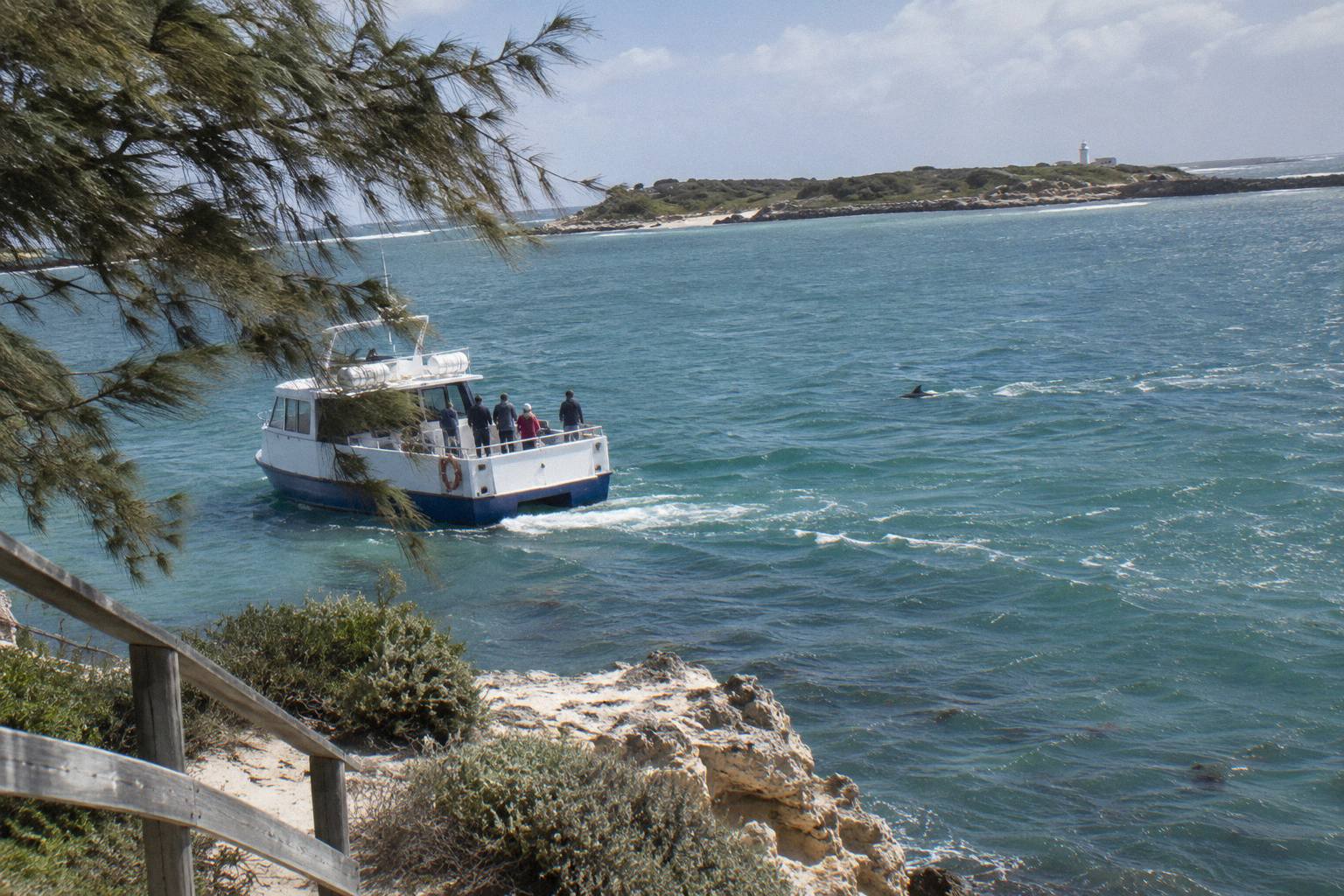
The fourth trap is the folk wisdom itself. Dolphins and sharks share coastal waters in many parts of the world, and the presence of one tells you nothing documented about the other on any operator or official page. A nervous swimmer who repeats "dolphins mean no sharks" has gained nothing except a false certainty. The only sourced position available is the operator's own two sentences, plus the option to ask for more.
What To Ask The Operator Before You Book
Before you book, ask the operator six questions: what the Shark Shields are and who wears them, what the very low assessment is based on, whether nervous swimmers can stay near the guide, what the spectator option costs, what the cancellation window is for the channel you book through, and what happens if the sea changes on the day. Asking first costs nothing, since the booking page allows free cancellation up to 24 hours ahead.
A checklist built only from what is stated, in the order it helps:
| Question to ask | Why it matters | Where the stated basis comes from |
|---|---|---|
| What are the Shark Shields, and does every crew member wear one? | Confirms the equipment detail in its exact scope | Operator statements, Rockingham swim |
| What does the very low chance of an encounter rest on? | Lets the operator, not the reader, expand its own words | Operator statements, Rockingham swim |
| Can a nervous swimmer stay beside the guide the whole time? | The group format is stated; personal comfort limits are worth confirming | Operator swim description |
| Is the spectator option available on the date, and at what price? | The option exists, the price is not stated | Operator, Rockingham swim |
| Which cancellation terms apply to this booking? | Direct-booking terms and booking-page terms differ | Operator conditions page; booking page |
| What happens if weather cancels the day? | The operator states a reschedule at no charge for its own cancellations | Operator conditions, direct bookings |
Two of these deserve a note on attribution. The weather answer, a reschedule at no charge when the operator cancels, is Perth Wildlife Encounters' term for its own cancellations. The spectator price is simply absent from any operator or official page, so it stays a question rather than a figure. Everything else on the list has a stated anchor somewhere on the operator's own pages, which is why these questions, and not others, are the ones worth asking.
The final move belongs to the reader. Compare the swim against the dry options, pick the format that matches the real source of the nerves, book the one that fits, and ask the shark question directly while the free cancellation window is still open. The date range to work with is September to early June for the Rockingham swim and November to April for Bunbury, both stated by their operators, with the Bunbury swim's daily 7:45 am start published on the Dolphin Discovery Centre's own page.
Common Questions About Dolphins And Sharks
Does Seeing Dolphins Mean Sharks Are Near?
No operator or official page states any link in either direction. The operator of the Rockingham swim says crew wear Shark Shields and describes the chance of a shark encounter as very low, and nothing further appears in the operator, park or university material. Ask the operator directly with any further question.
Do Dolphins Keep Sharks Away From Swimmers?
That claim appears nowhere on any operator or official page for these tours. The dolphin communities of Perth waters are documented by Murdoch University, but no operator or official page says anything about their effect on shark presence.
Do The Swimmers Wear Shark Shields On The Rockingham Swim?
The operator says the crew wear Shark Shields. It does not state that swimmers are issued them. People with pacemakers and people who are pregnant are told not to use the device and to avoid swimming near anyone using one wearing one.
What Does The Operator Say About The Chance Of A Shark Encounter?
Perth Wildlife Encounters describes the chance of a shark encounter on the Rockingham swim as very low. That is its complete stated position: no figures, no comparisons and no statistics accompany it anywhere in the material.
Can A Nervous Swimmer Still Join The Dolphin Swim?
Yes, per the operator: nervous swimmers are accepted, no previous snorkelling experience is required, an introductory lesson is included, and swimmers hold a guide's belt at the surface in groups of up to 7. Questions can be put to the operator before booking.
Is There A Way To See The Dolphins Without Getting In The Water?
Yes. The Rockingham operator states a spectator option exists, the Bunbury operator allows observers, and three watching-only cruises run from Shoalwater and Mandurah, including the Penguin Island And Dolphin Cruise at about 1 hour 30 minutes and the Mandurah Dolphin Cruise at 75 minutes.