Is Swimming With Wild Dolphins Ethical? Wild Versus Captive
The ethics of swimming with wild dolphins come down to law, licence and operator behaviour: Western Australia sets hard distance and no-touch rules, commercial swims operate inside a state framework, and the choices each operator makes, from group size to feeding policy, are visible before you book.
Short answer
Wild dolphin swims in Western Australia are regulated under the state wildlife rules, the Biodiversity Conservation Regulations 2018, which ban touching, feeding and approaching dolphins closer than 50 m in the water. Licensed operators may approach for commercial purposes; the Rockingham Wild Dolphin Swim states no touching and no feeding, and runs groups of up to 7 per guide.
In short. Yes, a guided wild dolphin swim in Western Australia can be an ethical choice, because the state's Biodiversity Conservation Regulations 2018 draw hard lines: no touching, no feeding, and no approaching a dolphin closer than 50 m in the water unless the activity is authorised under a commercial interaction licence. The Rockingham Wild Dolphin Swim and the Bunbury Wild Dolphin Swim each operate as swims with stated no-touch, no-feed conduct. The captive alternative raises different questions that no WA regulation answers, and no captive facility is described here. What you can judge before booking is concrete: the operator's licence claim, its group size, its distance behaviour and its feeding policy.
For the wider planning picture, see the parent guide to choosing a wild dolphin swim.
| Question | What the sources say |
|---|---|
| Is a wild swim legal in WA? | Yes, where a fauna disturbing (commercial interaction) licence authorises it |
| Can you touch a dolphin? | No; touching any marine fauna carries a AUD 10,000 fine |
| Can you feed a dolphin? | No; feeding needs its own licence and is never part of a commercial interaction |
| How close may an unlicensed swimmer get? | 50 m in the water, 100 m by vessel |
| Do the distance rules bind guided swims? | Regulation 112 exempts activities authorised under a licence |
| Who checks operator conduct? | The licence route sits with DBCA; no operator's licence number is published |
What Makes A Dolphin Swim Ethical Or Not?
An ethical dolphin swim leaves the animals in control: they are never captured, confined, fed or touched, and swimmers follow rules written to protect them rather than to entertain them. In Western Australia, commercial tours operate under the Biodiversity Conservation Regulations 2018, which set fixed separation distances and fines, while an unethical swim chases, touches or lures dolphins with food, buying proximity the law forbids.
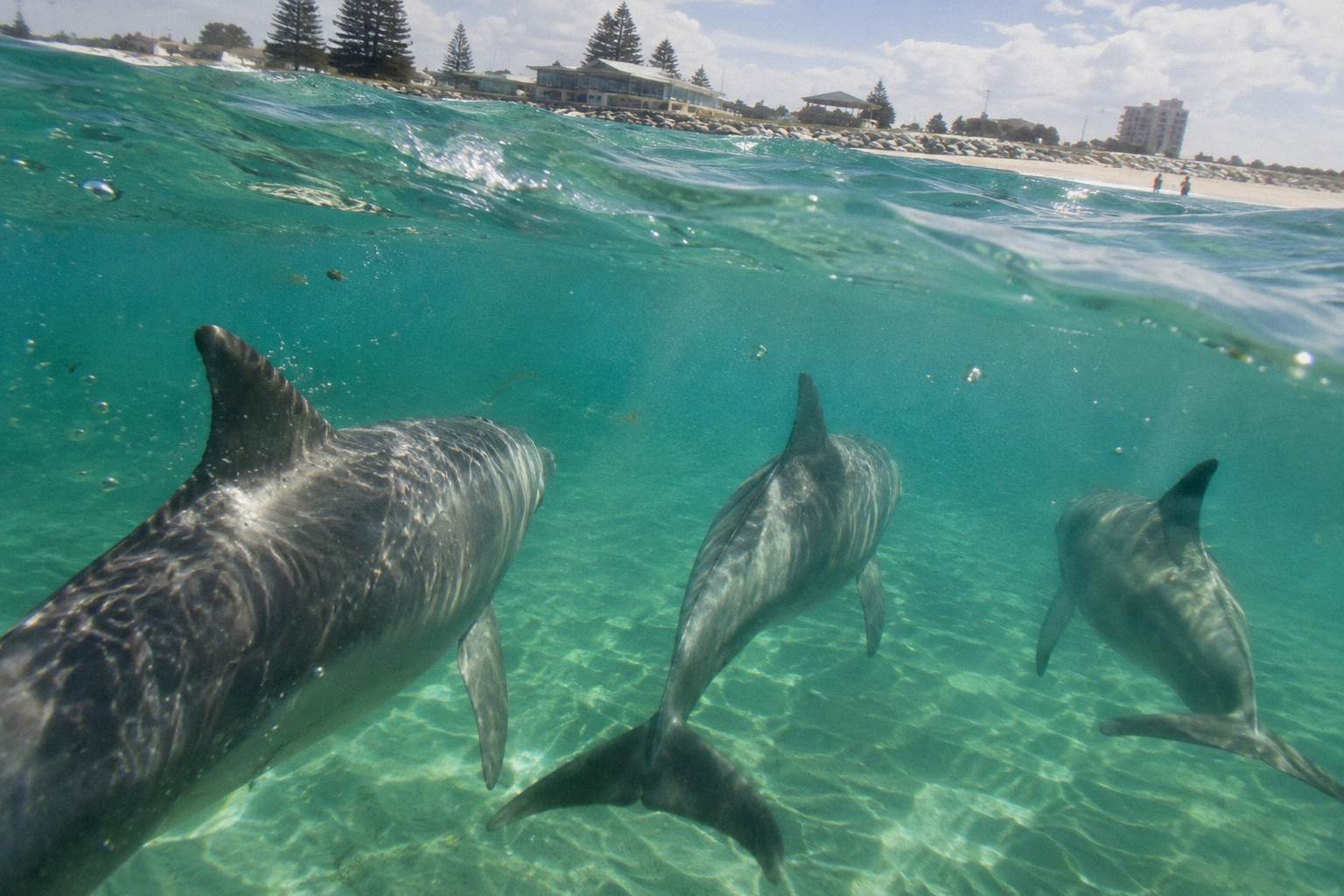
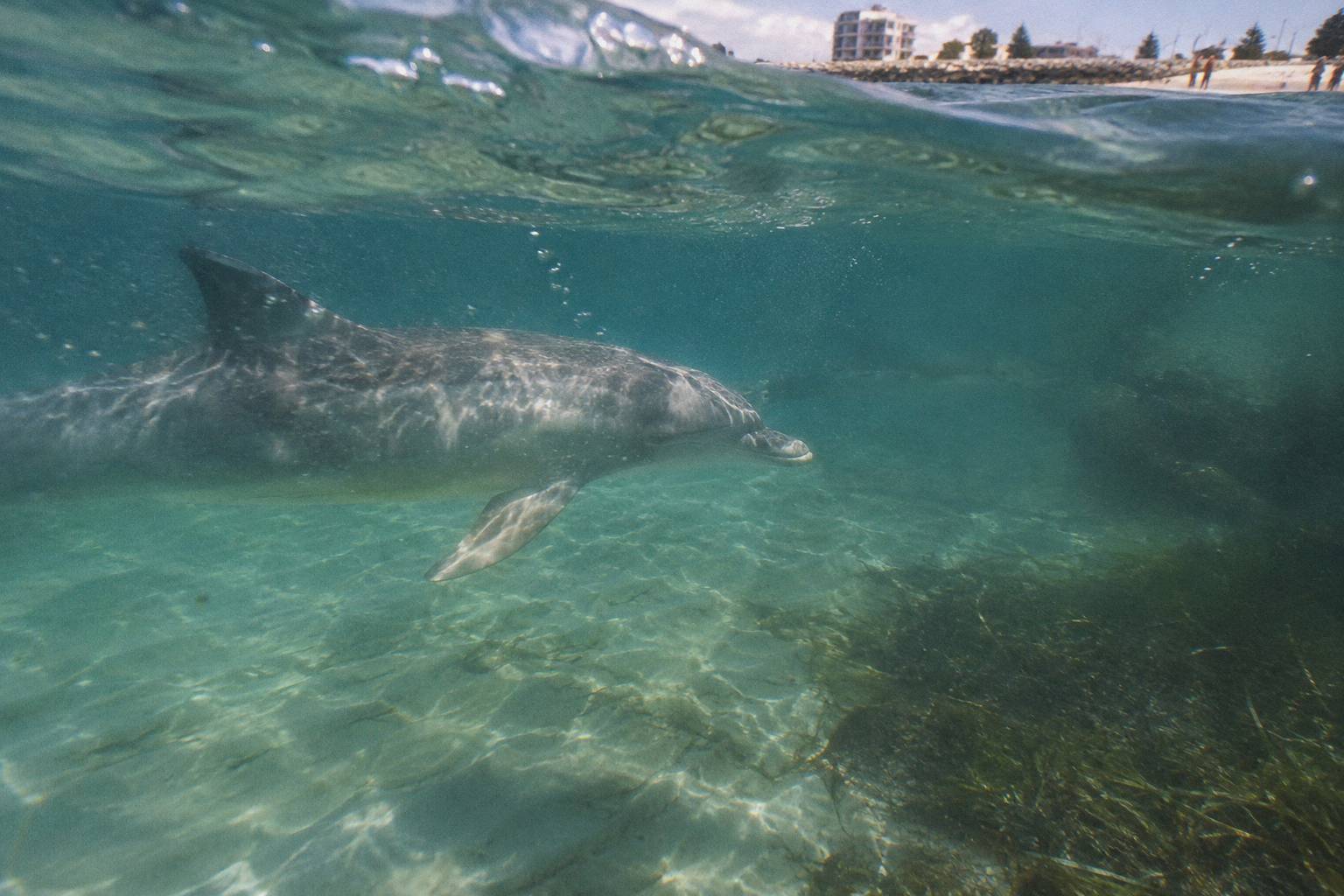
The wild versus captive question sits underneath all of this. A wild swim happens on the dolphins' terms, in their own waters, and the animals can leave. The regulations recognise that the encounter belongs to them: if a dolphin approaches a swimmer closer than 50 m, the swimmer must move away as soon as reasonably possible, and a vessel must go to neutral or move off at no more than 6 knots. That single rule, regulation 114, encodes the ethical principle plainly. The interaction is the dolphin's choice, and once the dolphin makes it, the human's obligation is to yield space.
A captive setting removes that choice entirely, and no state regulation in Western Australia governs it, because no captive dolphin facility operates in the places covered here. The comparison is not between two regulated products. It is between an activity the state has chosen to licence under wildlife law, and one that does not exist in this region to compare. A reader weighing the ethics is therefore weighing a guided wild swim against not swimming at all, or against watching from a boat or the shore.
Watching has its own ethics, and the same law covers it. The Penguin Island And Dolphin Cruise and the two Mandurah cruises here are watching only, and the vessel distance rule of 100 m applies to everyone on the water without a licence. The guide to choosing between a swim and a watching cruise works through that choice in detail.
What Does Western Australian Law Actually Say?
Western Australia's Biodiversity Conservation Regulations 2018 set binding separation distances: 50 m for a person in the water, 100 m for a vessel, 300 m for aircraft, 500 m for helicopters and 60 m for drones; Regulation 113 imposes a AUD 5,000 fine on a person or vessel approaching closer, Regulation 118 imposes AUD 10,000 for touching any marine fauna, feeding requires separate licensing, and one lawful route exists for commercial swims.
The full consolidated text is published by the Western Australian legislation register, and it rewards a direct read. Regulation 120 adds that a person in the water must not obstruct or interfere with the natural movement of marine fauna, a AUD 5,000 offence. Regulation 121 requires a vessel to move away from visibly disturbed marine fauna. Regulation 119 bans "diving" with marine fauna, where diving means swimming with an artificial air supply: scuba with dolphins is out, snorkelling is the permitted method.
| Rule | Distance or penalty | Source |
|---|---|---|
| Person in the water | 50 m from a dolphin | Schedule 5, Division 3 |
| Vessel | 100 m from a dolphin | Schedule 5, Division 3 |
| Aircraft (not helicopter) | 300 m | Schedule 5, Division 3 |
| Helicopter | 500 m | Schedule 5, Division 3 |
| Drone (aerial device) | 60 m | Schedule 5, Division 3 |
| Approaching closer | AUD 5,000 fine, person or vessel | Regulation 113 |
| Touching or attempting to touch | AUD 10,000 fine | Regulation 118 |
| Obstructing natural movement | AUD 5,000 fine | Regulation 120 |
The exemption is the part that surprises readers. Regulation 112 provides that the distance rules do not apply to an activity authorised under a licence, and regulation 30 defines the fauna disturbing (commercial interaction) licence as covering interaction activities involving approaches to fauna for commercial purposes. That is the legal architecture of every paid dolphin swim in the state: a licensed operator may approach dolphins, an unlicensed swimmer may not. No operator's licence number or licence conditions are published on any operator or official page, so treat any licence claim as a claim, and ask the operator directly.
The distances also matter to anyone with a camera drone. The 60 m aerial device distance is the tightest in the schedule, and it binds a recreational drone pilot over dolphin water just as the 50 m rule binds a swimmer. The blog post on how close you can legally get to wild dolphins unpacks each distance with the same figures.
If the law settles what is legal, the next question is what each swim actually does in the water, and the two swims described here lay out their conduct on their own pages.
How Does The Rockingham Swim Treat The Dolphins?
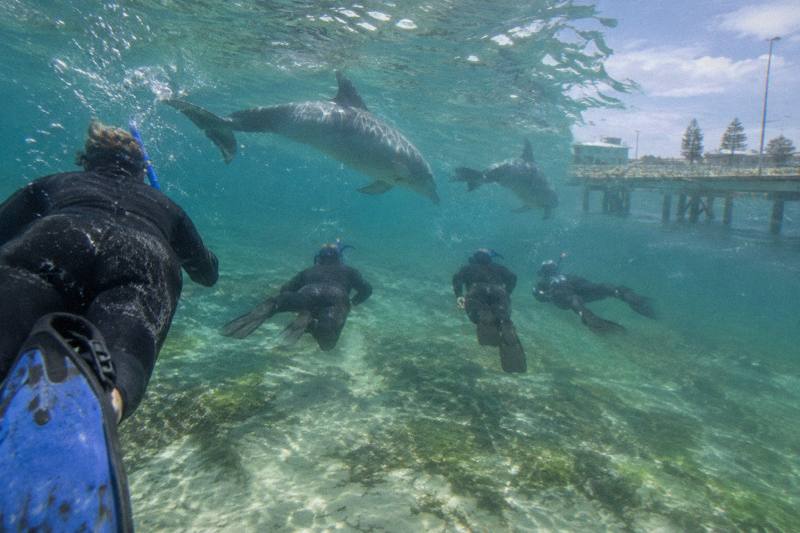
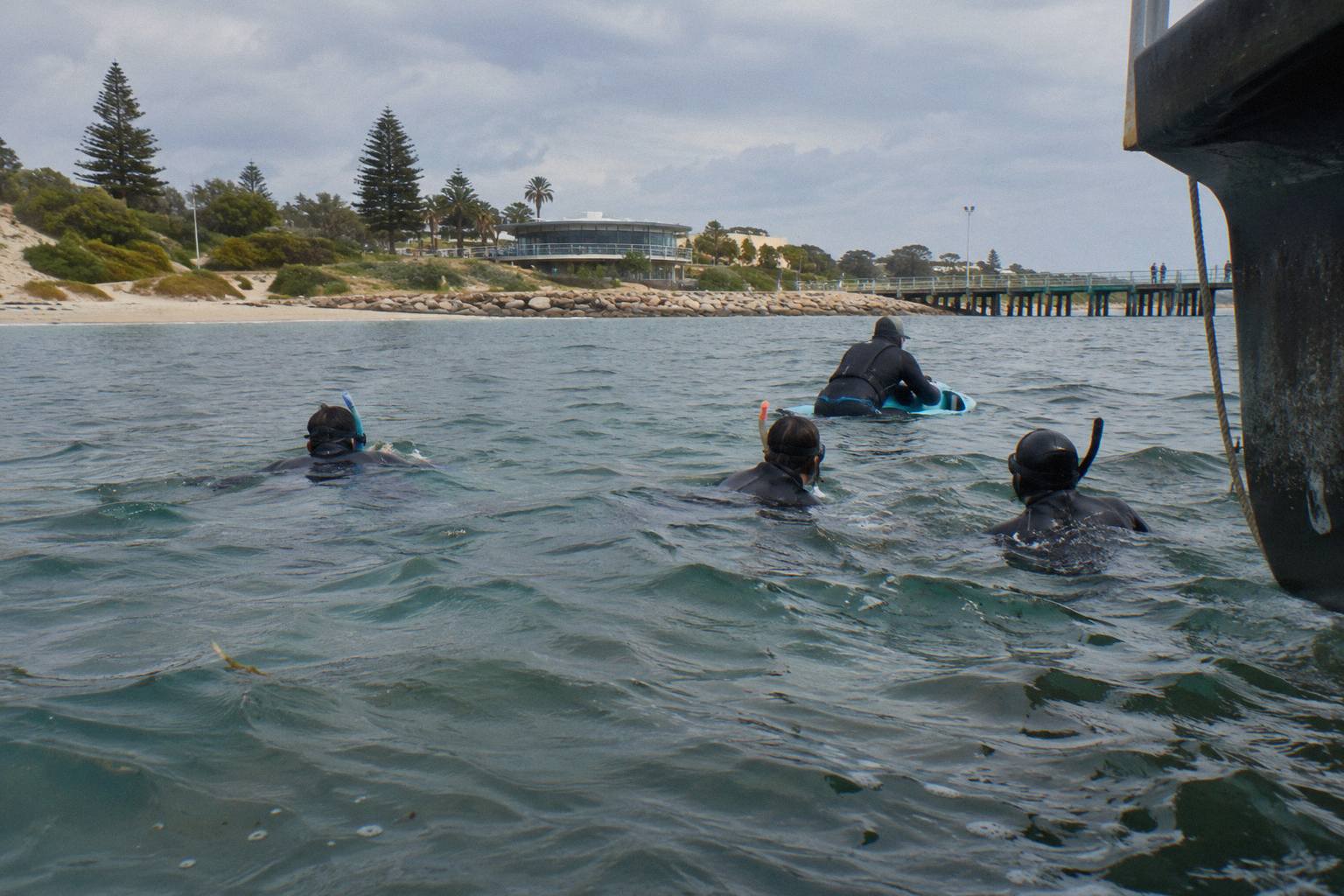
By operator Perth Wildlife Encounters' own account, the dolphins are never touched or fed: swimmers enter in guided groups of up to seven, each towed by a guide on an aqua scooter while holding the guide's belt and staying at the surface, with a second guide working around the group. The cruise's lack of a fixed finish time is framed as letting the crew keep searching rather than cutting an encounter short, though none of this is independently audited.
The listed range for the Rockingham Wild Dolphin Swim is about 3 to 6 hours depending on dolphin sightings, from A$249.72 per person, rated 4.7 across about 685 reviews on its booking page, with free cancellation up to 24 hours on the booking page. The season runs September to early June, and the operator says the swim is not recommended for children 6 years or younger, with parents responsible for supervising their own children in the water.
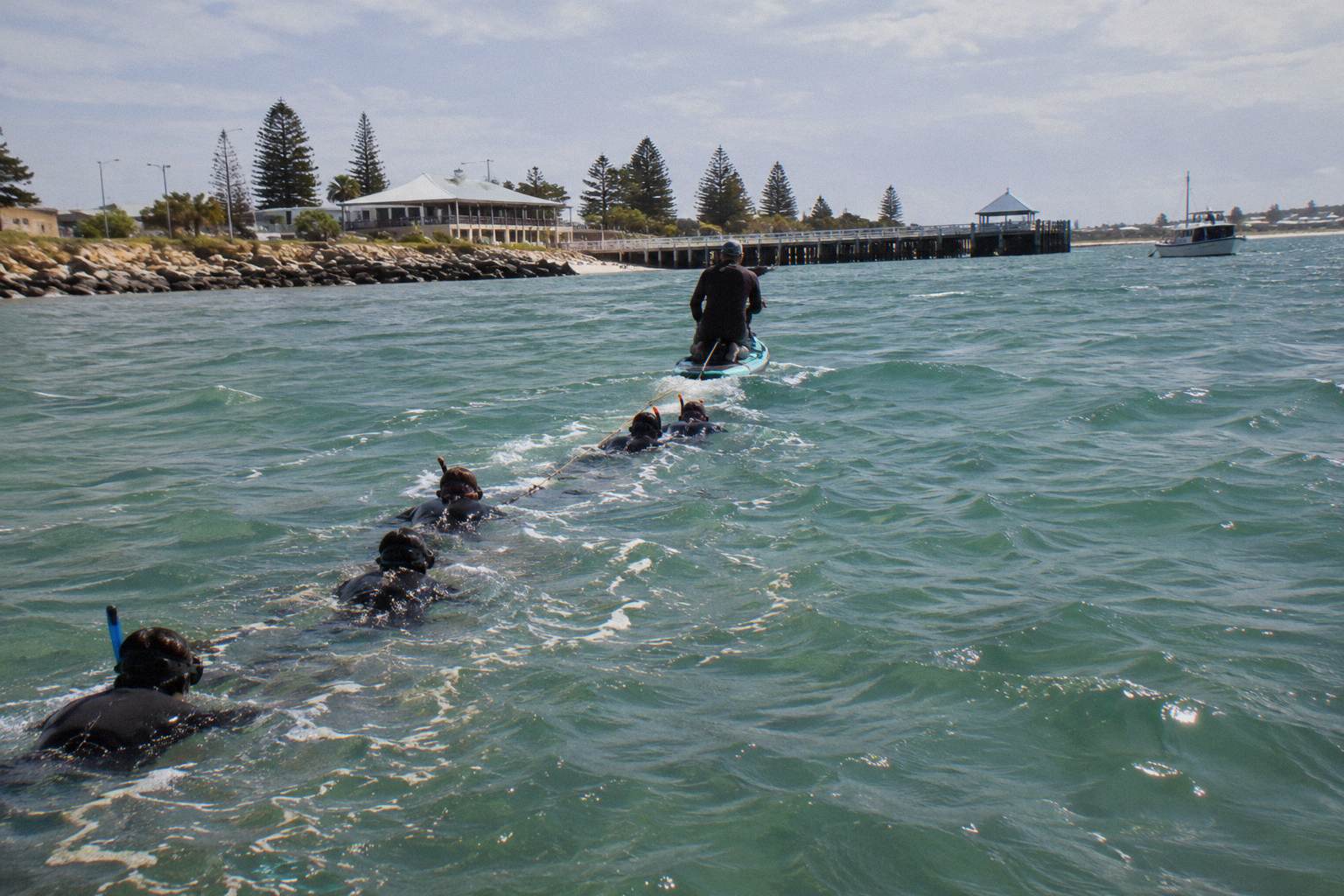
The ethical weight sits in the mechanics. Towing swimmers in a guided group keeps the group together and predictable, and holding the guide's belt keeps each swimmer at the surface and in formation rather than freelancing toward animals. The law already requires an unlicensed swimmer to retreat if a dolphin closes the distance; the guided format gives that retreat a structure, since the guide controls the group's position. The operator's no-feed policy aligns with the strictest line in the regulations, the separate feeding licence under regulation 32, because a fed dolphin is a dolphin whose behaviour has been altered for commerce.
The operator also describes conduct around the animals that an observer can verify from the boat: hunting, mating, sleeping, chasing octopus and squid, hunting on the back of big stingrays, and occasionally a sea lion joining. Those are operator-observed behaviours listed on the operator's page, and they matter ethically for one reason: a swim that crosses feeding or resting animals would breach regulation 121's requirement to move away from visibly disturbed fauna. The guide to what wild dolphins do around swimmers covers the behaviour question in depth.
How Does The Bunbury Swim Compare?
The Bunbury swim largely mirrors the Rockingham format on paper: a 4-hour guided swim in Koombana Bay from November to April, for swimmers 8 and over who can swim independently, with a free return if no dolphins appear, gear supplied, and free cancellation up to 24 hours. Its main structural difference is the larger group cap of 8 to 20 swimmers with 4 observers, the fact an ethics comparison turns on.
The Centre's own research page says its Koombana Bay resident group averages about 50 animals, with another 100 or more visiting through the year. That figure belongs to the Centre and to Bunbury; no comparable count exists for Rockingham in any source available, and none is offered here. What the figure does give an ethics reader is context for the Centre's local knowledge claim, stated on its swim with the dolphins page, alongside the season, the 7:45 am daily start and the swimming requirements.
| Element | Rockingham Wild Dolphin Swim | Bunbury Wild Dolphin Swim |
|---|---|---|
| Operator | Perth Wildlife Encounters | Dolphin Discovery Centre |
| Group structure | Up to 7 per scooter group, guided tow | Minimum 8, maximum 20 swimmers, 4 observers |
| Swimmer rule | Stay at the surface, hold the guide's belt | Independent, confident swimmers, 8 and over |
| Touching or feeding | Not permitted, operator statement | Not stated; the Centre states DBCA licensing |
| Season | September to early June | November to April |
| Duration | About 3 to 6 hours | About 4 hours |
| Booking-page cancellation | Free up to 24 hours | Free up to 24 hours |
Both swims are wild encounters; neither holds animals, and both depend on dolphins choosing to be where the swimmers are. The Centre frames the same point its own way for bookings made direct with the operator, describing sightings as coming with a free return, while the booking page separately shows free cancellation up to 24 hours. Those two terms belong to two different channels and are never interchangeable, a distinction the blog post on refunds when no dolphins show up sets out fully.
Why Do Distinct Dolphin Communities Change The Ethics?
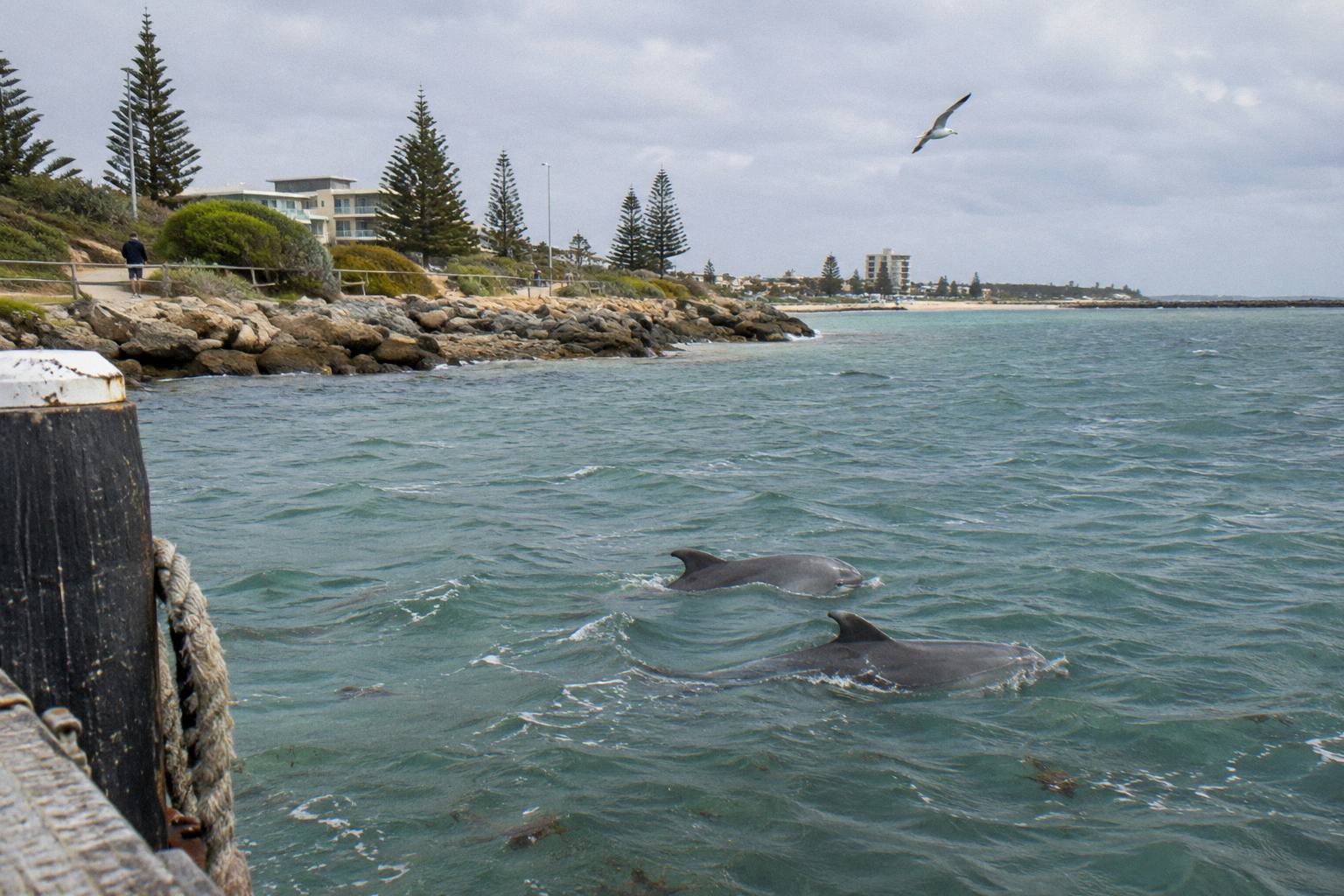
The ethics change because these dolphins are not one interchangeable population: Murdoch University research, published in Frontiers in Marine Science by Dr Delphine Chabanne, identified four discrete Indo-Pacific bottlenose dolphin communities in Perth metro waters, namely Cockburn Sound, the Swan Canning Riverpark, Owen Anchorage and Gage Roads. Each community has its own protection needs, the researchers argue, so swim impacts must be judged against one local community, not a city-wide dolphin pool.
The practical reading for a swimmer is that an operator working the same waters year after year is working with animals it can recognise, and the Rockingham operator says exactly that, claiming over 25 years' experience with the local dolphins and calling them territorial and very consistent. That is an operator claim, not research, but it points at the same reality the Murdoch work establishes: these are place-based communities, and encounters happen in their home range. The Murdoch announcement of the communities finding is the primary statement.
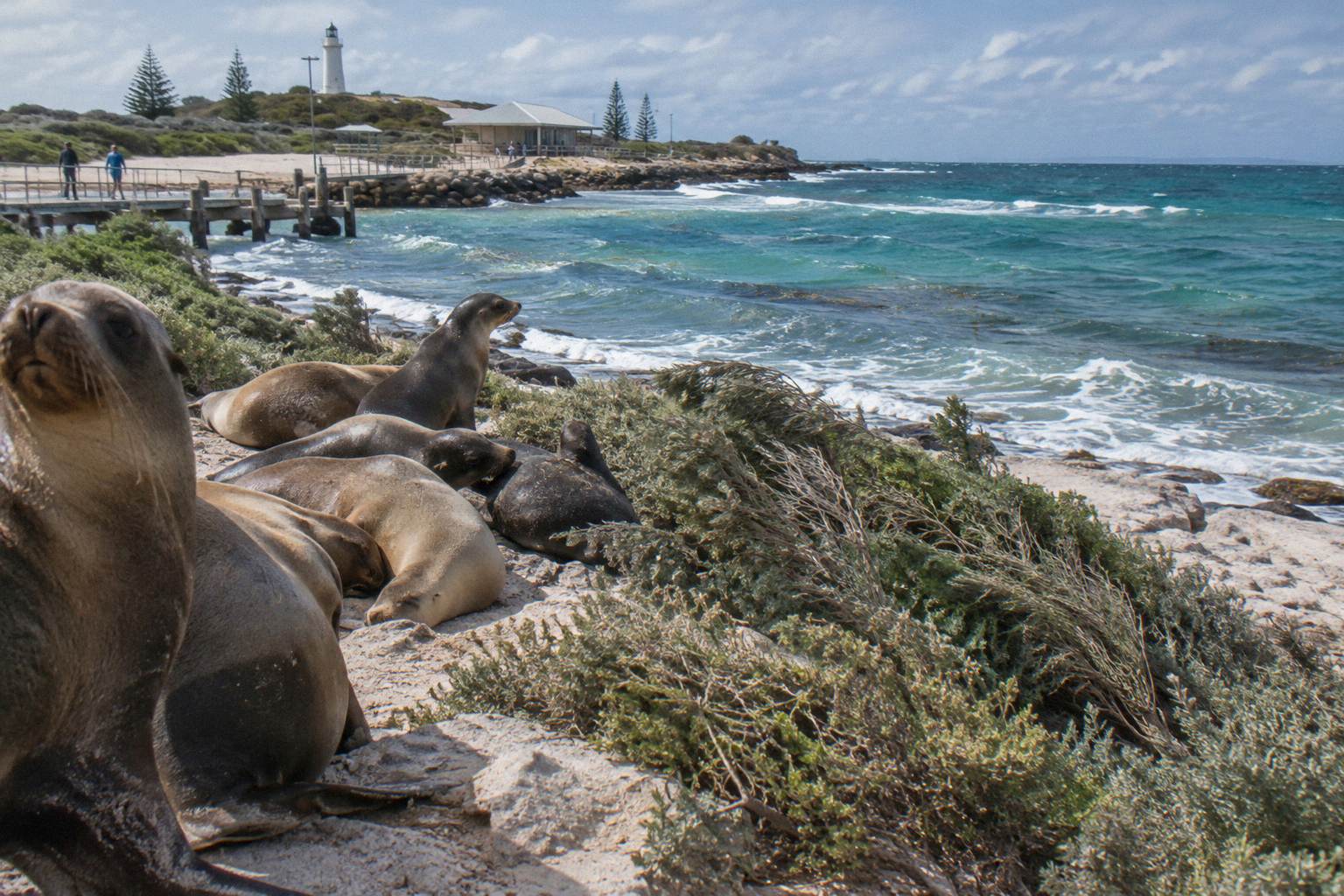
Community structure also explains why the sea lion trial down the coast is a separate matter. DBCA approved a licensed trial of swimming with sea lions in the Shoalwater Islands Marine Park in 2023, naming Perth Wildlife Encounters as the one operator, with trial participants keeping at least 10 m from the animals with a trained in-water guide. The dolphin swim does not include sea lion swimming, and whether a sea lion swim can be booked now is not stated. The Shoalwater Islands Marine Park page describes the park, its free entry and its wildlife, including the sea lions of Seal Island.
Which Choice Sits Best With Your Own Standards?
There is no single ethical ranking here, only a match between your standards and each product's stated design: if minimal intrusion wins, watch from the Mandurah Dolphin Cruise, 75 minutes from A$47 per person, rated 4.5 across 1,090 reviews; if being in the water wins, pick Rockingham's groups of up to 7 or Bunbury's 8 to 20 swimmers, both no-touch, or spectate from the boat.
Price sits low on the ethics list, but it is part of the decision. The Mandurah Giants And Dolphin Cruise, 2 hours from A$85 per person and rated 4.8 across 87 reviews, adds a fourth giant sculpture seen from the water and live commentary. The Penguin Island And Dolphin Cruise, about 1 hour 30 minutes from the Shoalwater base at 153 Arcadia Drive, carries no stated price, rating or cancellation term, so its ethics case rests on the same watching format and the park setting rather than on any published figure. Each of these is watching only, and none belongs in a swim discussion beyond that. Everything else covered here is indexed on Rockingham Swim With Dolphins.
| If your priority is... | The better fit | Why |
|---|---|---|
| Minimum intrusion | Mandurah Dolphin Cruise | Watching only, 75 minutes, vessel-based |
| Being in the water, small group | Rockingham Wild Dolphin Swim | Up to 7 per scooter group, guided tow |
| Being in the water, structured program | Bunbury Wild Dolphin Swim | 8 to 20 swimmers, confidence required |
| Doubts about swimming at all | Spectator or cruise options | Rockingham spectator option; Mandurah cruises |
| Shortest time commitment | Mandurah Dolphin Cruise | 75 minutes, from A$47 |
The in-water choice deserves one direct statement: the Rockingham Wild Dolphin Swim pairs its no-touch, no-feed conduct with the small guided format described above, and you can check availability on its booking page, which shows free cancellation up to 24 hours. For the full safety angle alongside the ethics one, the guide to whether swimming with wild dolphins in WA is safe covers restrictions and suitability.
Traveller scenarios help. A nervous swimmer can take the Rockingham operator at its word that no previous snorkelling experience is required and nervous swimmers are accepted, with a 4 mm wetsuit the operator says keeps you very buoyant; a parent of a child of 8 or over can weigh the Bunbury swimming-adult requirement against Rockingham's operator caution that the cruise is not recommended for children 6 or younger; a non-swimmer in a group can board as a spectator rather than sit out the day entirely. The guide to whether non-swimmers can join works each case through.
What Should You Ask Any Operator Before Booking?
Before booking, ask five questions: does the operator hold a commercial interaction licence for this activity, what is the maximum group size in the water, what is the touching and feeding policy, what happens when a dolphin approaches or shows disturbance, and what training or briefings do swimmers receive before entry. Vague answers on the licence or feeding are reason to book elsewhere, since both are matters of state law.
The checklist works for any operator anywhere in Australia, not just the swims described here, because the underlying questions are the ones wildlife law asks. A useful habit is to read the waiver before signing it; the Rockingham operator requires a waiver before boarding, and a waiver that mentions no-touch rules tells you the operator expects them to be enforced. Crew filming, which the Rockingham operator says happens on every swim, cuts both ways ethically: it documents conduct, and it is worth asking how footage and photos are handled.
One more question is fair: what does the operator do when no dolphins appear? The Rockingham operator's come-again term, for bookings made direct with the operator, invites a free return within the current season, and the Mandurah Dolphin Cruise's booking page describes a return-free term with rebooking within 12 months. Those terms are each attached to their own tour and channel, and neither is a promise about dolphins, only about the operator's response to their absence.
What Trips People Up When Judging A Dolphin Swim Ethically?
Three mistakes recur: treating every dolphin product as identical when a guided swim, a watching cruise and an unlicensed approach are three different activities in law and only the third is an offence waiting to happen; assuming a licence number or licence conditions are public when they are not published for any operator here; and confusing booking-page cancellation terms with direct-booking wildlife terms, which produces false confidence about what happens if dolphins stay away.
A fourth mistake deserves its own line: importing distance numbers from other states or other countries. In Western Australia the swimmer distance is 50 m, the vessel distance is 100 m, the drone distance is 60 m, and touching carries a AUD 10,000 fine. A number quoted from elsewhere, 30 m, 150 m or 10 m for dolphins, is wrong here and can turn a well-meaning swimmer into an offender. The blog post on touching wild dolphins takes the touch question head on.
A fifth is softer but common: assuming that because a swim is licensed, every choice the operator makes is regulated. The licence route authorises approaches; it does not publish group caps, in-water time or conduct rules for inspection. Those sit in the operator's own statements, which is why the checklist above asks for them directly, and why a decision worth making is worth a first-timer's preparation read before the day.
The bottom line for a reader still deciding: a guided wild swim with stated no-touch, no-feed conduct, small guided groups and surface-only swimming meets every ethical test the state of Western Australia has written into law, and the operator's own conduct fills the gaps the law leaves open. Ask the questions, read the waiver, and hold the operator to what its pages say.
Common Questions About The Ethics Of Swimming With Wild Dolphins
Is Swimming With Wild Dolphins Ethical?
A guided wild dolphin swim in Western Australia can be ethical: the animals stay wild and free to leave, the law bans touching and feeding, and licensed operators work under a state commercial interaction framework. The ethics then depend on the operator's own conduct, group size and approach behaviour, which is why asking questions before booking matters.
Can You Touch Wild Dolphins On A Guided Swim?
No. Regulation 118 of the Biodiversity Conservation Regulations 2018 bans touching or attempting to touch any marine fauna, with a AUD 10,000 fine. The Rockingham operator states a no-touch rule for its swim, and no swim here offers contact.
How Close Can You Legally Get To A Wild Dolphin?
An unlicensed person in the water must stay 50 m from a dolphin, a vessel 100 m, an aircraft 300 m, a helicopter 500 m and a drone 60 m. Commercial swims operate under an exemption in regulation 112, which is how a paid swim may approach.
What Happens If A Dolphin Swims Up To You?
The law puts the obligation on you: regulation 114 requires a swimmer to move away as soon as reasonably possible if a dolphin comes closer than the separation distance, and a vessel to go neutral or move off at no more than 6 knots. The interaction remains the dolphin's choice, not an invitation to stay.
Are Wild Swims Better For Dolphins Than Captive Shows?
A wild swim leaves the animals uncaptured, unfed and free to leave, which captive settings cannot offer. No captive dolphin facility is described here, and no claim is made about welfare outcomes beyond what the Murdoch University communities research states: Perth's four dolphin communities each need different protections.
How Do You Know An Operator Is Licensed?
No operator's licence number or licence conditions are published on any operator or official page, so treat licensing as a claim to verify. Ask the operator directly, and pair the answer with the checklist questions on group size, touching, feeding and retreat behaviour before you book.